Jack Dempsey’s Timeless ‘Double Shift’ Technique Explained
0
Double Shift Punch·Oracle Boxing
FIX YOUR BAD HABITS NOW: https://oracleboxing.com Join the Bali Boxing Camp Aug 2026: https://theboxingcamp.com/oracle-y…
Translation: Double shift punch — the fighter shifts stance mid-combination (switching the rear foot forward), allowing power punches from both sides in rapid succession without resetting
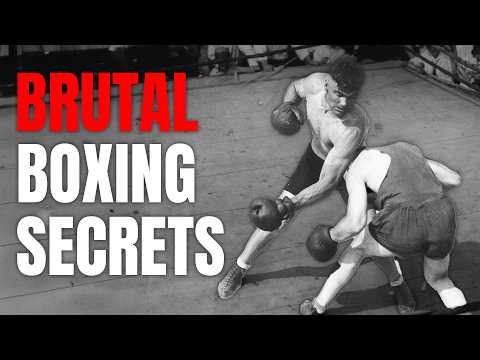
The Double Shift Punch is a footwork-punch combination where the boxer switches stance mid-combination by stepping the rear foot forward past the lead foot, allowing power punches from both sides in rapid succession without the pause required to reset to the original stance. [1] Jack Dempsey described the Double Shift as one of his most devastating tactical weapons: from an orthodox stance, the fighter throws a left hook while simultaneously stepping the right foot forward past the left — this converts the fighter's stance from orthodox to southpaw mid-punch — then immediately fires a right hook (now the lead-side power shot from the new southpaw stance) while the left foot steps forward to re-establish orthodox. [1] The result is two consecutive power hooks delivered from alternating sides with no gap between them, each powered by a falling step in the direction of the shift. [1] The Double Shift was Dempsey's signature weapon during his heavyweight title reign: he used it to overwhelm opponents with a rolling barrage of alternating hooks that appeared to come from everywhere at once. [1] The technique is the ancestor of what modern boxing commentators call the 'Dempsey Roll' — a continuous bobbing-and-weaving motion combined with alternating hooks, made famous in popular culture by the manga/anime series Hajime no Ippo. [1],[2] The biomechanical principle is that the stance shift adds the body's lateral momentum to each punch: the first hook is powered by the rightward shift, and the second hook is powered by the leftward shift, creating a pendulum-like motion where each punch loads the next. [1] Dempsey warned that the Double Shift requires precise timing and committed execution — a half-hearted shift leaves the fighter off-balance between stances, vulnerable to counter-punches. [1]
The Double Shift was Jack Dempsey's signature technique during his heavyweight championship reign (1919-1926), documented in detail in Championship Fighting (1950). [1] Dempsey described how he used the alternating stance shifts to overwhelm opponents who tried to cover up against his attacks — the rapid alternating hooks from both sides made defensive covering ineffective because the attacks came from both directions simultaneously. [1] The technique is directly linked to two of boxing's most famous fights: Dempsey vs Jess Willard (1919, where Dempsey's rolling attacks produced 7 knockdowns in Round 1) and Dempsey vs Luis Angel Firpo (1923, the 'Fight of the Century' at the Polo Grounds, featuring 11 knockdowns in two rounds). [1] Cus D'Amato studied Dempsey's Double Shift and incorporated the concept into Mike Tyson's peek-a-boo style, teaching Tyson to bob and shift while throwing alternating hooks — this evolution became known as the 'Dempsey Roll' in popular culture. [2] The technique gained additional fame through the Japanese manga/anime Hajime no Ippo, where the protagonist Ippo Makunouchi uses the 'Dempsey Roll' as his signature finishing technique — this fictional depiction introduced millions of viewers worldwide to Dempsey's shifting concept. [2]
The Double Shift is one of the most devastating offensive combinations in boxing because it attacks the opponent from alternating angles with no pause between attacks. [1] A covering opponent must simultaneously defend both the left and right sides of their head — biomechanically impossible with just two arms. [1] The technique's continuous rolling momentum makes it extremely difficult to interrupt: each hook loads the next, creating a self-sustaining cycle of alternating power shots. [1] Dempsey's career record (52 KOs in 83 fights) demonstrates the technique's fight-ending potential. [1] The Double Shift is most effective against opponents who shell up defensively (covering with both arms against the face) — the alternating hooks attack both sides of the shell. [1] Its weakness is against counter-punchers who can time the transitional moments between shifts. [1]
Jack Dempsey (developed during heavyweight reign, 1919-1926) → documented in Championship Fighting (1950) → studied by Cus D'Amato → taught to Mike Tyson as part of the peek-a-boo style (1980s) → popularised globally through Hajime no Ippo manga/anime → now a recognised advanced boxing technique worldwide. [1],[2]
Jack Dempsey vs Jess Willard (1919): Double Shift contributed to 7 knockdowns in Round 1, one of boxing's most devastating performances || Dempsey vs Luis Angel Firpo (1923): 11 knockdowns in 2 rounds, both fighters knocked down multiple times || Mike Tyson used D'Amato's evolution of the Double Shift (the peek-a-boo bobbing hook series) to produce 44 KOs in 50 wins, becoming the youngest heavyweight champion in history || The concept continues in modern boxing through fighters who use stance-switching combinations.
No images yet for this technique.
Sign in to suggest an image.
FIX YOUR BAD HABITS NOW: https://oracleboxing.com Join the Bali Boxing Camp Aug 2026: https://theboxingcamp.com/oracle-y…
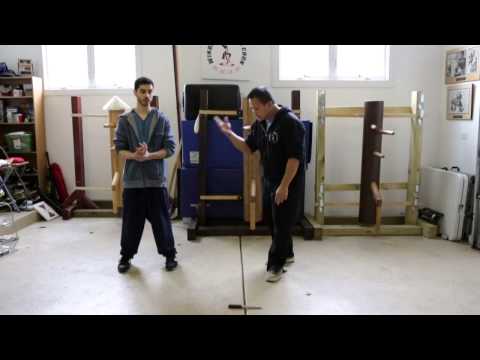
S2EP2 of our on going series looks back at shifting concept and goes deeper. We then add the punch for more body unity.
The double shift punch represents two distinct martial traditions with overlapping biomechanical principles. In Wing Chun, as taught by windycitywingchun, the shift-punch combines rotational weight transfer with simultaneous arm extension while maintaining a centered, vertical axis and 50/50 weight distribution. Critical to Wing Chun execution is preserving the triangle stance geometry and preventing over-rotation that compromises base stability; the body must lead the punch rather than the arm initiating independently, ensuring full kinetic chain connection from legs through torso to fist. Oracle Boxing presents Jack Dempsey's boxing interpretation: a forward-aggressive technique employing sequential stance switches (Orthodox to Southpaw to Orthodox) while continuously advancing. The boxer telegraphs a lead straight to provoke backward opponent movement, then drives explosively off the rear foot, shifting weight forward while throwing a rear hand cross, before pivoting into opposite stance to repeat the sequence with the opposite straight. Both instructors emphasize compact positioning and maintaining structural integrity during the technique—Wing Chun stresses vertical alignment and center-of-gravity control, while boxing emphasizes keeping elbows in and hips posterior-tilted to maximize power and minimize target exposure. The fundamental difference lies in application context: Wing Chun's shift maintains position while rotating, whereas boxing's double shift aggressively closes distance through sequential weight transfers across stance changes.
Synthesized from 2 instructors
No instructional courses yet for this technique.
Sign in to suggest a course.
Risk of injury to the person this technique is applied to
The Double Shift delivers two consecutive power hooks from alternating sides with no defensive gap between them — an opponent who successfully blocks the first hook is immediately hit by the second from the opposite direction. Dempsey used this technique to produce some of the most violent knockouts in heavyweight boxing history, including the destruction of Jess Willard and Luis Angel Firpo. [1]
Skill level needed to execute this technique reliably
Whether this technique is allowed under major competition rule sets
Championship Fighting (Dempsey, 1950)
description: [1] Dempsey 1950 Ch.16
Standard katakana transliteration of Western martial arts terminology (外来語) — used in Japanese MMA, boxing, and BJJ communities
description: [1] Dempsey 1950 Ch.16
Requires excellent coordination between footwork and punching — the stance switch and hook must be perfectly synchronised
Strong legs for explosive lateral movement
Good balance and proprioception to maintain stability during rapid stance changes
Core strength for the rotational power in each hook
Cardiovascular endurance — the Double Shift is physically demanding due to the full-body movement in each shift
The technique favours compact, explosive fighters (Dempsey was 6'1" 187 lbs; Tyson was 5'10" 218 lbs)
The double shift uses a stance switch during a combination — the rear hand fires while the feet switch, then the new rear hand fires immediately. Creates confusion and unusual angles. (Boxing technique manuals; Dempsey, Championship Fighting)
According to Oracle Boxing, beginners probably shouldn't try this technique, as it requires significant understanding and timing to execute effectively in actual combat.
Oracle Boxing explains that you telegraph your lead straight to make your opponent move backward, then shift into the opposite stance (from Orthodox to Southpaw or vice versa) as you advance forward to throw your actual power shots.
Oracle Boxing emphasizes staying compact and keeping yourself as small a target as possible while moving forward and throwing, since advancing while striking creates vulnerability.
Windy City Wing Chun notes that a frequent error is losing spatial awareness relative to your target—you may shift and punch but end up in the wrong position. You must also maintain constant arm connection to your body and stay vertical in your stance throughout the movement.
The Double Shift Punch is a footwork-punch combination where the boxer switches stance mid-combination by stepping the rear foot forward past the lead foot, allowing power punches from both sides in rapid succession without the pause required to reset to the original stance. Jack Dempsey described the Double Shift as one of his most devastating tactical weapons: from an orthodox stance, the fighter throws a left hook while simultaneously stepping the right foot forward past the left — this converts the fighter's stance from orthodox to southpaw mid-punch — then immediately fires a right hook (now the lead-side power shot from the new southpaw stance) while the left foot steps forward to re-establish orthodox.
The Double Shift was Jack Dempsey's signature technique during his heavyweight championship reign (1919-1926), documented in detail in Championship Fighting (1950). Dempsey described how he used the alternating stance shifts to overwhelm opponents who tried to cover up against his attacks — the rapid alternating hooks from both sides made defensive covering ineffective because the attacks came from both directions simultaneously.
Unified MMA: legal — Legal striking technique; WBC/Boxing: legal — Legal — punches are the core technique of boxing; WKF: legal — Legal, jodan/chudan punch scores 1 point (yuko) — controlled contact required; Kyokushin: restricted — Body punches legal at full power, head punches banned; WT: restricted — Punches to trunk only (1 point), punches to head banned; ITF: legal — Legal — hand techniques to head and body both permitted; WAKO: legal — Legal in Full Contact and Low Kick formats; K: legal — 1/GLORY — Legal — full power punches to head and body; IFMA: legal — Legal
Danger rating 9/10. The Double Shift delivers two consecutive power hooks from alternating sides with no defensive gap between them — an opponent who successfully blocks the first hook is immediately hit by the second from the opposite direction. Dempsey used this technique to produce some of the most violent knockouts in heavyweight boxing history, including the destruction of Jess Willard and Luis Angel Firpo.
The standard setup chain: Establish range with jab-cross → Opponent covers up or retreats → Step the rear foot forward past the lead (first shift) → Throw left hook simultaneously → Body pendulums to the opposite side → Step the new rear foot forward past the new lead (second shift) → Throw right hook simultaneously → Continue alternating: shift-hook-shift-hook → Opponent overwhelmed by alternating-side attacks → Finish with a committed power hook or uppercut.
Standard counters include: Timing the transition — the moment between shifts (when both feet are moving) is the fighter's most vulnerable instan… / Clinch — grabbing the shifting fighter neutralises the lateral momentum before the second hook can fire / Lateral movement (same direction) — moving in the same direction as the shift keeps the opponent out of hook range / Jab to the body during the bob — when the fighter dips during the shift, their body is momentarily exposed to a strai….
Common variants: Hook-Hook Double Shift (the standard version, alternating hooks with each shift (…); Uppercut-Hook Double Shift (leading with an uppercut during the first shift, then hoo…); Hook-Cross Double Shift (hooking during the first shift, then driving a straight r…); Triple Shift (extending the sequence to three shifts (left-right-left),…); Dempsey Roll (the modern evolution: adding a bobbing-and-weaving head m…).
Jack Dempsey vs Jess Willard (1919): Double Shift contributed to 7 knockdowns in Round 1, one of boxing's most devastating performances || Dempsey vs Luis Angel Firpo (1923): 11 knockdowns in 2 rounds, both fighters knocked down multiple times || Mike Tyson used D'Amato's evolution of the Double Shift (the peek-a-boo bobbing hook series) to produce 44 KOs in 50 wins, becoming the youngest heavyweight champion in history || The concept continues in modern boxing through fighters who use stance-switching combinations.
Top errors to watch for: Incomplete stance switch — stepping the rear foot forward but not FAR ENOUGH past the lead foot results in a narrow, … / Not synchronising the punch with the step — if the hook fires before or after the shifting foot plants, the body's la… / Standing upright during the shift — failing to bob the head during the shift leaves it on the centreline and vulnerab… / Half-hearted commitment — a tentative shift produces weak hooks and leaves the fighter stuck between stances. The shi….
The Double Shift Punch is also known as Daburu Shifuto Panchi, Shift Punch, Dempsey Shift, Stance Switch Punch, Double Switch.