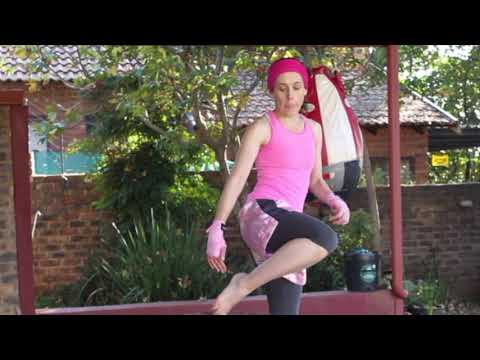
Some basics of the knees (khao)
0
Khao Trong·Tiger Dragon Muay Fight Gym·Added by Admin
This week's video focuses on some of our knee techniques, or khao in Thai. We have the khao dtrong or straight knee, the…
Translation: straight knee
Khao Trong (เข่าตรง), literally 'straight knee' in Thai, is the foundational knee strike in Muay Thai, driven directly upward into the target along a vertical line. [1] Kraitus and Rennehan describe Khao Trong as the first khao technique a nak muay (Muay Thai fighter) learns, noting that its simplicity and power make it the most frequently used knee strike in Thai boxing competition. [1] The technique has been a cornerstone of Muay Thai since the art's earliest documented forms, with Rebac tracing its battlefield application to Siamese military training where straight knee strikes to the torso were used in close-quarters combat. [2]
The clinch knee (khao trong) is the most commonly used knee strike in Muay Thai, delivered from the double collar tie clinch position with an upward thrust targeting the opponent's midsection or head. [1] It is highly effective in the clinch because the plum position controls the opponent's head and posture, allowing repeated knee strikes with minimal defensive options. [1]
In Muay Thai stadium fights, clinch knees are one of the most heavily weighted scoring techniques, with Thai judges rewarding dominance in the clinch. [1] Anderson Silva's clinch knee against Rich Franklin at UFC 64 (2006) — breaking Franklin's nose and scoring a TKO — is one of the most famous demonstrations of clinch knee technique in MMA history. [2]
No images yet for this technique.
Sign in to suggest an image.
This week's video focuses on some of our knee techniques, or khao in Thai. We have the khao dtrong or straight knee, the…
No instructional courses yet for this technique.
Sign in to suggest a course.
Risk of injury to the person this technique is applied to
Muay Thai khao trong; direct upward thrust to body/head
Skill level needed to execute this technique reliably
Whether this technique is allowed under major competition rule sets
Muay Thai: The Art of Fighting (Yod Ruerngsa, Khun Kao Charuad & James Cartmell, 2002)
Alias sources — [1] Muay Thai Unleashed (Delp, 2006) [2] Muay Thai: The Art of Fighting (Kraitus & Kraitus, 1988) [3] Muay Thai: A Living Legacy (Vail, 2014)
Effectiveness sources — [1] Muay Thai: The Art of Fighting (Kraitus & Kraitus, 1988)
Standard katakana transliteration of Western martial arts terminology (外来語) — used in Japanese MMA, boxing, and BJJ communities
Alias sources — [1] Muay Thai Unleashed (Delp, 2006) [2] Muay Thai: The Art of Fighting (Kraitus & Kraitus, 1988) [3] Muay Thai: A Living Legacy (Vail, 2014)
Effectiveness sources — [1] Muay Thai: The Art of Fighting (Kraitus & Kraitus, 1988)
hip flexion power, clinch control ability, close-range comfort
long thigh for greater leverage, strong hip flexors
hip flexors, quadriceps, core, grip (for clinch)
Focus on striking with a sharp point rather than a flat surface—bring your heel as close to your bum as possible and keep your toes pointed down. A smaller striking surface concentrates force and delivers more power than an open knee. Tiger Dragon Muay Fight Gym also emphasizes exploding off your back foot to drive the strike.
At good striking distance, use your hand to drive your hip forward as you deliver the knee. Keep your chin down and maintain your guard by touching your forehead to ensure your hands don't drop—though if you throw certain knee variations like the Raunhaus-style knee, some fighters drop one hand for balance, which does expose part of your face.
Don't cross your legs together, as this puts you off-balance and gives your opponent an opportunity to trip you. Instead, if striking with your front knee, change your stance and land with your front foot already opened out at 45 degrees.
Remember that where your knee points is where it will go—step forward with a straight knee to gain distance, and maintain proper body alignment so your strike travels in your intended direction.
The classic Muay Thai straight knee strike from the clinch, driving the knee directly upward into the opponent's body while controlling the head with both hands in a plum clinch.
Khao Trong (เข่าตรง), literally 'straight knee' in Thai, is the foundational knee strike in Muay Thai, driven directly upward into the target along a vertical line. Kraitus and Rennehan describe Khao Trong as the first khao technique a nak muay (Muay Thai fighter) learns, noting that its simplicity and power make it the most frequently used knee strike in Thai boxing competition.
Unified MMA: restricted — Knees to standing opponent legal, knees to head of grounded opponent banned; WBC/Boxing: banned — All knee strikes prohibited; WKF: banned — Prohibited in sport karate; Kyokushin: legal — Legal to body; WT: banned — Prohibited; ITF: banned — Prohibited; WAKO: banned — Prohibited in most formats; K: restricted — 1/GLORY — One clinch knee allowed before referee break; IFMA: legal — Legal — knees are a core Muay Thai weapon, clinch knees highly scored
Danger rating 7/10. Very High — Muay Thai khao trong; direct upward thrust to body/head
The standard setup chain: Assume Fighting Stance → Generate Power → Execute Strike → Recover to Guard.
Standard counters include: Block — absorb the strike with a protective guard position / Evasion — move the target out of the strike's path / Counter-Attack — time an offensive response during the recovery phase of the strike.
Common variants: Straight knee (driving the knee straight upward into the body or head); Curved knee (round knee) (swinging the knee from the side in a circular path); Flying knee (leaping forward and driving the knee at the apex of the jump); Clinch knee (pulling the opponent into the knee from Muay Thai plum po…).
In Muay Thai stadium fights, clinch knees are one of the most heavily weighted scoring techniques, with Thai judges rewarding dominance in the clinch. Anderson Silva's clinch knee against Rich Franklin at UFC 64 (2006) — breaking Franklin's nose and scoring a TKO — is one of the most famous demonstrations of clinch knee technique in MMA history.
Top errors to watch for: Not pulling the opponent's head down — the khao trong depends on the collision of the downward pull and the upward knee / Bumping the knee without hip extension — each knee must drive fully through the target / Flat-footed on the support leg, which limits height and reduces power / Losing inside position and letting the opponent's arms swim inside your clinch.
The Khao Trong is also known as Kao Toron, Straight Clinch Knee, Straight Knee, Plum Position Knee.