“Spinning” Back Kicks: footwork so you can actually land them
0
Hand-on-the-Floor Spinning Back Hook Kick·Ramsey Dewey
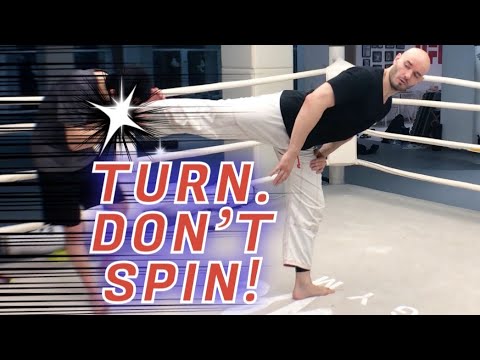
How to land more spinning back kicks in your fights- or should I say “turning back kicks”? Shanghai based MMA coach and…
Translation: Hand-on-the-floor spinning back hook kick
This advanced technique combines a spinning back hook kick with hand-on-the-floor support, creating a ground-level spinning attack with maximum reach. [1] It draws from capoeira's ground-level spinning attacks and traditional martial arts sacrifice techniques. [1]
Offers specific tactical advantages over the standard hook kick in appropriate situations. [1]
Cross-style martial arts kicking tradition; documented in kick compendiums. [1]
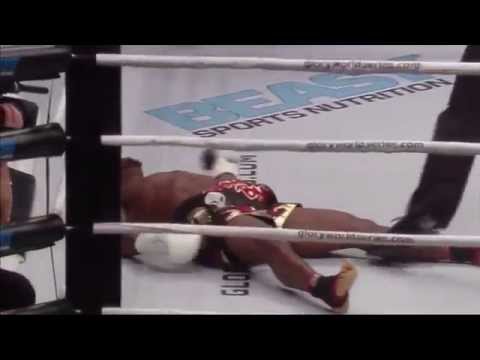
High-risk, high-reward technique seen in MMA, kickboxing, and TKD competition. Multiple notable KOs in UFC and GLORY kickboxing. Less common than standard kicks but spectacular when it lands. [1]
No images yet for this technique.
Sign in to suggest an image.
How to land more spinning back kicks in your fights- or should I say “turning back kicks”? Shanghai based MMA coach and…
The spinning hook kick or Crocodile Tail as its called by the Thai's is one of the most powerful strikes in MMA. In thi…
The hand-on-the-floor spinning back hook kick is a foundational drill for developing a straight, powerful back-kick without rotational contamination. Ramsey Dewey emphasizes this progression as a corrective tool: practitioners place both hands on the floor, execute the turning motion, and lift the kicking leg vertically before driving it backward. This method ensures the leg travels in a perfectly straight line rather than arcing into an uncontrolled hook-kick, a common error Dewey identifies when practitioners over-rotate by looking too far around their shoulder. Dewey notes that the floor-hand positioning eliminates the spinning momentum that causes wayward kicks, making it ideal for beginners or those struggling with precision. The drill reinforces proper heel-alignment mechanics—pointing the heel at the target is paramount, as the standing leg's position determines both distance and contact quality. Tristar Gym's Coach Firas Zahabi does not address the hand-on-floor variation explicitly but reinforces that the spinning hook kick (the advanced version) requires disguised footwork, eye retention on target during the pivot, and accurate striking of the chin for knockout power. Both instructors agree that footwork setup and target awareness are foundational; Dewey's floor-hand drill isolates the kicking mechanics while Zahabi's method emphasizes combat application and timing within fighting range.
Synthesized from 2 instructors
No instructional courses yet for this technique.
Sign in to suggest a course.
Risk of injury to the person this technique is applied to
Hook Kick variant with standard striking power
Skill level needed to execute this technique reliably
Whether this technique is allowed under major competition rule sets
Essential Book of Martial Arts Kicks (De Bremaeker & Faige, 2010)
[1] De Bremaeker & Faige, Essential Book of Martial Arts Kicks (2010)
Requires solid hook kick foundation
Good balance and coordination
Documented in De Bremaeker & Faige, Section 5.15. A spinning back hook kick delivered with one hand on the floor — combines capoeira-style ground contact with a spinning hook trajectory. (De Bremaeker & Faige, Essential Book of Martial Arts Kicks, 2010)
According to Ramsey Dewey, the ideal moment is when your opponent starts rotating away from your power hand. Avoid throwing the kick if your opponent moves away from your initial strike or moves forward toward you, as these are poor setups for landing the technique.
Ramsey Dewey explains that this happens because you're looking over your shoulder trying to see the details. Instead, think of kicking straight backwards like a bull or horse—kick in a straight line without letting the kick turn into a spin.
Heel alignment is critical—Ramsey Dewey emphasizes pointing your heel directly at your target, as your leg will travel in whatever direction your heel is pointing. If your heel points at the camera, your leg goes toward the camera; if it points at the ropes, it goes into the ropes.
Coach Firas Zahabi from Tristar Gym recommends keeping your eyes on the target as long as possible during the pivot, and use the corner of your eye to maintain sight of the target. Make sure the moment you turn your back is as short as possible by disguising the kick with footwork and feints.
This advanced technique combines a spinning back hook kick with hand-on-the-floor support, creating a ground-level spinning attack with maximum reach. It draws from capoeira's ground-level spinning attacks and traditional martial arts sacrifice techniques.
The Hand-on-the-Floor Spinning Back Hook Kick is a specialised variant documented in cross-style kicking methodology. It represents an advanced development of the standard hook kick.
Unified MMA: legal — Legal striking technique; WBC/Boxing: banned — All kicks prohibited in boxing; WKF: legal — Legal, chudan (body) kick scores 2 points, jodan (head) kick scores 3 points; Kyokushin: legal — Legal at full power to body and head; WT: legal — Legal, body kick 2 points, head kick 3 points, spinning body 4 points, spinni…; WAKO: legal — Legal in Full Contact and Low Kick formats; K: legal — 1/GLORY — Legal; IFMA: legal — Legal — kicks are a core Muay Thai technique
Danger rating 6/10. Hook Kick variant with standard striking power
The standard setup chain: Feint → Hand-on-the-Floor Spinning Back Hook Kick → Follow-up combination.
Standard counters include: Step inside range / Block and counter / Low kick to support leg.
Common variants: High variant; Mid variant; Low variant.
High-risk, high-reward technique seen in MMA, kickboxing, and TKD competition. Multiple notable KOs in UFC and GLORY kickboxing.
Top errors to watch for: Attempting without solid hook kick foundation / Poor balance / Insufficient power generation.
The Hand-on-the-Floor Spinning Back Hook Kick is also known as Hando on za Furoa Supiningu Bakku Fukku Kikku, Ground-Supported Spinning Hook.