Lead Hook Kick Technique | How to Use a Lead Leg Hook Kick
0
Front Leg Hook Kick·NY Martial Arts Academy
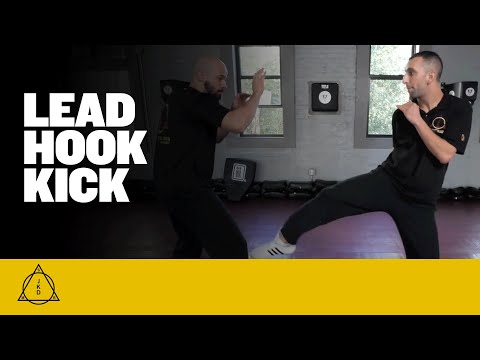
While some may think a lead hook kick is only meant to be a quick strike that does minimal damage, using the proper tech…
Translation: Front leg hook kick
The Front Leg Hook Kick uses a skip-step to deliver the hook kick from the lead leg, sacrificing some power for significantly faster delivery. [1] The lead-leg version arrives much sooner than the rear-leg version, making it effective as a counter or surprise attack. [1]
Offers specific tactical advantages over the standard hook kick in appropriate situations. [1]
Cross-style martial arts kicking tradition; documented in kick compendiums. [1]
Frequently used in MMA (UFC, ONE Championship, Bellator), kickboxing (GLORY, K-1), and Muay Thai (Lumpinee, Rajadamnern). One of the most commonly thrown kicks in professional striking competition. [1]
No images yet for this technique.
Sign in to suggest an image.
While some may think a lead hook kick is only meant to be a quick strike that does minimal damage, using the proper tech…
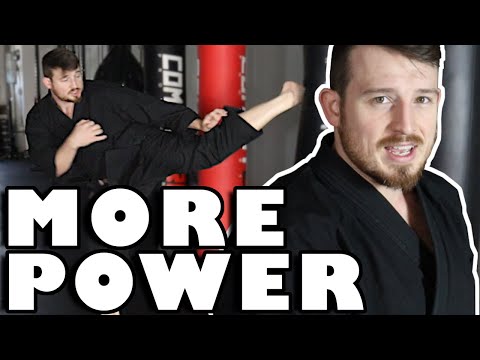
In this video I teach you what makes a difference when throwing better Lead Leg Kicks.. The answer is MOSTLY, momentum…
The front leg hook kick is a versatile striking technique that can be executed with varying degrees of commitment depending on tactical objectives. NY Martial Arts Academy emphasizes three primary applications: probing to draw reactions, setting up follow-up hand strikes, and delivering powerful knee-destroying damage. The mechanical distinction between these applications hinges on back foot rotation—minimal rotation maintains a centered stance for probing, while full back foot commitment generates maximum power by timing impact while the striker still possesses forward momentum (force = mass × acceleration). NY Martial Arts Academy demonstrates both sliding and stationary variations, with the slide covering distance but remaining optional for power generation. Sensei Seth approaches lead leg kicks more broadly, identifying four power-generation principles: explosive base leg drive (staying on the balls of the feet with heels elevated), proper muscular firing patterns, forward momentum toward the opponent, and lateral hip momentum. For hook kicks specifically, Sensei Seth notes the technique mirrors a reverse motion—the leg extends past the target then pulls backward, requiring upper body counter-rotation similar to a hook punch, generating power through both the initial forward drive and the retraction phase. Both instructors agree that proper footwork and momentum management are critical, though they frame them through different technical vocabularies.
Synthesized from 2 instructors
No instructional courses yet for this technique.
Sign in to suggest a course.
Risk of injury to the person this technique is applied to
Hook Kick variant with standard striking power
Skill level needed to execute this technique reliably
Whether this technique is allowed under major competition rule sets
Essential Book of Martial Arts Kicks (De Bremaeker & Faige, 2010)
[1] De Bremaeker & Faige, Essential Book of Martial Arts Kicks (2010)
Requires solid hook kick foundation
Good balance and coordination
Documented in De Bremaeker & Faige, Section 5.3. The hook kick from the front leg via a sliding step — faster delivery but less power. High-percentage point-fighting technique due to the deceptive arc. (De Bremaeker & Faige, Essential Book of Martial Arts Kicks, 2010)
According to NY Martial Arts Academy, you need to time your strike so you hit the target while you're still in the air as a projectile—hitting just before your foot would touch the ground. This way your entire body mass transfers into the kick rather than just the leg. Additionally, turn your back foot all the way through to generate maximum force through your shin.
NY Martial Arts Academy explains that for a setup or probe, you stay more upright with your back foot in place and throw light strikes to draw a reaction and set up your lead hand. For a powerful kick intended to damage, you turn your back foot all the way through and commit your full body weight into the strike.
Yes—Sensei Seth emphasizes that the momentum of your body should go in the same direction as your kick to maximize power. You should stay off your heels and load your weight, transferring it forward as you execute the technique.
The Front Leg Hook Kick uses a skip-step to deliver the hook kick from the lead leg, sacrificing some power for significantly faster delivery. The lead-leg version arrives much sooner than the rear-leg version, making it effective as a counter or surprise attack.
The Front Leg Hook Kick is a specialised variant documented in cross-style kicking methodology. It represents an advanced development of the standard hook kick.
Unified MMA: legal — Legal striking technique; WBC/Boxing: banned — All kicks prohibited in boxing; WKF: legal — Legal, chudan (body) kick scores 2 points, jodan (head) kick scores 3 points; Kyokushin: legal — Legal at full power to body and head; WT: legal — Legal, body kick 2 points, head kick 3 points, spinning body 4 points, spinni…; WAKO: legal — Legal in Full Contact and Low Kick formats; K: legal — 1/GLORY — Legal; IFMA: legal — Legal — kicks are a core Muay Thai technique
Danger rating 6/10. Hook Kick variant with standard striking power
The standard setup chain: Feint → Front Leg Hook Kick → Follow-up combination.
Standard counters include: Step inside range / Block and counter / Low kick to support leg.
Common variants: High variant; Mid variant; Low variant.
Frequently used in MMA (UFC, ONE Championship, Bellator), kickboxing (GLORY, K-1), and Muay Thai (Lumpinee, Rajadamnern). One of the most commonly thrown kicks in professional striking competition.
Top errors to watch for: Attempting without solid hook kick foundation / Poor balance / Insufficient power generation.
The Front Leg Hook Kick is also known as Furonto Reggu Fukku Kikku, Lead Leg Hook Kick.