Moo Yea-Do Reverse Roundhouse Kick Tutorial
0
Upward Hook Back Kick·Moo Yea Do Norco
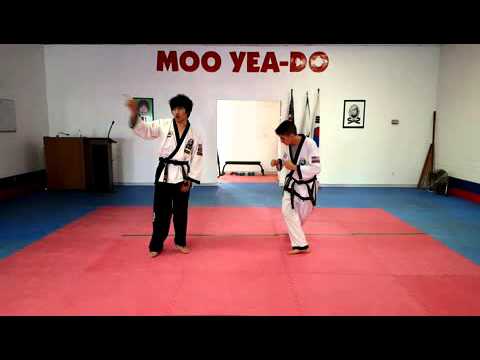
Welcome to our Moo Yea-Do YouTube Channel!! :) This is a tutorial on how to do a Basic Reverse Roundhouse Kick perform…
Translation: Upward hook back kick
The Upward Hook Back Kick combines back kick power with a hooking redirection at the end of the trajectory, sweeping upward and around the target. [1] The initial motion is a standard back kick, but near full extension, the foot hooks upward and inward, creating a scooping effect that can catch targets behind the opponent's guard. [1]
Offers specific tactical advantages over the standard back kick in appropriate situations. [1]
Cross-style martial arts kicking tradition; documented in kick compendiums. [1]
Primarily a training, demonstration, and point-fighting technique. Rarely seen in full-contact MMA or kickboxing due to acrobatic risk and telegraphing. Appears occasionally in TKD and point-fighting karate tournaments. [1]
No images yet for this technique.
Sign in to suggest an image.
Welcome to our Moo Yea-Do YouTube Channel!! :) This is a tutorial on how to do a Basic Reverse Roundhouse Kick perform…
Also found on Page 60 of the Beyond Sports Taekwondo Poomsae Handbook (5th Edition).
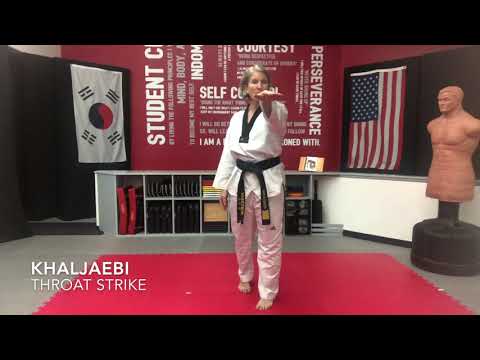
The upward hook back kick, also called a reverse roundhouse kick, is executed by rotating into a scissor stance where the kicking foot's heel faces upward and backward toward the opponent. Moo Yea Do Norco emphasizes that beginners should start with low kicks before progressing to chest and head height, with the critical element being the snap of the back heel as the leg rotates through the striking arc. The instructor stresses that the foot must spin completely back to its original position rather than remaining extended mid-air, and that forward lean increases proportionally with target height—head kicks require significantly more forward flexion than low kicks. Hand positioning remains elevated throughout to maintain balance, which Moo Yea Do Norco identifies as the most essential component of the technique. The striking surface is consistently the back of the heel, delivered with a sharp rotational snap. While Beyond Taekwondo's transcript appears to address throat strikes rather than back kicks, it does reinforce the importance of hip rotation and body unification for power generation—principles applicable across kicking techniques. Both sources emphasize repetitive practice and proper form over speed, with focus mitt work recommended for developing power and accuracy.
Synthesized from 2 instructors
No instructional courses yet for this technique.
Sign in to suggest a course.
Risk of injury to the person this technique is applied to
Back Kick variant with standard striking power
Skill level needed to execute this technique reliably
Whether this technique is allowed under major competition rule sets
Essential Book of Martial Arts Kicks (De Bremaeker & Faige, 2010)
[1] De Bremaeker & Faige, Essential Book of Martial Arts Kicks (2010)
Requires solid back kick foundation
Good balance and coordination
Documented in De Bremaeker & Faige, Section 4.10. A rising back kick that hooks upward — targeting the chin or groin from a low starting position. (De Bremaeker & Faige, Essential Book of Martial Arts Kicks, 2010)
According to Moo Yea Do Norco, you must bring your foot back to its original position immediately after the kick—leaving it hanging in the middle is a common mistake. Practice the rotation separately until you can execute it smoothly before adding the upward motion.
Moo Yea Do Norco emphasizes that balance is the most critical element, and this happens through proper hand and foot movement—avoid letting your hands go 'airplane mode' and instead keep them up and controlled to maintain stability throughout the technique.
You should snap the kick with the back of your heel as it comes around, not the front of the foot. Moo Yea Do Norco stresses the importance of this snap in the middle of the motion for proper execution.
The Upward Hook Back Kick combines back kick power with a hooking redirection at the end of the trajectory, sweeping upward and around the target. The initial motion is a standard back kick, but near full extension, the foot hooks upward and inward, creating a scooping effect that can catch targets behind the opponent's guard.
The Upward Hook Back Kick is a specialised variant documented in cross-style kicking methodology. It represents an advanced development of the standard back kick.
Unified MMA: legal — Legal striking technique; WBC/Boxing: banned — All kicks prohibited in boxing; WKF: legal — Legal, chudan (body) kick scores 2 points, jodan (head) kick scores 3 points; Kyokushin: legal — Legal at full power to body and head; WT: legal — Legal, body kick 2 points, head kick 3 points, spinning body 4 points, spinni…; WAKO: legal — Legal in Full Contact and Low Kick formats; K: legal — 1/GLORY — Legal; IFMA: legal — Legal — kicks are a core Muay Thai technique
Danger rating 6/10. Back Kick variant with standard striking power
The standard setup chain: Feint → Upward Hook Back Kick → Follow-up combination.
Standard counters include: Step inside range / Block and counter / Low kick to support leg.
Common variants: High variant; Mid variant; Low variant.
Primarily a training, demonstration, and point-fighting technique. Rarely seen in full-contact MMA or kickboxing due to acrobatic risk and telegraphing.
Top errors to watch for: Attempting without solid back kick foundation / Poor balance / Insufficient power generation.
The Upward Hook Back Kick is also known as Appuwādo Fukku Bakku Kikku, Hooking Back Kick.