Standard Sok Klap

Genus

スタンダードソーク・クラップ(Sutandādo Sōku Kurappu)

Transliteration

Translation: standard spinning elbow

Overview

The Standard Sok Klap is the fundamental execution of the spinning back elbow, where the fighter initiates a sharp pivot on the lead foot, rotates the torso 180 degrees, and drives the rear elbow into the opponent's temple, jaw, or cheek. [1] The striking arm remains tightly bent throughout the rotation, and the eyes locate the target as early as possible during the spin to ensure accuracy. [1],[2] The standard Sok Klap is most effective at medium-close range, where there is enough space to complete the rotation but close enough to connect with the relatively short elbow weapon. [2],[3]

Also known as
Standard Spinning Elbow[1]Sok KlapTH[2]Spinning Horizontal Elbow[3]

History & Origin

The standard Sok Klap has been part of the Muay Thai technical curriculum for many decades, taught as the primary spinning elbow variation in Thai camps. [1] Its prominence in international competition grew through the success of Thai fighters in global kickboxing promotions. [2],[3]

Effectiveness

The spinning elbow (sok klap) delivers devastating force through rotational momentum, with the elbow point acting as the striking surface at the apex of a 360-degree spin. [1] It is one of the most powerful elbow techniques in Muay Thai but carries high risk due to the temporary loss of visual contact during the spin. [1]

Lineage

Sok klap is classified within the traditional Muay Thai elbow taxonomy and has been practised in Thai boxing camps as an advanced elbow technique. [1]

Competition Record

In MMA, Jon Jones scored a spinning elbow knockout of Alexander Gustafsson at UFC 232 (2018). [1] Tony Ferguson is also known for his spinning elbows in UFC competition. [1]

Images

No images yet for this technique.

Sign in to suggest an image.

Biomechanical Mechanism

Primary ActionShort-range rotational strike — the elbow point or forearm impacts the target at close distance
Joints InvolvedShoulder (rotation and elevation), elbow (fixed angle creates the striking point), core (torque generation)
Force VectorVaries by type — horizontal (swing), vertical (rising or downward), diagonal, or spinning
Impact MechanicThe olecranon (elbow point) is extremely hard bone — concentrates force into a small area, high cutting potential

Position & Entry

From clinch rangeIn close quarters, rotate the torso and drive the elbow point into the target (head, jaw, or body)
From dirty boxingDuring collar-and-bicep clinch, create space and throw a short elbow strike
As counter (opponent ducks)When the opponent level changes or ducks, bring the elbow down or across

Variants

Horizontal elbowswinging the elbow horizontally at head level
Uppercut elbowrising elbow from below targeting the chin
Downward elbowchopping the elbow straight down (Muay Thai sok tat)
Spinning elbowfull rotation before driving the elbow into the target

Videos

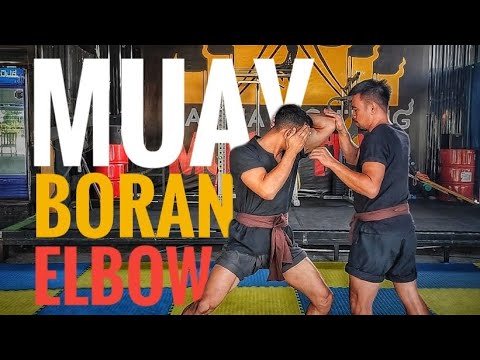
Muayboran elbow

0
Standard Sok Klap·LANNAFIGHTING·Added by Admin

#muayboran #มวยโบราณ #muaythai

1 video

Learn This Technique

No instructional courses yet for this technique.

Sign in to suggest a course.

Ratings

Danger Rating

Risk of injury to the person this technique is applied to

8
Very High8/10

Spinning generates rotational force; devastating KO power

Difficulty

Skill level needed to execute this technique reliably

Advanced
Competition Legality

Whether this technique is allowed under major competition rule sets

Illegal
WBC/Boxing — All elbow strikes prohibited in boxing {srcWBC Rules of Boxing}
WKF — Elbow strikes not a legal technique in sport karate
WKF Competition Rules 2024PDF
Kyokushin — Elbow strikes prohibited {srcIKO Kyokushin Tournament Rules}
WT — Prohibited
WT Competition Rules 2024PDF
ITF — Prohibited
ITF Competition RulesPDF
WAKO — Prohibited in all kickboxing formats
WAKO Competition RulesPDF
K-1/GLORY — Prohibited — key difference from Muay Thai {srcK-1/GLORY Kickboxing Rules}
Legal
Unified MMA — Legal — all elbow strikes permitted
Unified Rules of MMA, August 2025PDF
art of eight limbs
IFMA Muay Thai RulesPDF

Training Notes

From fighting stance, pivot on the lead foot and drive the rear hip forward to initiate the spin
Rotate 180 degrees while keeping the rear elbow at head height, fist pressed to shoulder
As you come around, the elbow point drives through the target — jaw, temple, or brow ridge
The whole rotation should take less than half a second — explosive speed is non-negotiable
The lead hand should be near the chin as you spin, providing some guard during the exposed moment
Land the support foot in a stable position and immediately reset to fighting stance
The standard sok klap is best thrown after two or three straight punches that condition the opponent to defend the centre

Common Mistakes

!Spinning slowly enough that the opponent can see it and step back or counter
!Not keeping the elbow at head height during the spin — it drops and hits the shoulder or chest instead of the head
!Landing off-balance after the spin because the feet were not planted properly
!Telegraphing with a visible weight shift onto the lead foot before spinning
!Using the sok klap from outside range — the spin must bring you into elbow distance, not past it
!Not following up if the elbow clips but does not finish — the opponent is likely stunned and you must press the advantage
!Attempting the sok klap when exhausted — the coordination demand is high and sloppy execution is dangerous

Related Techniques

Counter Techniques

Setup Chain

1Assume Fighting Stancebegin from a balanced position with guard up
2Generate Poweruse hip rotation and weight transfer for maximum force
3Execute Strikedeliver the technique to the target with correct form
4Recover to Guardreturn immediately to defensive position

Sources & References

Primary Source

Muay Thai: The Art of Fighting (Yod Ruerngsa, Khun Kao Charuad & James Cartmell, 2002)

1BookTaekwondo (Choi, 1965)

Alias sources — [1] Muay Thai Unleashed (Delp, 2006) [2] Muay Thai: The Art of Fighting (Kraitus & Kraitus, 1988) [3] Muay Thai: A Living Legacy (Vail, 2014)

2BookMuay Thai: The Art of Fighting (Kraitus, 2002)

Effectiveness sources — [1] Muay Thai: The Art of Fighting (Kraitus & Kraitus, 1988)

3OtherJapanese Combat Sports Katakana Convention

Standard katakana transliteration of Western martial arts terminology (外来語) — used in Japanese MMA, boxing, and BJJ communities

4CitationTaekwondo (Choi, 1965)

Alias sources — [1] Muay Thai Unleashed (Delp, 2006) [2] Muay Thai: The Art of Fighting (Kraitus & Kraitus, 1988) [3] Muay Thai: A Living Legacy (Vail, 2014)

5CitationMuay Thai: The Art of Fighting (Kraitus, 2002)

Effectiveness sources — [1] Muay Thai: The Art of Fighting (Kraitus & Kraitus, 1988)

Community

Athletics

Requires

close-range proficiency, hip rotation, sharp elbow point

Favours

dense bone structure at the olecranon, strong rotational core

Key muscles

core rotators, deltoids, trapezius, biceps

Frequently Asked Questions

How does the Standard Sok Klap work?

The Standard Sok Klap is the fundamental execution of the spinning back elbow, where the fighter initiates a sharp pivot on the lead foot, rotates the torso 180 degrees, and drives the rear elbow into the opponent's temple, jaw, or cheek. The striking arm remains tightly bent throughout the rotation, and the eyes locate the target as early as possible during the spin to ensure accuracy.

Where does the Standard Sok Klap come from?

The standard Sok Klap has been part of the Muay Thai technical curriculum for many decades, taught as the primary spinning elbow variation in Thai camps. Its prominence in international competition grew through the success of Thai fighters in global kickboxing promotions.

Is the Standard Sok Klap legal in competition?

Unified MMA: legal — Legal — all elbow strikes permitted; WBC/Boxing: banned — All elbow strikes prohibited in boxing; WKF: banned — Elbow strikes not a legal technique in sport karate; Kyokushin: banned — Elbow strikes prohibited; WT: banned — Prohibited; ITF: banned — Prohibited; WAKO: banned — Prohibited in all kickboxing formats; K: banned — 1/GLORY — Prohibited — key difference from Muay Thai; IFMA: legal — Legal — elbows are a core Muay Thai weapon (art of eight limbs)

How dangerous is the Standard Sok Klap?

Danger rating 8/10. Very High — spinning generates rotational force; devastating KO power

How do I set up the Standard Sok Klap?

The standard setup chain: Assume Fighting Stance → Generate Power → Execute Strike → Recover to Guard.

How do I defend against the Standard Sok Klap?

Standard counters include: Block — absorb the strike with a protective guard position / Evasion — move the target out of the strike's path / Counter-Attack — time an offensive response during the recovery phase of the strike.

What are the variants of the Standard Sok Klap?

Common variants: Horizontal elbow (swinging the elbow horizontally at head level); Uppercut elbow (rising elbow from below targeting the chin); Downward elbow (chopping the elbow straight down (Muay Thai sok tat)); Spinning elbow (full rotation before driving the elbow into the target).

How effective is the Standard Sok Klap in competition?

In MMA, Jon Jones scored a spinning elbow knockout of Alexander Gustafsson at UFC 232 (2018). Tony Ferguson is also known for his spinning elbows in UFC competition.

What are common mistakes when doing the Standard Sok Klap?

Top errors to watch for: Spinning slowly enough that the opponent can see it and step back or counter / Not keeping the elbow at head height during the spin — it drops and hits the shoulder or chest instead of the head / Landing off-balance after the spin because the feet were not planted properly / Telegraphing with a visible weight shift onto the lead foot before spinning.

What are other names for the Standard Sok Klap?

The Standard Sok Klap is also known as Sutandādo Sōku Kurappu, Standard Spinning Elbow, Sok Klap, Spinning Horizontal Elbow.