Spinning Elbow

Family

回転肘打ち(Kaiten Hiji-uchi)

Traditional

Translation: spinning elbow

Overview

The Spinning Elbow family comprises elbow strikes delivered with a full rotational turn of the body, where the striker pivots 180 to 360 degrees to build centripetal force before impacting the target with the elbow point. [1] Spinning elbows are among the most powerful striking techniques in combat sports, as the full-body rotation adds substantial angular momentum to the already dense impact surface of the elbow. [1],[2] The technique requires precise timing and distance management, because the rotation temporarily turns the striker's back to the opponent, creating vulnerability if the strike misses. [2],[3] Despite this risk, well-executed spinning elbows are extremely difficult to defend against because the rotational path obscures the angle of attack until the moment of impact. [3]

Also known as
Sok KlapTH[1]Back Elbow[2]Spinning Back Elbow[3]

History & Origin

Spinning elbow techniques originated in Muay Thai and Muay Boran, where the spinning back elbow (sok klap) was considered an advanced but devastating weapon. [1] The technique gained international fame in MMA through fighters like Tony Ferguson, Jon Jones, and Anderson Silva, who used spinning elbows to secure highlight-reel finishes. [2],[3] Korean martial arts (taekwondo and hapkido) also include spinning elbow techniques, though they are more commonly associated with the Thai fighting tradition. [3]

Effectiveness

The spinning elbow uses full body rotation to generate devastating impact force. [1]

Lineage

From Muay Thai's sok klap. [1]

Competition Record

Has produced multiple KO finishes in UFC and Muay Thai competition. [1]

Images

No images yet for this technique.

Sign in to suggest an image.

Biomechanical Mechanism

Primary ActionShort-range rotational strike — the elbow point or forearm impacts the target at close distance
Joints InvolvedShoulder (rotation and elevation), elbow (fixed angle creates the striking point), core (torque generation)
Force VectorVaries by type — horizontal (swing), vertical (rising or downward), diagonal, or spinning
Impact MechanicThe olecranon (elbow point) is extremely hard bone — concentrates force into a small area, high cutting potential

Position & Entry

From clinch rangeIn close quarters, rotate the torso and drive the elbow point into the target (head, jaw, or body)
From dirty boxingDuring collar-and-bicep clinch, create space and throw a short elbow strike
As counter (opponent ducks)When the opponent level changes or ducks, bring the elbow down or across

Videos

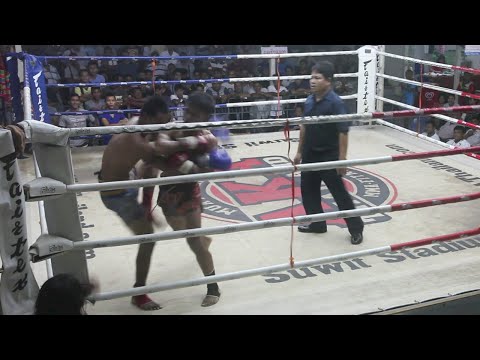
Spinning Elbow KO: Krorpet TigerMuayThai vs Pechprasong Lookthamsua

0
Spinning Elbow·Tiger Muay Thai and MMA Training Camp, Phuket, Thailand

Krorpet from Tiger Muay Thai (red gloves) ended this fight with a beautiful spinning elbow, knocking Pechprasong out col

1 video

Learn This Technique

No instructional courses yet for this technique.

Sign in to suggest a course.

Ratings

Danger Rating

Risk of injury to the person this technique is applied to

8
Very High8/10

Spinning generates rotational force; devastating KO power

Difficulty

Skill level needed to execute this technique reliably

Advanced
Competition Legality

Whether this technique is allowed under major competition rule sets

Illegal
WBC/Boxing — All elbow strikes prohibited in boxing {srcWBC Rules of Boxing}
WKF — Elbow strikes not a legal technique in sport karate
WKF Competition Rules 2024PDF
Kyokushin — Elbow strikes prohibited {srcIKO Kyokushin Tournament Rules}
WT — Prohibited
WT Competition Rules 2024PDF
ITF — Prohibited
ITF Competition RulesPDF
WAKO — Prohibited in all kickboxing formats
WAKO Competition RulesPDF
K-1/GLORY — Prohibited — key difference from Muay Thai {srcK-1/GLORY Kickboxing Rules}
Legal
Unified MMA — Legal — all elbow strikes permitted
Unified Rules of MMA, August 2025PDF
art of eight limbs
IFMA Muay Thai RulesPDF

Training Notes

The spinning elbow adds 360-degree rotational momentum to a horizontal or diagonal elbow strike
Spin on the lead foot, rotating the body in the direction of the rear hand, and deliver the elbow as you come around
The spinning elbow generates enormous force from the full-body rotation and is one of the most devastating strikes in MMA
Spot the target by looking over the lead shoulder before initiating the spin
Keep the elbow tight — fist to shoulder — throughout the rotation to maintain the compact striking surface
The spinning elbow bridges the gap between elbow range and mid-range by using the step and spin to close distance
Set up the spinning elbow after a punch combination that naturally turns your body away from the opponent

Common Mistakes

!Spinning without looking for the target — you will miss and be exposed with your back turned
!Spinning too slowly, allowing the opponent to step back or counter during the rotation
!Opening the arm angle during the spin and hitting with the forearm
!Telegraphing by visibly shifting weight before spinning
!Over-spinning past the target and completing nearly a full 360 without hitting anything
!Using the spinning elbow too often — it is a surprise weapon that loses effectiveness with repetition
!Not recovering stance after a missed spinning elbow — drill the recovery as part of the technique

Related Techniques

Counter Techniques

Setup Chain

1Close Distanceenter elbow range through clinch work or after slipping a punch
2Hip Rotationgenerate power through the core by rotating the hips
3Strike with Elbow Pointdrive the elbow through the target at the correct angle

Sources & References

Primary Source

Muay Thai: The Art of Fighting (Yod Ruerngsa, Khun Kao Charuad & James Cartmell, 2002)

1BookTaekwondo (Choi, 1965)

Alias sources — [1] Muay Thai: The Art of Fighting (Kraitus & Kraitus, 1988) [2] Muay Thai: The Art of Fighting (Kraitus & Kraitus, 1988) [3] Muay Thai: The Art of Fighting (Kraitus & Kraitus, 1988)

2BookMuay Thai: The Art of Fighting (Kraitus, 2002)

Effectiveness sources — [1] Muay Thai Unleashed (Delp, 2006)

Official karate technique names (和語/漢語)

4OtherJapanese Martial Arts Standard Terminology (武道用語)

Established Japanese martial arts naming convention — native Japanese term (和語/漢語)

5CitationTaekwondo (Choi, 1965)

Alias sources — [1] Muay Thai: The Art of Fighting (Kraitus & Kraitus, 1988) [2] Muay Thai: The Art of Fighting (Kraitus & Kraitus, 1988) [3] Muay Thai: The Art of Fighting (Kraitus & Kraitus, 1988)

6CitationMuay Thai: The Art of Fighting (Kraitus, 2002)

Effectiveness sources — [1] Muay Thai Unleashed (Delp, 2006)

Community

Athletics

Requires

close-range proficiency, hip rotation, sharp elbow point

Favours

dense bone structure at the olecranon, strong rotational core

Key muscles

core rotators, deltoids, trapezius, biceps

Sub-techniques

Notes

The spinning elbow is considered the most dangerous elbow technique due to the rotational force generated. Widely used in Muay Thai and MMA. (Delp, Muay Thai Unleashed)

Frequently Asked Questions

How does the Spinning Elbow work?

The Spinning Elbow family comprises elbow strikes delivered with a full rotational turn of the body, where the striker pivots 180 to 360 degrees to build centripetal force before impacting the target with the elbow point. Spinning elbows are among the most powerful striking techniques in combat sports, as the full-body rotation adds substantial angular momentum to the already dense impact surface of the elbow.

Where does the Spinning Elbow come from?

Spinning elbow techniques originated in Muay Thai and Muay Boran, where the spinning back elbow (sok klap) was considered an advanced but devastating weapon. The technique gained international fame in MMA through fighters like Tony Ferguson, Jon Jones, and Anderson Silva, who used spinning elbows to secure highlight-reel finishes.

Is the Spinning Elbow legal in competition?

Unified MMA: legal — Legal — all elbow strikes permitted; WBC/Boxing: banned — All elbow strikes prohibited in boxing; WKF: banned — Elbow strikes not a legal technique in sport karate; Kyokushin: banned — Elbow strikes prohibited; WT: banned — Prohibited; ITF: banned — Prohibited; WAKO: banned — Prohibited in all kickboxing formats; K: banned — 1/GLORY — Prohibited — key difference from Muay Thai; IFMA: legal — Legal — elbows are a core Muay Thai weapon (art of eight limbs)

How dangerous is the Spinning Elbow?

Danger rating 8/10. Very High — spinning generates rotational force; devastating KO power

How do I set up the Spinning Elbow?

The standard setup chain: Close Distance → Hip Rotation → Strike with Elbow Point.

How do I defend against the Spinning Elbow?

Standard counters include: Lean Back — pull the head out of elbow range to avoid the short-range strike / Clinch Tie-Up — close to body-to-body range to smother elbow strikes / Push Kick (Teep) — maintain distance to prevent elbow range from being established.

What are the variants of the Spinning Elbow?

Common variants: Horizontal elbow (swinging the elbow horizontally at head level); Uppercut elbow (rising elbow from below targeting the chin); Downward elbow (chopping the elbow straight down (Muay Thai sok tat)); Spinning elbow (full rotation before driving the elbow into the target).

How effective is the Spinning Elbow in competition?

Has produced multiple KO finishes in UFC and Muay Thai competition.

What are common mistakes when doing the Spinning Elbow?

Top errors to watch for: Spinning without looking for the target — you will miss and be exposed with your back turned / Spinning too slowly, allowing the opponent to step back or counter during the rotation / Opening the arm angle during the spin and hitting with the forearm / Telegraphing by visibly shifting weight before spinning.

What are other names for the Spinning Elbow?

The Spinning Elbow is also known as Kaiten Hiji-uchi, Sok Klap, Back Elbow, Spinning Back Elbow.