Hiji Uchi Jodan
0
Hiji Oroshi Uchi·Drammen Karate Dojo IKOK Norway
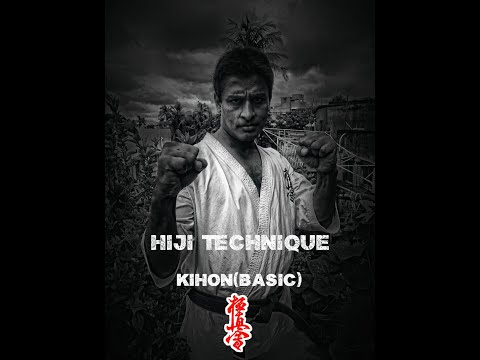
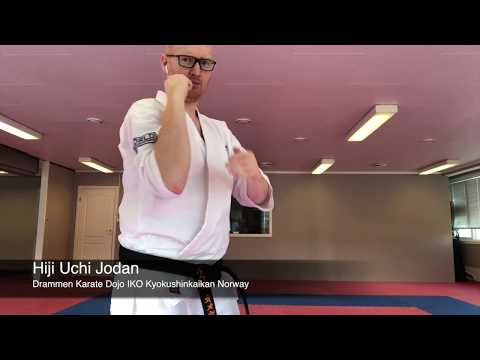
How to do a correct Hiji Uchi Jodan(Elbow strike to face).
Translation: descending elbow strike
Hiji Oroshi Uchi is a descending elbow strike delivered vertically downward onto the opponent, using gravity and body weight to amplify the impact. [1] The attacker raises the elbow above the target and drives it straight down, targeting the crown of the head, back of the neck, spine, or collarbone. [1] This is the karate equivalent of the 12-to-6 elbow in MMA — one of the most powerful short-range striking techniques due to the combination of gravity, body weight, and the hardness of the elbow bone. [1]
Descending elbow strikes appear in karate kata and were systematized by Mas Oyama in his Kyokushin curriculum. [1] The technique corresponds to the Muay Thai Sok Sab (chopping elbow). In MMA, the descending elbow (12-to-6) was banned under the Unified Rules from 2000 to 2024, making this one of the most historically controversial striking techniques. [1]
One of the most devastating short-range strikes — gravity, body weight, and the hardness of the elbow combine for extreme force concentrated on a small point. [1] The back of the neck and spine are particularly vulnerable to downward strikes. In Muay Thai and MMA, descending elbows from clinch and ground positions have ended numerous fights. [1]
Used in WKF karate kumite (controlled contact) and Kyokushin full-contact competition. Banned in boxing, TKD, and most kickboxing rulesets. Appears in MMA where legal. [1]
No images yet for this technique.
Sign in to suggest an image.
How to do a correct Hiji Uchi Jodan(Elbow strike to face).
1.HIJI JODAN ATE 2.HIJI USHIRO ATE 3.HIJI AGO UCHI 4.HIJI OROSHI UCHI
Hiji Oroshi Uchi is a downward elbow strike technique executed with specific body mechanics and targeting principles. According to Drammen Karate Dojo IKOK Norway, the technique requires significant forearm conditioning and structural integrity; practitioners must maintain a tightly clenched fist with the hand turned upward to generate maximum striking power. The strike targets the upper body, particularly the face, chin, or temple area. Proper execution involves coordinated hand positioning: one hand maintains fingers-down orientation while the opposite hand remains at approximately 90 degrees. The movement pattern emphasizes a twisting, rotational shift of the hips and hands that generates force through the kinetic chain, transitioning from stance into the striking motion. The technique appears to be employed in both traditional kata and breaking applications (tameshiwari), as suggested by video titles from the instructional corpus. While full technical details emerge primarily from the Drammen Karate Dojo source, the presence of dedicated tameshiwari instruction from Vargas Lupa Christian indicates the strike's capacity for power demonstration and board-breaking practice.
Synthesized from 3 instructors
No instructional courses yet for this technique.
Sign in to suggest a course.
Risk of injury to the person this technique is applied to
Descending elbow to the back of the neck or spine can cause serious spinal injury, concussion, or death.
Skill level needed to execute this technique reliably
Whether this technique is allowed under major competition rule sets
Oyama, M. This Is Karate / Essentials of Karate.
[1] Oyama / Funakoshi, Karate technique manuals
Official karate technique names (和語/漢語)
Established Japanese martial arts naming convention — native Japanese term (和語/漢語)
[1] Oyama / Funakoshi, Karate technique manuals
ability to position above the target, controlled descent
deltoids (raising), latissimus dorsi (driving down), core (body weight transfer)
Hiji oroshi uchi (descending elbow strike) drops the elbow vertically downward — the 'twelve-to-six' trajectory. One of the most powerful elbow strikes due to gravity assistance. Was the last banned elbow in MMA until August 2025 when the Unified Rules legalized all elbows. (Oyama, This Is Karate; Unified Rules of MMA, August 2025)
You need to tighten your hand together and make a strong fist with your striking arm, keeping it straight as you chamber and execute the strike. This generates maximum power through proper arm tension.
The face area is the primary target, specifically the chin or temple area, which are vulnerable points that the elbow strike is designed to reach.
Hiji Oroshi Uchi is a descending elbow strike delivered vertically downward onto the opponent, using gravity and body weight to amplify the impact. The attacker raises the elbow above the target and drives it straight down, targeting the crown of the head, back of the neck, spine, or collarbone.
Descending elbow strikes appear in karate kata and were systematized by Mas Oyama in his Kyokushin curriculum. The technique corresponds to the Muay Thai Sok Sab (chopping elbow).
WKF Karate: Legal: legal — controlled contact; Kyokushin: Legal: legal — full contact permitted; Unified MMA: Legal {src:Unified Rules of MMA, August 2025|/sources/Unified: legal — MMA-Rules-August-2025.pdf}; WAKO Kickboxing: Legal {src:WAKO Full Contact Rules|/sources/WAKO: legal — Full-Contact-Rules.pdf}
Danger rating 9/10. Extreme — descending elbow to the back of the neck or spine can cause serious spinal injury, concussion, or death.
The standard setup chain: Clinch → pull opponent's head down → descending elbow to back of neck → Snap down → opponent bends → immediate Hiji Oroshi → Sprawl on a takedown attempt → opponent on knees → descending elbow.
Standard counters include: Move out from under — don't stay in the downward path / Raise hands overhead to block — absorb the impact with forearms / Shoot for a takedown — close distance to prevent the downward angle.
Common variants: Standing Hiji Oroshi (from standing onto a bent opponent); Dropping Hiji Oroshi (dropping body weight with the strike); Ground Hiji Oroshi (from top position driving elbow down); Two-handed assist (other hand pushes the striking elbow down for more force).
Used in WKF karate kumite (controlled contact) and Kyokushin full-contact competition. Banned in boxing, TKD, and most kickboxing rulesets.
Top errors to watch for: Not raising the elbow high enough — reduces gravity contribution / Striking with the forearm instead of the elbow point — disperses force / Using only arm strength without body weight — weak strike / Using against a standing opponent at head height — the angle is wrong, need the opponent below you.
The Hiji Oroshi Uchi is also known as Hiji Oroshi Uchi, Hiji-Oroshi-Uchi, Descending Elbow, Otoshi Empi, Dropping Elbow Strike.