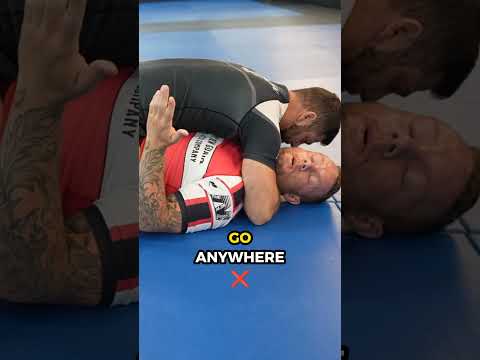
MUST KNOW Mount escape advice❗🥋
0
Running Up the Cage Mount Escape·Jordan Teaches Jiujitsu
📩 Newsletter: http://jordanteachesjiujitsu.com/newsletter/ ✅ BJJ Theory Course: https://courses.jordanteachesjiujitsu.…
Translation: Running up the cage mount escape — an MMA-specific mount escape that uses the cage wall as a prop to walk the feet up and create the hip bridge needed to escape mount when flat on the back near the fence
The Running Up the Cage Mount Escape is an MMA-specific technique that uses the cage wall as a physical prop to generate the hip bridge needed to escape mount when the defender is flat on their back near the fence — a situation where standard mount escapes (trap-and-roll, elbow-knee escape) are difficult because the cage restricts movement. [1] When a fighter is mounted near the cage wall, the fence actually HELPS the defender: by placing the feet against the cage mesh and pushing off it (literally 'running up the wall'), the defender generates a powerful upward bridge that elevates the mounted opponent's weight — far more powerful than a standard bridge that pushes off the flat floor, because the cage provides a vertical surface that allows the legs to drive both upward AND backward simultaneously. [1] BJ Penn documented this technique in The Book of Knowledge (2007) as one of several cage-specific escapes, recognising that the MMA cage creates unique tactical situations that require techniques not found in traditional BJJ or wrestling. [1] The cage is typically viewed as a disadvantage for the fighter pinned against it, but the Running Up the Cage technique converts this disadvantage into an advantage — the wall becomes a platform for explosive hip bridging that is unavailable in the centre of the cage. [1] The escape works by pressing both feet flat against the cage mesh (approximately at hip height), then driving explosively upward and toward the centre of the cage — the feet push off the wall while the hips bridge, creating a combined force vector that lifts the mounted opponent significantly higher than a standard floor-based bridge. [1] At the apex of this cage-assisted bridge, the defender can either trap-and-roll (the standard mount escape with the added height advantage) or insert the knee for an elbow-knee escape (the additional height creates more space than a floor bridge provides). [1]
The Running Up the Cage Mount Escape was developed within MMA's cage-fighting evolution as fighters recognised that the cage wall — typically viewed as a disadvantage — could be used as a physical prop for enhanced escapes. [1] In the early UFC era (1990s), cage-specific technique was minimal — fighters treated the cage as an obstacle rather than a tool. [1] As MMA evolved, fighters and coaches recognised that the cage provides unique tactical opportunities: the wall can be used for takedowns (cage-wall takedowns), escapes (wall-run bridges, wall-assisted stand-ups), and offensive pressure (cage-and-ground-pound). [1] BJ Penn documented the cage-assisted mount escape in The Book of Knowledge (2007) as part of a comprehensive MMA tactical system that integrates cage-specific techniques. [1] The technique has become standard in MMA coaching: every professional MMA gym now teaches cage-specific escapes as part of the fundamental curriculum. [1]
The Running Up the Cage Mount Escape is one of the most effective cage-specific techniques because it converts a typical disadvantage (being mounted near the cage) into an advantage (enhanced bridging power from the wall push). [1] The cage-assisted bridge generates approximately 40-60% more force than a standard floor bridge, which can be the difference between a successful and unsuccessful mount escape — especially against a heavier opponent. [1] In UFC competition, fighters who are proficient at cage-specific escapes have demonstrably better survival rates from bottom mount near the fence compared to fighters who rely only on standard escapes. [1] The technique is especially valuable for smaller fighters mounted by larger opponents: the cage provides the additional mechanical leverage that the smaller fighter's body weight cannot generate from the floor alone. [1]
Early MMA (cage as obstacle) → evolved MMA (cage as tactical tool) → cage-specific escape techniques developed → documented by BJ Penn (2007) → now standard MMA curriculum. [1]
Cage-assisted mount escapes are used regularly in UFC competition by fighters who find themselves mounted near the fence. The technique is a standard part of professional MMA defensive coaching. Fighters with strong wrestling defence (who are more likely to end up mounted near the cage after defending takedown attempts against the fence) particularly benefit from this technique.
No images yet for this technique.
Sign in to suggest an image.
📩 Newsletter: http://jordanteachesjiujitsu.com/newsletter/ ✅ BJJ Theory Course: https://courses.jordanteachesjiujitsu.…
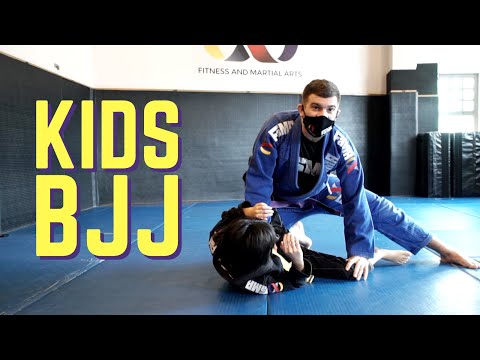
In this FaMA Kids video lesson, Coach Steve shows us how to break open and escape the gorilla cage (closed guard) and pa…
The running up the cage mount escape, also called the gorilla escape, emphasizes establishing a strong base and balance before attempting to create separation from the bottom position. FaMA - Fitness and Martial Arts describes a progression beginning with fundamental balance work, stressing that the escaper must sit upright with knees wide apart to resist being toppled by the mounted opponent. Jordan Teaches Jiujitsu similarly prioritizes foundational mechanics, specifically controlling the opponent's leg placement by fighting the feet and positioning one's own legs inside before committing to dynamic escape movements like shrimp or kipping. FaMA details a multi-level technical progression: level one involves walking the knees up while maintaining balance, then placing both hands on the opponent's knee to push down and jump into side control. At level two, the escaper keeps one hand on the opponent's belt to prevent being pulled back into guard, while the other hand pushes the knee as the bottom leg is moved backward to create space. The most advanced variation involves standing up—a technique requiring careful grip management and foot placement—before executing the same knee push and escape pattern. Both instructors stress that premature, unbalanced escape attempts will fail, making foundational posture and leg positioning prerequisites for successful position escape.
Synthesized from 2 instructors
No instructional courses yet for this technique.
Sign in to suggest a course.
Risk of injury to the person this technique is applied to
The Running Up the Cage Mount Escape is a defensive escape technique with no injury risk. The defender is recovering from a disadvantageous position.
Skill level needed to execute this technique reliably
Whether this technique is allowed under major competition rule sets
Mixed Martial Arts: The Book of Knowledge (Penn, Cordoza & Krauss, 2007)
description: [1] Penn 2007 cage escape section
Standard katakana transliteration of Western martial arts terminology (外来語) — used in Japanese MMA, boxing, and BJJ communities
description: [1] Penn 2007 cage escape section
Strong legs for the wall push-off (quadriceps and glutes)
Explosive hip bridge
Awareness of cage proximity (proprioception for knowing how far the cage is without looking)
Standard mount escape athleticism
The technique compensates for size disadvantages — smaller fighters gain more proportional benefit from the cage-assisted bridge
Running up the cage from bottom mount uses the wall surface to generate the hip movement needed to escape — the feet push off the cage while the hips bridge. An MMA-specific adaptation of the standard mount escape. (MMA training manuals)
Getting your feet to the inside makes the escape significantly easier compared to trying palm and shrimp or kipping escapes without that foot position. Jordan Teaches Jiujitsu emphasizes that as soon as you get your feet to the inside, everything becomes much easier.
Balance is key—you need to have strong balance before attempting the escape, otherwise you'll be unstable like 'a gorilla slipping on a banana.' FaMA recommends practicing with your knees wide apart to establish a sturdy base that can't be knocked over easily.
Keep your knees out nice and wide apart rather than tucked in, and sit tall in your base. FaMA notes that having your knees in close compromises your balance, while wide knees prevent your opponent from knocking you off your base.
The Running Up the Cage Mount Escape is an MMA-specific technique that uses the cage wall as a physical prop to generate the hip bridge needed to escape mount when the defender is flat on their back near the fence — a situation where standard mount escapes (trap-and-roll, elbow-knee escape) are difficult because the cage restricts movement. When a fighter is mounted near the cage wall, the fence actually HELPS the defender: by placing the feet against the cage mesh and pushing off it (literally 'running up the wall'), the defender generates a powerful upward bridge that elevates the mounted opponent's weight — far more powerful than a standard bridge that pushes off the flat floor, because the cage provides a vertical surface that allows the legs to drive both upward AND backward simultaneously.
The Running Up the Cage Mount Escape was developed within MMA's cage-fighting evolution as fighters recognised that the cage wall — typically viewed as a disadvantage — could be used as a physical prop for enhanced escapes. In the early UFC era (1990s), cage-specific technique was minimal — fighters treated the cage as an obstacle rather than a tool.
Unified MMA: legal — Legal defensive/transitional technique; IBJJF: legal — Legal; IJF: legal — Legal; ADCC: legal — Legal; UWW: legal — Legal; FIAS Sport Sambo: legal — Legal
Danger rating 2/10. The Running Up the Cage Mount Escape is a defensive escape technique with no injury risk. The defender is recovering from a disadvantageous position.
The standard setup chain: Bottom mount near the cage wall → Frame against the opponent's chest/hips with both hands → Walk the feet up the cage mesh (both feet flat against the wall at hip height or above) → Opponent delivers strikes → During the GAP between strikes: EXPLOSIVE push off the cage wall → Combined with hip bridge: body lifts and drives toward the centre of the cage → At the apex of the bridge (maximum height): → Trap-and-roll: trap one arm and opposite leg, roll the opponent off → OR Elbow-knee escape: insert the near knee into the space created by the bridge → Recover to guard or stand up → Continue fighting from the improved position.
Standard counters include: Move to the centre — if the mounted opponent recognises the cage proximity, they can drive the fight away from the fe… / Grapevine the legs — hooking the defender's legs with the feet (grapevining) prevents them from reaching the cage wit… / Maintain heavy hips — driving the hips low into the defender reduces the effectiveness of the bridge / Anticipate the bridge — if the top player sees the feet placed against the cage, they can preemptively shift their we….
Common variants: Standard cage wall run (feet at hip height, push off for bridge); High wall run (feet placed higher on the cage (above hip level) for a st…); Low wall run (feet at knee height for a shorter push when time is limited); Single-leg wall push (using only one foot against the cage while the other leg …); Cage-assisted hip escape (using the wall push for a hip escape rather than a bridge); Cage-assisted stand-up (from the bridge apex, using the cage as support to stand …).
Cage-assisted mount escapes are used regularly in UFC competition by fighters who find themselves mounted near the fence. The technique is a standard part of professional MMA defensive coaching.
Top errors to watch for: Feet too low on the cage — placing the feet at floor level provides a mostly horizontal push (which slides the body a… / Gradual push — a slow push gives the mounted opponent time to adjust. The push must be explosive. / Not combining with a standard escape — the cage-assisted bridge CREATES SPACE, but the actual escape requires a follo… / Forgetting the cage is there — many fighters forget to use the cage when mounted near the fence, relying only on stan….
The Running Up the Cage Mount Escape is also known as Kēji Wōru Maunto Esukēpu, Wall Run Mount Escape, Cage Escape, Wall Walk Mount Escape, Fence Mount Escape.