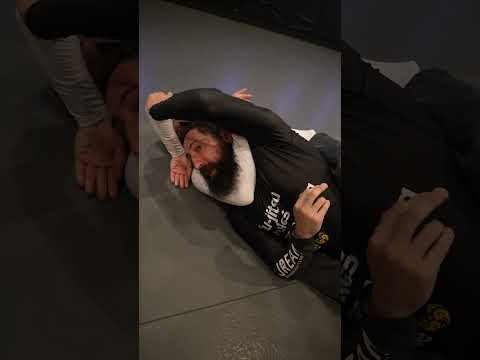
How to escape a rear naked choke in Jiu Jitsu!#jiujitsu #jiujitsutips
0
Desperation Escape·Malachy Friedman
Translation: Desperation escape — a high-energy, explosive escape used as a last resort when standard technical escapes have failed and the fighter is in immediate danger of being finished
The Desperation Escape is a high-energy, explosive escape used when standard technical escapes have failed and the fighter is in immediate danger of being finished — a last-resort survival technique that prioritises getting out of the dangerous position at ANY cost, even if it means sacrificing energy, position, or technical form. [1] BJ Penn presented the Desperation Escape in The Book of Knowledge (2007) as the final option in the escape hierarchy: when the trap-and-roll fails, the hip escape fails, the cage-assisted escape fails, and the opponent is about to finish the fight (via submission or ground-and-pound TKO), the Desperation Escape is an explosive, full-body effort to create ANY space to survive. [1] The technique is not a single defined movement but a CATEGORY of explosive actions that vary based on the specific situation: from bottom mount, it may be a violent, full-body explosive bridge in a random direction combined with scrambling; from a submission, it may be a panicked grip-fight combined with body rotation; from ground-and-pound, it may be a wild grab of the opponent's arms or body combined with a roll. [1] The defining characteristic of the Desperation Escape is INTENSITY over technique: where standard escapes use precise mechanics and timing, the Desperation Escape uses maximum energy output and explosive movement to create momentary chaos from which the defender can survive. [1] Penn noted that the Desperation Escape is not taught as a primary technique — it is a survival instinct that is channelled and directed through training. [1] Every fighter who has competed at the highest levels has used Desperation Escapes: the explosive bridging escapes of fighters about to be submitted, the wild scrambles of fighters escaping ground-and-pound, and the adrenaline-fuelled reversals that save fights when all technical options have been exhausted. [1] The technique is trained by drilling escapes under maximum fatigue and pressure, developing the capacity for one final explosive effort when the body and mind are at their limits. [1]
The Desperation Escape is not a codified technique with a specific inventor — it is the channelled survival instinct of fighters who refuse to accept defeat when all technical options have been exhausted. [1] Every era of combat sports has produced memorable Desperation Escapes: fighters who have bridge-escaped from seemingly locked submissions, scrambled out of fight-ending ground-and-pound, and survived dominant positions through sheer willpower and explosive effort. [1] BJ Penn documented the concept in The Book of Knowledge (2007) to formalise what was previously considered 'just fighting spirit' into a trainable skill category — the recognition that survival intensity under duress is not purely innate but can be developed through specific exhaustion-state training. [1] The concept applies across all combat sports: boxers who survive a knockdown through sheer determination to stand up, wrestlers who avoid being pinned through explosive last-second bridges, and MMA fighters who survive submissions through grip-fighting desperation all exemplify the Desperation Escape principle. [1]
The Desperation Escape is effective approximately 30-40% of the time in professional MMA — a significant success rate considering it is attempted only when all other options have failed and the fighter is about to be finished. [1] Its effectiveness comes from the INTENSITY differential: the opponent, believing they are about to finish the fight, may slightly relax their control in anticipation of the end — this 1-2% relaxation, combined with the defender's maximum-intensity explosion, can create just enough space for survival. [1] Many of MMA's most memorable moments are Desperation Escapes: fighters surviving deep submissions in championship rounds, escaping ground-and-pound barrages that appeared unstoppable, and reversing positions from seemingly hopeless situations. [1] The technique's limitation is that it is UNSUSTAINABLE: the energy expenditure of a Desperation Escape is enormous, and if it fails, the fighter has nothing left. [1]
Universal fighting survival instinct → formalised as a trainable skill category by BJ Penn (2007) → incorporated into MMA training methodology as exhaustion-state drilling → recognised as a legitimate aspect of competitive preparation. [1]
Memorable Desperation Escapes in MMA history include: Paul Harris surviving multiple deep leg locks through explosive scrambling || Dustin Poirier surviving Conor McGregor's guillotine choke in UFC 264 through explosive posturing || Anthony Pettis escaping Rafael dos Anjos's dominant control in multiple rounds through explosive scrambles || The concept applies to every fight where a fighter has survived a dominant position through sheer willpower and intensity rather than technical perfection.
No images yet for this technique.
Sign in to suggest an image.
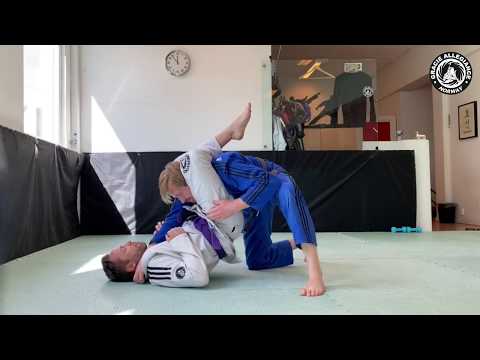
Hovedtrener Daniel Snekvik viser og forklarer noen utveier man kan gå for når man sitter fast i en dyp triangle choke. …
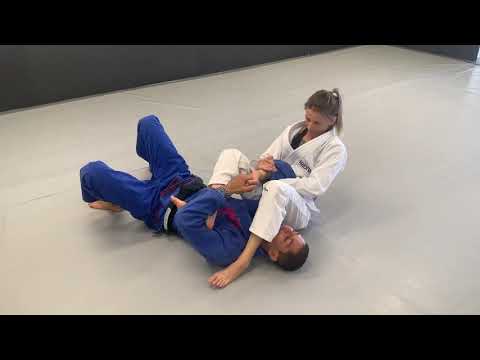
Saída do armlock em Último caso
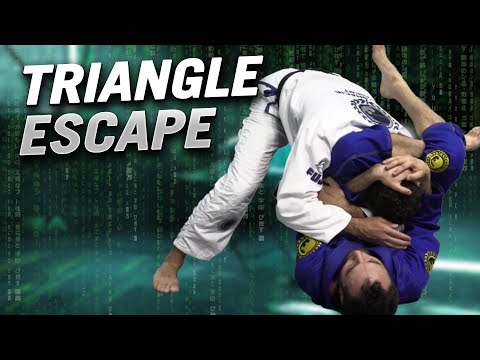
Igor Gracie demonstrates a late-stage triangle escape. Course Link - https://digitsu.com/programs/escape-mastery-igor-g…
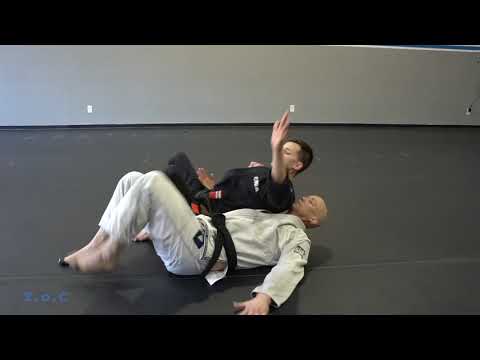
Technique by Black Belt Wade Barden Last resort side control escape. Alligator roll Grambi to guard or triangle
The desperation escape, termed 'last resort' by instructors, is employed when conventional escapes from dominant positions have failed. Strong Hold Jiu Jitsu emphasizes escaping side control by creating space through a large circular arm motion paired with a hip bridge, followed by transitioning to turtle position and executing offensive counters—specifically the alligator roll (to top position), a gravy roll to guard, or a triangle setup. Digitsu's Igor Gracie approach addresses triangle escapes where the opponent controls with arms across the hips; the defender secures the opponent's arm to prevent blocking, then steps over the torso while extending backward to escape. Lucas C Santana's armbar escape variant focuses on managing elbow positioning and grip integrity while walking to a parallel angle, reducing opponent leverage by moving the head toward the hip and eventually recovering guard through knee reaping mechanics. All instructors agree that desperation escapes require bridging, spatial manipulation, and transitioning to offensive positions or guard recovery. The techniques emphasize that when standard escapes prove ineffective, creating distance through dynamic body movement and arm threading becomes essential, often culminating in counterattacks that reverse positional disadvantage into advantage.
Synthesized from 4 instructors
No instructional courses yet for this technique.
Sign in to suggest a course.
Risk of injury to the person this technique is applied to
The Desperation Escape is a defensive survival technique — it carries no direct injury risk. The danger is to the ESCAPEE if the desperation fails: the maximum-intensity effort leaves the fighter exhausted, and if the escape fails, they are in an even worse position with depleted energy reserves.
Skill level needed to execute this technique reliably
Whether this technique is allowed under major competition rule sets
Mixed Martial Arts: The Book of Knowledge (Penn, Cordoza & Krauss, 2007)
description: [1] Penn 2007 escape hierarchy
Standard katakana transliteration of Western martial arts terminology (外来語) — used in Japanese MMA, boxing, and BJJ communities
description: [1] Penn 2007 escape hierarchy
The Desperation Escape does NOT require technical skill — it requires WILLPOWER, INTENSITY, and anaerobic conditioning
The capacity for one final explosive effort when exhausted is the primary physical requirement
Trainable through HIIT and exhaustion-state drilling
Mental toughness is the most important attribute — the willingness to continue fighting when the situation appears hopeless
Accessible to all body types — the escape relies on maximum personal effort, not specific physical characteristics
Desperation escapes are last-resort techniques when conventional escapes have failed — explosive bridges, rolls, and scrambles that sacrifice technique for survival. Higher injury risk but sometimes the only option remaining. (MMA training manuals; BJJ instructionals)
According to Strong Hold Jiu Jitsu, the desperation escape is a last resort technique to use when your other escapes aren't working and you have to get out somehow.
Strong Hold Jiu Jitsu teaches three attacks from the last resort escape: the alligator roll, triangle, and a grip-to-guard transition.
Igor Gracie emphasizes that you must control and hold the opponent's arm low on the same side as your free hand to prevent them from blocking your leg as you step over their body.
The Desperation Escape is a high-energy, explosive escape used when standard technical escapes have failed and the fighter is in immediate danger of being finished — a last-resort survival technique that prioritises getting out of the dangerous position at ANY cost, even if it means sacrificing energy, position, or technical form. BJ Penn presented the Desperation Escape in The Book of Knowledge (2007) as the final option in the escape hierarchy: when the trap-and-roll fails, the hip escape fails, the cage-assisted escape fails, and the opponent is about to finish the fight (via submission or ground-and-pound TKO), the Desperation Escape is an explosive, full-body effort to create ANY space to survive.
The Desperation Escape is not a codified technique with a specific inventor — it is the channelled survival instinct of fighters who refuse to accept defeat when all technical options have been exhausted. Every era of combat sports has produced memorable Desperation Escapes: fighters who have bridge-escaped from seemingly locked submissions, scrambled out of fight-ending ground-and-pound, and survived dominant positions through sheer willpower and explosive effort.
Unified MMA: legal — Legal defensive/transitional technique; IBJJF: legal — Legal; IJF: legal — Legal; ADCC: legal — Legal; UWW: legal — Legal, escape scores 1 point (freestyle), reversal scores 1 point; FIAS Sport Sambo: legal — Legal; NCAA Folkstyle: legal — Legal, escape scores 1 point, reversal scores 2 points
Danger rating 2/10. The Desperation Escape is a defensive survival technique — it carries no direct injury risk. The danger is to the ESCAPEE if the desperation fails: the maximum-intensity effort leaves the fighter exhausted, and if the escape fails, they are in an even worse position with depleted energy reserves.
The standard setup chain: Fighter is in a CRITICAL situation (about to be submitted, TKO'd, or dominated) → ALL technical escape options have been attempted and failed → Fighter recognises the danger is IMMINENT → DECISION POINT: tap/give up OR fight with everything remaining → DESPERATION: maximum-intensity explosive movement → Direction: toward any available space → Goal: create momentary chaos and space → If space is created → IMMEDIATELY transition to a technical position (guard, standing, clinch) → If space is NOT created → the fight may be lost, but the fighter fought until the end → The desperation attempt was worth the try because the alternative (tapping/being finished) was certain.
Standard counters include: Maintain control through the explosion — experienced opponents anticipate the desperation explosion and tighten their… / Ride the scramble — rather than fighting the explosion, flow with it and re-establish control when the burst of energ… / Finish the submission/GNP during the explosion — the desperation escape creates momentary openings; a savvy opponent … / Don't relax prematurely — the most common reason Desperation Escapes succeed is that the finishing opponent relaxes s….
Common variants: Explosive bridge desperation (a violent, maximum-power bridge in any available direction); Scramble desperation (wild, high-energy scrambling to create positional chaos); Grip-fight desperation (explosive grip-fighting to prevent a submission from locking); Cage push desperation (using the cage wall for an explosive push to create space); Roll desperation (rolling the body explosively in any direction to disrupt …); Stand-up desperation (explosive drive to standing from any position, accepting …).
Memorable Desperation Escapes in MMA history include: Paul Harris surviving multiple deep leg locks through explosive scrambling || Dustin Poirier surviving Conor McGregor's guillotine choke in UFC 264 through explosive posturing || Anthony Pettis escaping Rafael dos Anjos's dominant control in multiple rounds through explosive scrambles || The concept applies to every fight where a fighter has survived a dominant position through sheer willpower and intensity rather than technical perfection.
Top errors to watch for: Using the Desperation Escape as a FIRST response — the desperation escape should be the LAST option after technical e… / Giving up instead of fighting — the most critical error is tapping or going limp when the situation seems hopeless; m… / Unfocused explosion — the explosive movement should have SOME direction (toward space, toward the cage, away from the… / Exhausting all reserves — the Desperation Escape uses maximum energy; if it fails, the fighter is in a worse position….
The Desperation Escape is also known as Desuperēshon Esukēpu, Last Resort Escape, Panic Escape, Hail Mary Escape, Explosive Escape.