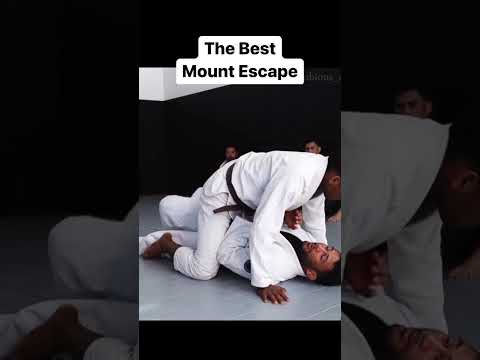
The best mount escape #bjj #jiujitsu #brazilianjiujitsu
0
Guantanamo Escape·Dubious Dom
Translation: Guantanamo escape — named after the Guantanamo Bay detention facility, referencing the difficulty of escaping from mount (being 'imprisoned' under the opponent's weight), and the specific technique needed to break free
The Guantanamo Escape is a 10th Planet Jiu-Jitsu technique for recovering half guard from the mounted position, using a specific hip movement combined with knee insertion that differs from the standard BJJ elbow-knee mount escape by incorporating the lockdown as the target recovery position rather than simply recovering full guard. [1] When mounted, the standard BJJ escape involves framing with the arms, bridging to create space, and inserting the knee to recover full guard or half guard. [1] The Guantanamo refines this by specifically targeting the lockdown half guard as the recovery position: instead of simply getting a leg inside (standard half guard), the escaping player hooks the opponent's far ankle with their outside foot during the escape, immediately establishing Eddie Bravo's signature lockdown control. [1] This distinction is tactically significant: a standard half guard recovery from mount puts the bottom player in a DEFENSIVE half guard (where they must rebuild their offensive game from scratch), while the Guantanamo's lockdown recovery puts them in an OFFENSIVE half guard (the lockdown immediately threatens sweeps via the Jean Jacques, Electric Chair, and Godfather systems). [1] The name 'Guantanamo' — in Bravo's characteristic naming style — references the idea of being imprisoned (mounted) and executing a sophisticated escape: you're not just getting out of prison (recovering guard), you're escaping into a position where you can fight back immediately (the lockdown offensive system). [1] The technique was specifically designed for the no-gi environment where gi-dependent mount escapes (collar grips, sleeve grips) are unavailable, and the lockdown provides a grip-free leg control that functions without fabric. [1]
The Guantanamo Escape was developed by Eddie Bravo as part of the 10th Planet Jiu-Jitsu escape system, specifically designed to integrate with the lockdown-based offensive half guard game that is the 10th Planet system's signature. [1] Standard BJJ mount escapes (elbow-knee escape, trap-and-roll) recover guard as a neutral position from which the bottom player must rebuild their offensive game — Bravo recognised that escaping to a specific offensive position (the lockdown) rather than a generic guard would give the bottom player an immediate tactical advantage upon escape. [1] This 'escape to offence' philosophy — choosing the recovery position based on the offensive system it feeds — represents a strategic innovation that has influenced modern no-gi grappling methodology. [1] The technique is documented in Mastering the Rubber Guard (2006) within the escape section, alongside other 10th Planet escapes (Escape from Alcatraz, Jailbreak, The Tunnel). [1]
The Guantanamo's effectiveness comes from its strategic destination: escaping mount is common (any competent grappler can hip escape to half guard), but escaping mount directly into a lockdown offensive position is rare and gives the escaping player an immediate tactical advantage. [1] The opponent, having just lost mount, must immediately deal with the lockdown's sweep threats (Jean Jacques, Electric Chair, Godfather) before they can re-establish their passing game — this transition from 'dominant top position' to 'defending sweeps from half guard' happens in a single movement if the Guantanamo is executed correctly. [1] In EBI competition, the escape-to-lockdown-to-sweep sequence has been demonstrated by 10th Planet practitioners who turn bottom mount positions into offensive sweeps within seconds. [1]
Standard BJJ mount escape (hip escape to half guard) → Eddie Bravo's modification to target the lockdown half guard specifically → Guantanamo documented in Mastering the Rubber Guard (2006) → standard mount escape for 10th Planet practitioners. [1]
Used in EBI (Eddie Bravo Invitational) competition by 10th Planet practitioners to recover from mount directly into the lockdown offensive system. The escape-to-lockdown-to-sweep chain has produced position reversals in professional no-gi competition. In MMA, the technique is used by fighters with 10th Planet training to escape ground-and-pound situations into offensive half guard.
No images yet for this technique.
Sign in to suggest an image.
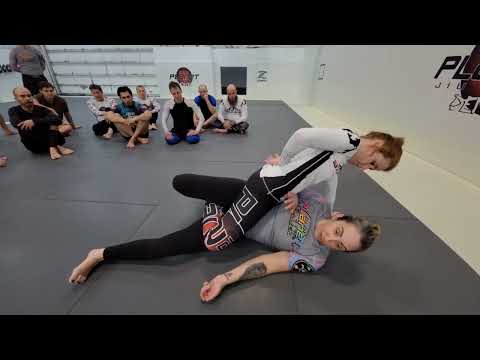
The Guantanamo escape is a mount escape variation taught within 10th Planet Jiu Jitsu lineage that prioritizes going over the opponent's leg rather than underneath it. Both Dubious Dom and 10th Planet Denver Jiu Jitsu agree on the foundational setup: the bottom player presses their head into the mat, keeps elbows low on the opponent's hips to control leg position, and gets their legs inside the opponent's legs while shifting to one hip. The key differentiator in the Guantanamo variation, as emphasized by 10th Planet Denver, occurs when the top player flattens their foot to prevent the under-leg escape (Alcatraz). Instead of going under, the bottom player uses their heel to pull the opponent's leg between their own legs and applies pressure with the elbow. 10th Planet Denver introduces an additional technique—a "motorcycle" motion where the bottom player slides the knee without direct elbow pressure, which can be more effective against strong bases. Both instructors acknowledge the need for precise leg positioning to achieve a double-under control and maintain control of the opponent's lower body. The escape concludes with the bottom player establishing a solid base and transitioning to a dominant position.
Synthesized from 2 instructors
No instructional courses yet for this technique.
Sign in to suggest a course.
Risk of injury to the person this technique is applied to
The Guantanamo is a defensive escape technique with no injury risk to either participant. The technique involves positional recovery, not strikes or submissions.
Skill level needed to execute this technique reliably
Whether this technique is allowed under major competition rule sets
Mastering the Rubber Guard (Bravo, 2006)
description: [1] Bravo 2006 Guantanamo section
Standard katakana transliteration of Western martial arts terminology (外来語) — used in Japanese MMA, boxing, and BJJ communities
description: [1] Bravo 2006 Guantanamo section
Good hip escape ability (the foundation of the technique)
Leg dexterity for the far-ankle hook during the escape
Core strength for the shrimping motion under the opponent's weight
Does NOT require rubber guard flexibility (the lockdown operates from half guard, not high guard)
Accessible to practitioners who cannot do rubber guard but want 10th Planet's lockdown offensive system
The Guantanamo escape is a 10th Planet Jiu-Jitsu back escape — part of Eddie Bravo's named escape system. 10th Planet techniques appear in 33 passages across 5 books. (5 books; Bravo, 10th Planet system)
Press your head firmly into the mat to prevent your opponent from getting their hand under your head, and bring your elbows low on their hips so your elbows touch their thighs to keep their legs compressed.
Work your legs inside of theirs, then put yourself on one hip and use your heel to pull their leg on top of yours, which allows you to lever against their leg and begin underhooking or framing their elbow.
The Guantanamo escape involves going over the leg, whereas variations like Alcatraz go under, representing different pathways to dismount.
The Guantanamo Escape is a 10th Planet Jiu-Jitsu technique for recovering half guard from the mounted position, using a specific hip movement combined with knee insertion that differs from the standard BJJ elbow-knee mount escape by incorporating the lockdown as the target recovery position rather than simply recovering full guard. When mounted, the standard BJJ escape involves framing with the arms, bridging to create space, and inserting the knee to recover full guard or half guard.
The Guantanamo Escape was developed by Eddie Bravo as part of the 10th Planet Jiu-Jitsu escape system, specifically designed to integrate with the lockdown-based offensive half guard game that is the 10th Planet system's signature. Standard BJJ mount escapes (elbow-knee escape, trap-and-roll) recover guard as a neutral position from which the bottom player must rebuild their offensive game — Bravo recognised that escaping to a specific offensive position (the lockdown) rather than a generic guard would give the bottom player an immediate tactical advantage upon escape.
Unified MMA: legal — Legal defensive/transitional technique; IBJJF: legal — Legal; IJF: legal — Legal; ADCC: legal — Legal; UWW: legal — Legal; FIAS Sport Sambo: legal — Legal
Danger rating 2/10. The Guantanamo is a defensive escape technique with no injury risk to either participant. The technique involves positional recovery, not strikes or submissions.
The standard setup chain: Bottom mount position → Frame on the opponent's hips/chest to create initial space → Bridge slightly (or use the opponent's strike attempt as a timing cue in MMA) → Hip escape (shrimp) laterally → Insert the near knee between the bodies as a barrier → SIMULTANEOUSLY: hook the opponent's far ankle with the outside foot → Figure-four the legs to establish the lockdown → Lockdown half guard achieved → IMMEDIATELY: Jaws of Life (hip whip to create space for the underhook) → Jean Jacques Sweep or Electric Chair → Arrive in top position from a mount bottom start.
Standard counters include: Maintain heavy hips — driving the hips low into the bottom player reduces the space available for the hip escape / Grapevine the legs — hooking the bottom player's legs with the feet (grapevining) from mount prevents the knee insertion / High mount — climbing to high mount (knees in armpits) places the weight above the hip escape zone, making the shrimp… / Extract the leg immediately — if the bottom player begins to establish the lockdown, immediately extract the trapped ….
Common variants: Standard Guantanamo (hip escape to lockdown half guard from full mount); Quick Guantanamo (abbreviated version using minimal hip escape when the opp…); Guantanamo from high mount (modified hip escape targeting the lower body when the opp…); Guantanamo to Electric Chair (completing the escape and immediately entering the Electr…); Guantanamo to Jean Jacques (completing the escape and immediately entering the Jean J…); MMA Guantanamo (integrating the escape with defensive hand positioning ag…).
Used in EBI (Eddie Bravo Invitational) competition by 10th Planet practitioners to recover from mount directly into the lockdown offensive system. The escape-to-lockdown-to-sweep chain has produced position reversals in professional no-gi competition.
Top errors to watch for: Escaping to standard half guard instead of lockdown — the most common error: performing a standard mount escape and a… / Trying to hook the far ankle AFTER the escape — the hook must happen DURING the hip escape, not after; delaying gives… / Insufficient hip escape — a weak or shallow shrimp doesn't create enough space for the knee to insert; the hips must … / Not framing before escaping — attempting the hip escape without first creating space (by framing on the opponent's hi….
The Guantanamo Escape is also known as Guantanamo Esukēpu, Guantanamo, Mount to Half Guard Escape, 10th Planet Mount Escape, Hip Movement Mount Recovery.