Strike & defenceLocksClose rangeFighting multiple people
Distance
CloseMiddleLong
Overview
Standard Grip Fighting for armlock defence involves clasping both hands together in a Gable grip, S-grip, or figure-four configuration to prevent the opponent from isolating and straightening the targeted arm. [1] The defender grabs their own wrist, hand, or gi sleeve with the free hand, creating a connection that the opponent must break before they can apply the armlock. [1],[2] While maintaining the grip, the defender works to improve their position — either stacking the opponent, turning into them, or working to extract the elbow past the opponent's legs. [2],[3]
Also known as
Basic Grip Fight[1]Standard Kumi KataJP[2]Hand Fighting Defence[3]
Standard grip fighting for armlock defence is one of the most fundamental defensive techniques in all grappling arts, practised since the earliest development of armlock techniques. [1] It remains the first defensive response taught for armbar defence in BJJ and judo. [2],[3]
Country of origin· shown in random order
🇧🇷BrazilBJJ, MMA
🇯🇵JapanBJJ, Judo
🇺🇸USAMMA, Catch Wrestling
🇷🇺RussiaSambo
🇬🇧EnglandCatch Wrestling
Effectiveness
Grip fighting is the first line of defence against all arm attacks, as preventing the opponent from establishing dominant grips makes it extremely difficult for them to isolate and attack the arm. [1] In judo, grip fighting (kumi-kata) is considered so important that entire training sessions are devoted to it, and the rules specifically address stalling through negative grip fighting. [2]
Lineage
Grip fighting as a formalised skill is central to both judo (kumi-kata) and BJJ, with the judo tradition of systematic grip fighting dating back to Jigoro Kano's original Kodokan curriculum. [1] In BJJ, the development of grip fighting as a specific defensive skill accelerated with the growth of gi competition in the 1990s and 2000s. [2]
Competition Record
Grip fighting is a fundamental component of judo and gi BJJ competition. [1]
Images
No images yet for this technique.
Sign in to suggest an image.
Biomechanical Mechanism
Primary Action — Preventing or reducing the effect of an incoming attack through physical interception, evasion, or structural positioning
Joints Involved — Varies by defence type — blocks use arms/shins, evasions use head/body movement, sprawls use hips
Force Vector — Opposing or tangential to the attack — either absorbing, redirecting, or evading the incoming force
Defensive Principle — Economy of motion — the best defence uses minimal movement to neutralise the maximum threat
Position & Entry
From clinch or ground — When the opponent secures a controlling grip, use two-on-one, stripping, or peeling motions to break their hold
As preemptive defence — Break the opponent's grip before they can execute their intended technique
Variants
Standard defence — primary defensive technique from the most common position
Reactive defence — triggered by the opponent's attack, minimal movement for maximum protection
Proactive defence — anticipating the attack and positioning to neutralise it early
Counter defence — using the defensive movement to create an immediate counter-attack opportunity
✓The standard grip fighting defence uses two-on-one control to strip the opponent's dominant grip and immediately reposition (Danaher, Armbar Series, 2019)
✓Grip one wrist with both hands, peel toward the thumb, and immediately swim your freed arm to a safe position
✓The key timing is to break grips before the opponent establishes a secondary control — once they have two attachment points, breaking becomes much harder
✓In closed guard, fight sleeve grips immediately upon establishment — the opponent needs sleeve control to set up most armbars
✓Against collar grips, use a same-side hand to strip while the opposite hand blocks re-gripping
✓The grip break should flow into your next action: break grip → establish your own grip or posture up
✓Drill grip breaks as standalone skills — most grapplers only practice them incidentally during rolling
Common Mistakes
!Breaking the grip but staying in the same position — the grip break must lead to repositioning or posture recovery
!Using fine motor grip strips under pressure — gross motor two-on-one breaks work better under adrenaline
!Focusing on the non-dominant grip — identify which grip is the primary threat and attack that one first
!Breaking grips slowly — grip breaks must be explosive; a slow pull lets the opponent adjust and re-grip
!Not using your legs during grip fighting — feet on hips or biceps create distance that makes gripping harder
!Allowing the opponent to chain grips — break each grip as it's established, don't let them accumulate controls
!Grip fighting with straight arms — keep elbows bent for mechanical advantage
strong hands and forearms, quick stripping motions
Key muscles
forearm flexors/extensors, wrist rotators, biceps
Frequently Asked Questions
Why is controlling the sleeve so important in grip fighting?
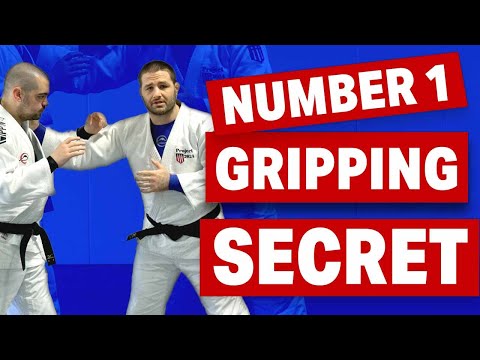
Travis Stevens emphasizes that sleeve control is critical because a solid grip that your opponent can't break allows you to prevent them from turning into their throws while still being able to execute your own techniques. This gives you control over your opponent's movement and options.
How does sleeve grip help defend against throws?
According to Travis Stevens, controlling the sleeve prevents your opponent from turning in the direction they want to throw. For example, a right-handed player's sleeve grip will prevent a right-handed opponent from turning to their right to execute a throw.
What's the downside to gripping the chest first?
Travis Stevens notes that the main disadvantage of prioritizing a chest grip is that your opponent can counter with a Maki Komi throw by throwing their hand over the top in the opposite direction.
How does the Standard Grip Fighting work?
Standard Grip Fighting for armlock defence involves clasping both hands together in a Gable grip, S-grip, or figure-four configuration to prevent the opponent from isolating and straightening the targeted arm. The defender grabs their own wrist, hand, or gi sleeve with the free hand, creating a connection that the opponent must break before they can apply the armlock.
Where does the Standard Grip Fighting come from?
Standard grip fighting for armlock defence is one of the most fundamental defensive techniques in all grappling arts, practised since the earliest development of armlock techniques. It remains the first defensive response taught for armbar defence in BJJ and judo.
Is the Standard Grip Fighting legal in competition?
Unified MMA: legal — Legal defensive technique; IBJJF: legal — Legal — defensive techniques are fundamental to grappling; IJF: legal — Legal defensive action; ADCC: legal — Legal; UWW: legal — Legal defensive technique; FIAS Sport Sambo: legal — Legal
How dangerous is the Standard Grip Fighting?
Danger rating 3/10. Moderate — submission defence involves resisting joint locks/chokes; risk of injury if defence fails or is delayed
How do I set up the Standard Grip Fighting?
The standard setup chain: Anticipate the Attack → Execute Defence → Recover Stance → Counter or Disengage.
How do I defend against the Standard Grip Fighting?
Standard counters include: Timing — attack when the defence is recovering or between movements / Feint — use deception to create openings in the defensive structure / Angle Change — attack from an unexpected angle that the defence does not cover.
What are the variants of the Standard Grip Fighting?
Common variants: Standard defence (primary defensive technique from the most common position); Reactive defence (triggered by the opponent's attack, minimal movement for …); Proactive defence (anticipating the attack and positioning to neutralise it …); Counter defence (using the defensive movement to create an immediate count…).
How effective is the Standard Grip Fighting in competition?
Grip fighting is a fundamental component of judo and gi BJJ competition.
What are common mistakes when doing the Standard Grip Fighting?
Top errors to watch for: Breaking the grip but staying in the same position — the grip break must lead to repositioning or posture recovery / Using fine motor grip strips under pressure — gross motor two-on-one breaks work better under adrenaline / Focusing on the non-dominant grip — identify which grip is the primary threat and attack that one first / Breaking grips slowly — grip breaks must be explosive; a slow pull lets the opponent adjust and re-grip.
What are other names for the Standard Grip Fighting?
The Standard Grip Fighting is also known as Sutandādo Gurippu Faitingu, Basic Grip Fight, Standard Kumi Kata, Hand Fighting Defence.