Grip Fighting Overview: The Key to Controlling Offense
0
Grip Fighting Defence·JonThomasBJJ
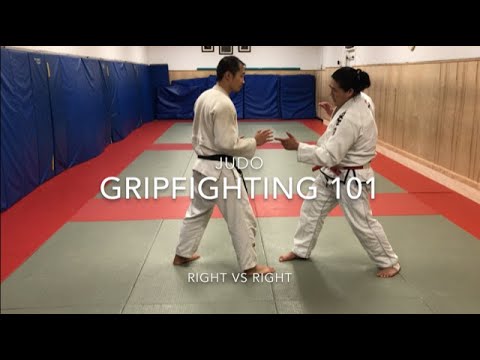
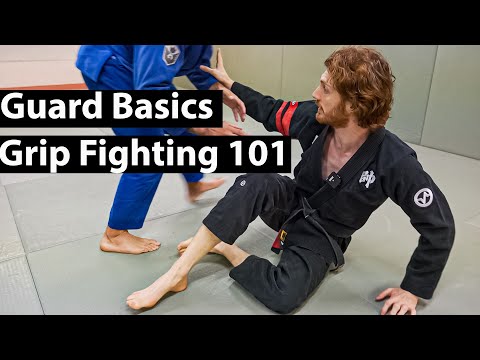
This video I go over critical aspects of winning the grip fight. A lot of people struggle to find establish offense in …
Translation: grip fighting defence
The Grip Fighting Defence subfamily covers armlock defence techniques where the defender prevents the submission by maintaining grip connections that stop the opponent from isolating and extending the arm. [1] The most common grip defence is clasping the hands together — Gable grip, S-grip, or interlocking fingers — preventing the opponent from straightening the arm for an armbar. [1],[2] Grip fighting defence is the first line of armlock defence, buying time while the defender works for a positional escape. [2],[3]
Grip fighting as armlock defence is one of the most instinctive defensive reactions in grappling and has been taught since the earliest joint lock systems were developed. [1] Modern BJJ has refined grip fighting defence into a systematic approach with specific grip types recommended for each armlock scenario. [2],[3]
Grip fighting defence strips and prevents the opponent from establishing dominant grips for armlocks. [1]
Grip fighting is fundamental in judo and gi BJJ. [1]
Essential in judo and BJJ competition. [1]
No images yet for this technique.
Sign in to suggest an image.
This video I go over critical aspects of winning the grip fight. A lot of people struggle to find establish offense in …
Great for BJJ too. This is the Basic Judo grip fighting 101 for righty vs righty.
No instructional courses yet for this technique.
Sign in to suggest a course.
Risk of injury to the person this technique is applied to
Submission defence involves resisting joint locks/chokes; risk of injury if defence fails or is delayed
Skill level needed to execute this technique reliably
Whether this technique is allowed under major competition rule sets
Boxing (Edwin Haislet, 1940)
Alias sources — [1] Jiu-Jitsu University (Ribeiro, 2008) [2] Fundamentals of Brazilian Jiu-Jitsu (Danaher, 2012) [3] Kodokan Judo (Kano, 1986)
Effectiveness sources — [1] Kodokan Judo (Kano, 1986)
Standard katakana transliteration of Western martial arts terminology (外来語) — used in Japanese MMA, boxing, and BJJ communities
Alias sources — [1] Jiu-Jitsu University (Ribeiro, 2008) [2] Fundamentals of Brazilian Jiu-Jitsu (Danaher, 2012) [3] Kodokan Judo (Kano, 1986)
Effectiveness sources — [1] Kodokan Judo (Kano, 1986)
grip fighting technique, forearm endurance, timing
strong hands and forearms, quick stripping motions
forearm flexors/extensors, wrist rotators, biceps
Every move, in any martial art, shares a few universal traits. Mix and match below to pinpoint the right tool — or compare equivalents across styles.
Keep your forward hand active while protecting your lapel by bringing that shoulder back. Shintaro Higashi emphasizes never reaching with your back hand, as this gives your opponent an easy turn-and-throw opportunity.
Turn your shoulders so your sleeve-side hand is slightly further away, then control that side of the body first while protecting your own same-side. This prevents your opponent from easily securing both hands on you.
Rather than staying static trying to get two hands on, Shintaro Higashi recommends executing a couple of attacks and then improving your position over the back. If you go underneath and your opponent comes over the back, you end up even—so maintain the initiative.
The Grip Fighting Defence subfamily covers armlock defence techniques where the defender prevents the submission by maintaining grip connections that stop the opponent from isolating and extending the arm. The most common grip defence is clasping the hands together — Gable grip, S-grip, or interlocking fingers — preventing the opponent from straightening the arm for an armbar.
Grip fighting as armlock defence is one of the most instinctive defensive reactions in grappling and has been taught since the earliest joint lock systems were developed. Modern BJJ has refined grip fighting defence into a systematic approach with specific grip types recommended for each armlock scenario.
Unified MMA: legal — Legal defensive technique; IBJJF: legal — Legal — defensive techniques are fundamental to grappling; IJF: legal — Legal defensive action; ADCC: legal — Legal; UWW: legal — Legal defensive technique; FIAS Sport Sambo: legal — Legal
Danger rating 3/10. Moderate — submission defence involves resisting joint locks/chokes; risk of injury if defence fails or is delayed
The standard setup chain: Anticipate the Attack → Execute Defence → Recover Stance → Counter or Disengage.
Standard counters include: Timing — attack when the defence is recovering or between movements / Feint — use deception to create openings in the defensive structure / Angle Change — attack from an unexpected angle that the defence does not cover.
Common variants: Standard defence (primary defensive technique from the most common position); Reactive defence (triggered by the opponent's attack, minimal movement for …); Proactive defence (anticipating the attack and positioning to neutralise it …); Counter defence (using the defensive movement to create an immediate count…).
Essential in judo and BJJ competition.
Top errors to watch for: Trying to break grips by pulling straight away — circular motion toward the thumb is far more effective / Using one hand to fight a two-handed grip — you need two-on-one to break an established grip / Ignoring grip fighting and focusing only on escaping the submission — prevention through grip fighting is easier than… / Breaking one grip but allowing the opponent to immediately re-grip — break and reposition simultaneously.
The Grip Fighting Defence is also known as Gurippu Faitingu Difensu, Grip Break, Hand Fighting, Kumi Kata Defence.