The Genius of the Cross Guard – Mastering Pressure and Patience
0
Cross Block·The Modern Martial Artist
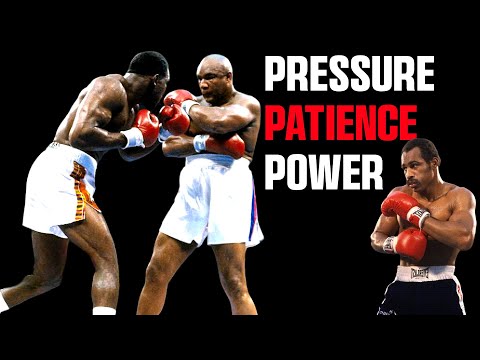
The Genius of the Cross Guard: Mastering Pressure and Patience in the Ring! Explore the genius and effectiveness of the …
Translation: cross block
The Cross Block (juji uke) crosses both forearms in front of the head to create an X-shaped blocking structure that intercepts powerful overhead or straight attacks. [1] The cross block uses both arms simultaneously, creating a stronger barrier than single-arm blocks at the cost of momentarily occupying both hands in defence. [1],[2] The cross block is used against high-power attacks like axe kicks, overhead hammerfists, or weapon strikes where a single-arm block might be insufficient. [2],[3]
The cross block provides strong structural defence against overhead and axe-kick attacks by creating an X-shaped barrier with both forearms. [1] However, it ties up both hands simultaneously, leaving the defender unable to counter-attack during the block and vulnerable to feints that draw the cross block before a real attack targets the body. [2]
The cross block appears in traditional karate (juji uke) and taekwondo forms, described in Funakoshi's Karate-Do Kyohan (1935) and in early taekwondo manuals. [1]
The cross block (juji uke) is used in karate competition. [1]
No images yet for this technique.
Sign in to suggest an image.
The Genius of the Cross Guard: Mastering Pressure and Patience in the Ring! Explore the genius and effectiveness of the …
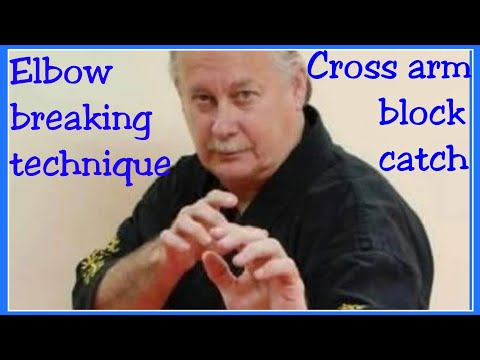
Pat Munk's seminar held in Atlanta before the USA Martial Arts Hall of Fame. Pat prefers to fight in a phone booth so th…
The cross block is a defensive technique employing both arms in a crossed or overlapping configuration to protect against incoming strikes, particularly to the head and upper body. Taekwondo Lifestyle's coverage, drawing from Ed Parker Kenpo lineage via Grand Master Pat Munk, emphasizes the mechanics of combining a high block with a catching hand, where one arm executes the primary block while the opposite arm positions itself between defender and attacker to prevent the strike from slipping off. This dual-element approach—blocking with power and catching with the secondary arm—increases defensive solidity compared to single-arm techniques. The Modern Martial Artist provides extensive context on cross guard application across boxing, Muay Thai, and MMA, detailing how the crossed-arm position protects both sides of the body simultaneously, citing historical practitioners like Joe Frazier, Archie Moore, and George Foreman. This source emphasizes that while the cross block leaves certain openings (particularly to high-volume attacks and body shots), it becomes powerful when paired with head movement, footwork, and offensive setup. Len Tran's karate-focused instruction identifies the cross block conceptually within a broader blocking taxonomy, though his emphasis centers on inside and outside blocks as more practical street-applicable alternatives to traditional high blocks. All three instructors agree the cross block requires proper positioning and follow-up—blocking alone proves insufficient without transitional offense or evasion.
Synthesized from 3 instructors
No instructional courses yet for this technique.
Sign in to suggest a course.
Risk of injury to the person this technique is applied to
Blocking and parrying absorb strike force; hand/forearm injury from repeated blocking
Skill level needed to execute this technique reliably
Whether this technique is allowed under major competition rule sets
Karate-Do Kyohan: The Master Text (Gichin Funakoshi, 1935)
Alias sources — [1] Karate-Do Kyohan (Funakoshi, 1935) [2] The Kyokushin Way (Oyama, 1979) [3] Dynamic Karate (Nakayama, 1966)
Effectiveness sources — [1] Karate-Do Kyohan (Funakoshi, 1935) [2] Dynamic Karate (Nakayama, 1966)
Official karate technique names (和語/漢語)
Established Japanese martial arts naming convention — native Japanese term (和語/漢語)
Alias sources — [1] Karate-Do Kyohan (Funakoshi, 1935) [2] The Kyokushin Way (Oyama, 1979) [3] Dynamic Karate (Nakayama, 1966)
Effectiveness sources — [1] Karate-Do Kyohan (Funakoshi, 1935) [2] Dynamic Karate (Nakayama, 1966)
forearm conditioning, reaction speed, structural stability
dense bone structure, strong forearms
forearm flexors/extensors, deltoids, biceps, core (absorbing impact)
With a cross block, you use one arm to block while the other arm catches and controls the incoming strike, preventing it from slipping away like it would with a standard high block. Grand Master Pat Munk emphasizes that you put emphasis on the blocking part while your catch hand keeps the opponent's limb in place so you can follow up.
The Modern Martial Artist notes that in a cross guard position, your lead arm handles the blocking while your power-side arm remains free to generate explosive counterattacks. This allows you to block incoming strikes while staying in position to immediately launch your own offense.
Since both your arms are occupied in a crossed position, high-volume, multi-leveled offense can expose defensive gaps—your opponent can overwhelm the crossed arms by punching to areas you can't cover simultaneously, and it takes more time to set up your own punches from this guard angle.
The Cross Block (juji uke) crosses both forearms in front of the head to create an X-shaped blocking structure that intercepts powerful overhead or straight attacks. The cross block uses both arms simultaneously, creating a stronger barrier than single-arm blocks at the cost of momentarily occupying both hands in defence.
The cross block (juji uke) appears in traditional karate kata and is found across multiple Japanese martial arts including jujutsu and aikido. The technique is also used in self-defence systems as a high-force blocking method for emergency situations.
Unified MMA: legal — Legal defensive technique; WBC/Boxing: legal — Legal — blocking and evasion are core boxing skills; WKF: legal — Legal — blocking is a fundamental karate skill; Kyokushin: legal — Legal; WT: legal — Legal; WAKO: legal — Legal; K: legal — 1/GLORY — Legal; IFMA: legal — Legal
Danger rating 3/10. Moderate — blocking and parrying absorb strike force; hand/forearm injury from repeated blocking
The standard setup chain: Read the Attack → Position the Guard → Absorb Impact → Counter or Reset.
Standard counters include: Feint — fake an attack to draw out the block then strike the opening / Level Change — switch attack levels to go around the blocking defence / Combination — throw multiple strikes to overwhelm the single defensive response.
Common variants: High block (forearm raised above the head to protect against overhead…); Low block (forearm driven downward to deflect kicks or body strikes); Cross block (forearm crosses the body to protect the opposite side); Double forearm block (both forearms together for maximum coverage).
The cross block (juji uke) is used in karate competition.
Top errors to watch for: Using the cross block as a primary defence instead of a last resort — it ties up both hands and sacrifices counter-st… / Crossing the arms with limp wrists — the wrists must be firm and the forearms tensed to absorb impact / Placing the cross too far from the body — keep the block close to the target being protected for structural strength / Not transitioning after the block — the cross block is momentary; immediately move to a better defensive or offensive….
The Cross Block is also known as Jūji Uke, Juji Uke, X-Block, Scissor Block.