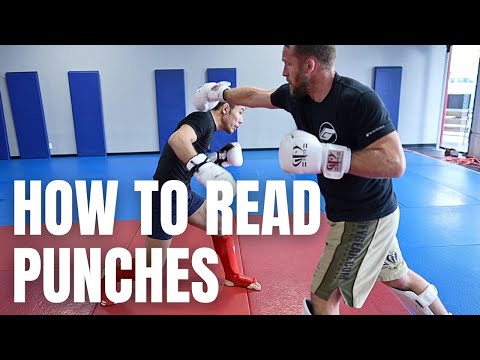
3 Beginner Tips for Reading Punches & Improving Head Movement
0
Jab-Teep Range Management·Jeff Chan MMAShredded
0:00 - Start 0:11 - Tip 1 2:37 - Tip 2 3:18 - Tip 3 Start dodging punches like a pro with this head movement program: h…
Translation: jab/teep range management
Jab-Teep Range Management uses the longest-range striking tools — the jab (boxing) and teep/push kick (Muay Thai) — as defensive weapons to maintain distance and prevent the opponent from closing range. [1] The jab and teep serve as defensive probes that occupy the opponent's approach line, forcing them to deal with incoming strikes before they can close to their preferred range. [1],[2] This range management technique is the practical application of out-fighting theory, using offensive tools in a defensive role to control the fight's spatial dynamics. [2],[3]
Using the jab as a range management tool has been a fundamental boxing strategy for over a century, with fighters like Larry Holmes and Lennox Lewis building careers around the defensive jab. [1] The teep serves the same function in Muay Thai, where controlling range with the push kick is a foundational defensive skill. [2],[3]
The jab and teep (push kick) are the primary tools for controlling fighting distance, keeping opponents at the end of the defender's longest weapon to prevent them from entering effective range. [1] The teep is especially effective in Muay Thai, where it serves as both a scoring technique and a range management tool that can disrupt an opponent's rhythm and balance. [2]
The use of the lead hand for range control is as old as boxing itself, while the teep's role in distance management is central to the Muay Thai tradition, described in foundational Thai boxing texts. [1] Samart Payakaroon and Dieselnoi Chor Thanasukarn are widely credited with demonstrating the highest-level teep-based distance control in Muay Thai history. [2]
Dieselnoi Chor Thanasukarn's dominant use of teep range control contributed to his undefeated Lumpinee Stadium championship reign at 160 lbs, retiring undefeated in the division because no challengers remained. [1]
No images yet for this technique.
Sign in to suggest an image.
0:00 - Start 0:11 - Tip 1 2:37 - Tip 2 3:18 - Tip 3 Start dodging punches like a pro with this head movement program: h…
UFC Middleweight Champion Israel "The Last Stylebender" Adesanya, breaks down and explains how to use feints to set up y…
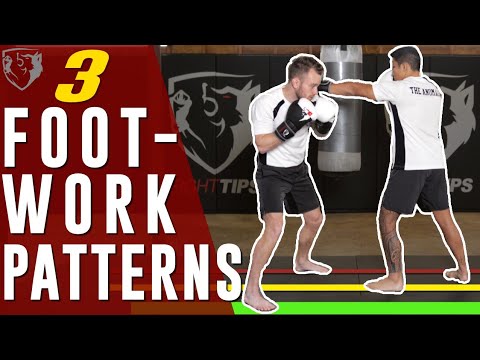
Proper footwork can be challenging to master, but once you find the proper balance and coordination, you’ll find that yo…
Jab-teep range management operates as a distance-control system wherein fighters use the jab as a measuring tool to probe optimal striking range while maintaining the ability to retreat safely. Jeff Chan (MA Shredded) emphasizes maintaining an outside distance where opponents are forced to throw straight punches rather than wider circular strikes, making incoming attacks easier to read and counter. He advocates lowering the hands to bait punches, then reading the opponent's lead hand through parrying before slipping or rolling away from the counter hand—a principle rooted in tactile sensitivity similar to Wing Chun. Chan stresses synchronizing an exit plan with every offensive movement to avoid predictable patterns. FightTIPS (Shane) describes the probing step as stepping in on the jab to achieve range, then immediately retreating before the opponent can counter, comparing the timing to stepping on a spider—quick entry and faster exit. The foot and hand must synchronize, with the step completed as the jab extends and the retreat initiated as the hand retracts. Stylebender (FREESTYLEBENDER) contributes the concept of feinting to deceive opponents about attack timing, using front-side feints to disguise jabs and manipulate defensive reactions. These instructors collectively teach that jab-teep range management combines tactical distance establishment, rapid entry-exit timing, and feint-based deception to keep opponents guessing while maintaining safety.
Synthesized from 3 instructors
No instructional courses yet for this technique.
Sign in to suggest a course.
Risk of injury to the person this technique is applied to
Evasion techniques avoid contact entirely; lowest injury risk of all techniques
Skill level needed to execute this technique reliably
Whether this technique is allowed under major competition rule sets
Boxing (Edwin Haislet, 1940)
Alias sources — [1] Championship Fighting (Dempsey, 1950) [2] Muay Thai: The Most Distinguished Art of Fighting (Kraitus, 1988) [3] Muay Thai: The Most Distinguished Art of Fighting (Kraitus, 1988)
Effectiveness sources — [1] Championship Fighting (Dempsey, 1950) [2] Muay Thai: The Most Distinguished Art of Fighting (Kraitus, 1988)
Mixed Japanese-Western terminology — combines traditional Japanese terms with katakana loanwords
Alias sources — [1] Championship Fighting (Dempsey, 1950) [2] Muay Thai: The Most Distinguished Art of Fighting (Kraitus, 1988) [3] Muay Thai: The Most Distinguished Art of Fighting (Kraitus, 1988)
Effectiveness sources — [1] Championship Fighting (Dempsey, 1950) [2] Muay Thai: The Most Distinguished Art of Fighting (Kraitus, 1988)
agility, quick directional changes, balance in motion
light feet, strong calves and ankles
calves, tibialis anterior, quadriceps, hip stabilisers
Start by blocking or parrying the first punch to make contact, then focus on reading the other hand. Jeff Chan explains that once you've made contact with a parry, you can see the follow-up punch coming and be ready to slip or move accordingly.
Jeff Chan calls this your 'exit plan'—you need to know where your head will go after you punch so you're not vulnerable to counters. It's also crucial to vary your exit movements so opponents can't predict and exploit your habits.
A common mistake is stepping forward on the jab but forgetting to maintain proper range with the right hand, causing you to get too wide. You want to make sure you're close enough to land both the jab and cross effectively.
Jab-Teep Range Management uses the longest-range striking tools — the jab (boxing) and teep/push kick (Muay Thai) — as defensive weapons to maintain distance and prevent the opponent from closing range. The jab and teep serve as defensive probes that occupy the opponent's approach line, forcing them to deal with incoming strikes before they can close to their preferred range.
Using the jab as a range management tool has been a fundamental boxing strategy for over a century, with fighters like Larry Holmes and Lennox Lewis building careers around the defensive jab. The teep serves the same function in Muay Thai, where controlling range with the push kick is a foundational defensive skill.
Unified MMA: legal — Legal defensive technique; WBC/Boxing: legal — Legal — blocking and evasion are core boxing skills; WKF: legal — Legal — blocking is a fundamental karate skill; Kyokushin: legal — Legal; WT: legal — Legal; WAKO: legal — Legal; K: legal — 1/GLORY — Legal; IFMA: legal — Legal
Danger rating 1/10. Low — evasion techniques avoid contact entirely; lowest injury risk of all techniques
The standard setup chain: Anticipate the Attack → Execute Defence → Recover Stance → Counter or Disengage.
Standard counters include: Timing — attack when the defence is recovering or between movements / Feint — use deception to create openings in the defensive structure / Angle Change — attack from an unexpected angle that the defence does not cover.
Common variants: Standard defence (primary defensive technique from the most common position); Reactive defence (triggered by the opponent's attack, minimal movement for …); Proactive defence (anticipating the attack and positioning to neutralise it …); Counter defence (using the defensive movement to create an immediate count…).
Dieselnoi Chor Thanasukarn's dominant use of teep range control contributed to his undefeated Lumpinee Stadium championship reign at 160 lbs, retiring undefeated in the division because no challengers remained.
Top errors to watch for: Using the jab only for damage — the distance-management jab doesn't need to be powerful; it needs to be frequent and … / Not retracting the jab quickly — a slow jab hand gets grabbed or countered; snap it back / Throwing the teep too high — target the hips or lower abdomen for maximum push-back effect / Over-committing weight forward on the jab — maintain balance to retreat if the opponent counters.
The Jab-Teep Range Management is also known as Jabu / Tīpu Kyori Kanri, Teep Range Control, Jab Range Control, Push Kick Distance.