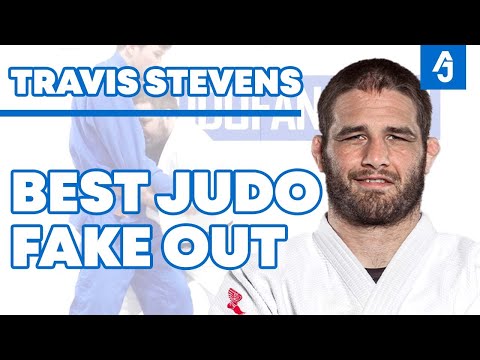
Best Fake Out Technique In Judo!
0
Out-Fighting Range Control·Travis Stevens
The Switch (Tani Otoshi) is a great way to fake your opponent out by faking forward then going backward! Grab a member…
Translation: out-fighting range control
The Out-Fighting Range Control subfamily covers defensive techniques for maintaining long fighting range, keeping the opponent at the maximum effective distance where the defender's longest weapons can reach but the opponent's shorter weapons cannot. [1] Out-fighting is a range-based defensive strategy where the fighter uses jabs, teeps (push kicks), and footwork to maintain distance and prevent the opponent from closing to their preferred range. [1],[2] This defensive approach is particularly effective for taller fighters with longer reach who want to fight at their range advantage. [2],[3]
Out-fighting uses long-range striking and movement to keep the opponent at maximum distance. [1]
Out-fighting is a classic boxing style emphasising jabs and footwork. [1]
Out-fighting is used by tall, rangy fighters in boxing and MMA. [1]
No images yet for this technique.
Sign in to suggest an image.
The Switch (Tani Otoshi) is a great way to fake your opponent out by faking forward then going backward! Grab a member…
No instructional courses yet for this technique.
Sign in to suggest a course.
Risk of injury to the person this technique is applied to
Evasion techniques avoid contact entirely; lowest injury risk of all techniques
Skill level needed to execute this technique reliably
Whether this technique is allowed under major competition rule sets
Boxing (Edwin Haislet, 1940)
Alias sources — [1] Championship Fighting (Dempsey, 1950) [2] Boxing Mastery (Hatmaker, 2004) [3] Fighter's Fact Book (Christensen, 2000)
Effectiveness sources — [1] Boxing: The Complete Guide to Training and Fitness (Hatmaker, 2004)
Mixed Japanese-Western terminology — combines traditional Japanese terms with katakana loanwords
Alias sources — [1] Championship Fighting (Dempsey, 1950) [2] Boxing Mastery (Hatmaker, 2004) [3] Fighter's Fact Book (Christensen, 2000)
Effectiveness sources — [1] Boxing: The Complete Guide to Training and Fitness (Hatmaker, 2004)
agility, quick directional changes, balance in motion
light feet, strong calves and ankles
calves, tibialis anterior, quadriceps, hip stabilisers
Every move, in any martial art, shares a few universal traits. Mix and match below to pinpoint the right tool — or compare equivalents across styles.
Fencing Distance Control applies the fencing concept of measure — the precise management of distance using footwork advances, retreats, and checks — to unarmed combat defence. [1] The fencing approach to distance control emphasises maintaining a specific optimal distance where the defender can reach the opponent with a single step but the opponent cannot reach the defender without committing to a full advance. [1,2] This creates a reactive advantage where the defender can respond to the opponent's advance with either a counter-attack or a retreat before the attack lands. [2,3]
Jab-Teep Range Management uses the longest-range striking tools — the jab (boxing) and teep/push kick (Muay Thai) — as defensive weapons to maintain distance and prevent the opponent from closing range. [1] The jab and teep serve as defensive probes that occupy the opponent's approach line, forcing them to deal with incoming strikes before they can close to their preferred range. [1,2] This range management technique is the practical application of out-fighting theory, using offensive tools in a defensive role to control the fight's spatial dynamics. [2,3]
Your shooting leg should glide just over the surface without putting weight on the ground—keep all your weight in your hands like a pullup. This allows you to maintain control and prevents your opponent from escaping or turning in to counter.
Travis Stevens emphasizes that this technique should be used offensively to punish your partner, not defensively when you're losing grip positions. It's a setup move meant to establish control and launch an attack, not a desperation escape.
Keep your opponent's body weight suspended and hanging throughout the technique by maintaining proper hand and hip control. This defensive position prevents them from turning in and thinking of counters like uchi, because they're forced to focus on just blocking your approach.
The Out-Fighting Range Control subfamily covers defensive techniques for maintaining long fighting range, keeping the opponent at the maximum effective distance where the defender's longest weapons can reach but the opponent's shorter weapons cannot. Out-fighting is a range-based defensive strategy where the fighter uses jabs, teeps (push kicks), and footwork to maintain distance and prevent the opponent from closing to their preferred range.
Out-fighting has been a recognised boxing strategy since the sport's earliest days, with tall, long-armed fighters using the jab and movement to maintain distance. The teep (push kick) serves the same distance-management function in Muay Thai and kickboxing.
Unified MMA: legal — Legal defensive technique; WBC/Boxing: legal — Legal — blocking and evasion are core boxing skills; WKF: legal — Legal — blocking is a fundamental karate skill; Kyokushin: legal — Legal; WT: legal — Legal; WAKO: legal — Legal; K: legal — 1/GLORY — Legal; IFMA: legal — Legal
Danger rating 1/10. Low — evasion techniques avoid contact entirely; lowest injury risk of all techniques
The standard setup chain: Anticipate the Attack → Execute Defence → Recover Stance → Counter or Disengage.
Standard counters include: Timing — attack when the defence is recovering or between movements / Feint — use deception to create openings in the defensive structure / Angle Change — attack from an unexpected angle that the defence does not cover.
Common variants: Standard defence (primary defensive technique from the most common position); Reactive defence (triggered by the opponent's attack, minimal movement for …); Proactive defence (anticipating the attack and positioning to neutralise it …); Counter defence (using the defensive movement to create an immediate count…).
Out-fighting is used by tall, rangy fighters in boxing and MMA.
Top errors to watch for: Fighting stationary at long range — out-fighting requires constant movement to maintain the range as the opponent closes / Not jabbing frequently enough — the jab is your range-finder and distance-maintenance tool / Allowing the opponent inside without a clinch plan — if they close range, you must clinch or create distance immediately / Moving only backward — lateral movement and pivots maintain distance more safely than straight retreat.
The Out-Fighting Range Control is also known as Auto Faitingu Kyori Kanri, Long Range Fighting, Outside Fighting, Out-Boxing.