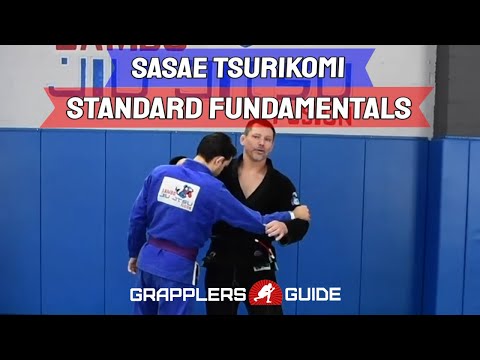
Sasae Tsurikomi Course - Standard Fundamentals by Vladislav Koulikov
0
Standard Duck·The Grapplers Guide by Jason Scully
The Grapplers Guide is the longest running and most recommended premium BJJ and grappling learning site ever created. L…
Translation: standard duck
The Standard Duck executes the fundamental ducking defence where the fighter rapidly drops their level by bending deeply at the knees, lowering the entire torso to bring the head below the incoming strike's arc. [1] The movement must be quick and compact — a sharp downward bend of the knees with the back relatively straight to maintain balance and vision of the opponent. [1],[2] The standard duck finishes with the fighter in a low, athletic position from which they can fire counter-strikes, shoot for takedowns, or rise back to fighting height. [2],[3]
The duck is highly effective against hooks and wide punches when timed correctly, allowing the defender to change levels and counter from a low position. [1] However, ducking into an uppercut or knee strike is a significant risk, making the technique dangerous against opponents who anticipate the level change. [2]
The standard duck is the fundamental ducking defence. [1]
Used in boxing competition. [1]
No images yet for this technique.
Sign in to suggest an image.
The Grapplers Guide is the longest running and most recommended premium BJJ and grappling learning site ever created. L…
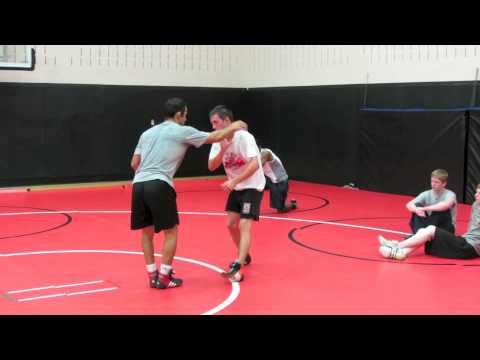
2008 Olympian and Coach at the University of Western Ontario, Saeed Azarbayjani, shows a counter leg attack when your op…
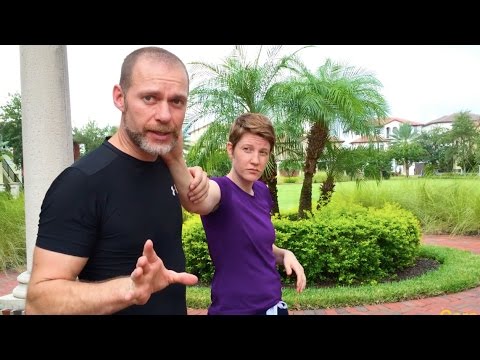
Ming makes it very easy to understand how to use this technique so you can get out of the standard 50-50 clinch range he…
The standard duck is a fundamental head-movement evasion technique used across multiple combat disciplines. While the three instructors address different contexts—49 North Wrestling discusses hand-fighting mechanics during clinch exchanges, The Grapplers Guide covers throwing mechanics (sasae tsurikomi), and Core JKD focuses on escaping neck control—they collectively emphasize key principles of the movement. The standard duck involves a rotational head movement away from an incoming attack or control attempt, typically combined with shoulder elevation and spinal rotation to create distance and prevent the opponent from maintaining contact. Instructors stress that head position is critical: keeping the head up on the correct axis of rotation rather than dropping the chin downward allows proper disengagement. The movement often incorporates a small lateral step or weight shift to generate momentum that assists the rotational escape. Hand positioning matters significantly; maintaining an extended guard hand aids both defense and counter-attack readiness. Core JKD emphasizes maintaining relaxed tension during the escape to maximize contact surface area and generate proper mechanical advantage, while both 49 North Wrestling and The Grapplers Guide stress the importance of hand speed and timing in executing the technique cleanly. The duck's effectiveness depends on understanding that rotational force transfers through the entire body rather than isolated arm movement.
Synthesized from 3 instructors
No instructional courses yet for this technique.
Sign in to suggest a course.
Risk of injury to the person this technique is applied to
Evasion techniques avoid contact entirely; lowest injury risk of all techniques
Skill level needed to execute this technique reliably
Whether this technique is allowed under major competition rule sets
Boxing (Edwin Haislet, 1940)
Alias sources — [1] Championship Fighting (Dempsey, 1950) [2] Boxing Mastery (Hatmaker, 2004) [3] Fighter's Fact Book (Christensen, 2000)
Effectiveness sources — [1] Championship Fighting (Dempsey, 1950) [2] Muay Thai Counters (Delp, 2005)
Standard katakana transliteration of Western martial arts terminology (外来語) — used in Japanese MMA, boxing, and BJJ communities
Alias sources — [1] Championship Fighting (Dempsey, 1950) [2] Boxing Mastery (Hatmaker, 2004) [3] Fighter's Fact Book (Christensen, 2000)
Effectiveness sources — [1] Championship Fighting (Dempsey, 1950) [2] Muay Thai Counters (Delp, 2005)
neck flexibility, knee bend coordination, visual tracking
shorter stature for easier level changes, strong neck
neck muscles, quadriceps, obliques, calves
According to Vladislav Koulikov, the standard action involves pulling at one point, jacking up at another, and stepping with your opposite leg to generate proper leverage and control.
Saeed Azarbayjani emphasizes that you should push to the angle rather than directly pushing your opponent, and use your hand to twist your wrist into them while catching the elbow—this makes them heavy on that leg and forces extension.
According to Saeed Azarbayjani, quickness of your hands is very important when dropping the leg and calling the ankle, as timing allows you to catch your opponent before they can defend.
The Standard Duck executes the fundamental ducking defence where the fighter rapidly drops their level by bending deeply at the knees, lowering the entire torso to bring the head below the incoming strike's arc. The movement must be quick and compact — a sharp downward bend of the knees with the back relatively straight to maintain balance and vision of the opponent.
The standard duck is one of the most basic defensive techniques in boxing and has been taught since the sport's earliest formalisation. It remains a fundamental skill in all striking martial arts and MMA.
Unified MMA: legal — Legal defensive technique; WBC/Boxing: legal — Legal — blocking and evasion are core boxing skills; WKF: legal — Legal — blocking is a fundamental karate skill; Kyokushin: legal — Legal; WT: legal — Legal; WAKO: legal — Legal; K: legal — 1/GLORY — Legal; IFMA: legal — Legal
Danger rating 1/10. Low — evasion techniques avoid contact entirely; lowest injury risk of all techniques
The standard setup chain: Anticipate the Attack → Execute Defence → Recover Stance → Counter or Disengage.
Standard counters include: Timing — attack when the defence is recovering or between movements / Feint — use deception to create openings in the defensive structure / Angle Change — attack from an unexpected angle that the defence does not cover.
Common variants: Inside slip (moving the head to the inside of the incoming punch); Outside slip (moving the head to the outside of the incoming punch); Bob and weave (ducking under a hook and rising on the other side); Pull-back (leaning the head and torso backward to make the punch fal…).
Used in boxing competition.
Top errors to watch for: Bending forward instead of downward — the spine stays vertical; the knees do the work / Closing your eyes — you must see what follows the strike you ducked / Staying low — the duck is a momentary level change, not a sustained low position / Dropping the hands to the floor — hands stay at chin level for guard.
The Standard Duck is also known as Sutandādo Dakkingu, Knee Bend Duck, Drop Under, Quick Duck.