Side Step

Genus

サイドステップ(Saido Suteppu)

Transliteration

Translation: side step

Overview

The Side Step is a quick lateral movement where the fighter steps directly to the side, perpendicular to the line of attack, to evade an incoming strike or takedown. [1] The side step removes the fighter from the attack's path without retreating, maintaining the original distance while creating a lateral angle. [1],[2] The side step is particularly effective against linear attacks like jabs, crosses, and single-leg takedown entries that travel in a straight line. [2],[3]

Also known as
Lateral Step[1]Yoko SabakiJP[2]Side Shift[3]

History & Origin

The side step has been a fundamental defensive technique in boxing, fencing, and kickboxing for centuries, valued for its simplicity and effectiveness against linear attacks. [1] It is one of the first defensive movements taught in most striking martial arts. [2],[3]

Effectiveness

The side step is particularly effective against linear attacks such as jabs, crosses, and single-leg takedown entries, as it removes the target from the straight-line path of the attack. [1] Its effectiveness diminishes against circular attacks and opponents who can adjust mid-attack. [2]

Lineage

The side step is a fundamental boxing footwork technique. [1]

Competition Record

Used in boxing and MMA competition. [1]

Images

No images yet for this technique.

Sign in to suggest an image.

Biomechanical Mechanism

Primary ActionUsing foot positioning to control range and angles — maintaining optimal distance relative to the opponent
Joints InvolvedAnkles (pivot and directional changes), knees (level maintenance), hips (balance and weight distribution)
Force VectorMulti-directional — lateral steps, pivots, and retreats adjust distance and angle simultaneously
Distance PrincipleManaging the distance between fighters is the most fundamental defensive skill — controlling range dictates which techniques are available

Position & Entry

From fighting stanceUse foot positioning to maintain optimal distance — step back, angle off, or pivot to avoid attacks
As cut angleStep off the centre line while the opponent attacks, creating an angle for the counter

Variants

Standard defenceprimary defensive technique from the most common position
Reactive defencetriggered by the opponent's attack, minimal movement for maximum protection
Proactive defenceanticipating the attack and positioning to neutralise it early
Counter defenceusing the defensive movement to create an immediate counter-attack opportunity

Videos

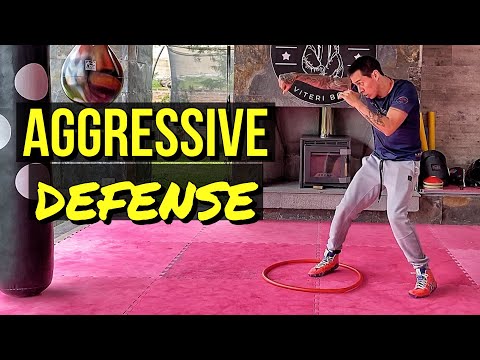
AGGRESSIVE DEFENSE: Lateral Movement, Side Step Punching, Punching Moving Backwards

0
Side Step·VITERI BOXING ENGLISH·Added by Admin

In this video you will learn how you can still attack your opponent even if you are moving backwards or laterally. In ad

1 video

Learn This Technique

No instructional courses yet for this technique.

Sign in to suggest a course.

Ratings

Danger Rating

Risk of injury to the person this technique is applied to

1
Low1/10

Evasion techniques avoid contact entirely; lowest injury risk of all techniques

Difficulty

Skill level needed to execute this technique reliably

Advanced
Competition Legality

Whether this technique is allowed under major competition rule sets

Unified MMA — Legal defensive technique
Unified Rules of MMA, August 2025PDF
WBC/Boxing — Legal — blocking and evasion are core boxing skills {srcWBC Rules of Boxing}
WKF — Legal — blocking is a fundamental karate skill
WKF Competition Rules 2024PDF
Kyokushin — Legal {srcIKO Kyokushin Tournament Rules}
WAKO — Legal
WAKO Competition RulesPDF
K-1/GLORY — Legal {srcK-1/GLORY Kickboxing Rules}
IFMA — Legal
IFMA Muay Thai RulesPDF

Training Notes

The side step moves your entire body laterally to avoid a forward attack — a larger version of the slip that moves the whole body offline
Step laterally with the lead foot, then follow with the rear foot — the entire body shifts to the side
The side step is effective against charges, straight-line attacks, and opponents who commit heavily forward
Use the side step to avoid takedown shots in MMA: step to the side as the opponent shoots and they pass by
After the side step, counter immediately — the opponent is turned and exposed
The side step is a larger commitment than a slip but creates a bigger angle for counter-attacking
Drill side steps against a partner's level change: as they drop for a shot, step to the side and front headlock or strike

Common Mistakes

!Side stepping too far — a one-step lateral movement is usually sufficient; more breaks your stance
!Not countering after the side step — the lateral position creates a counter window
!Side stepping too late — the movement must happen as the attack begins, not after it arrives
!Breaking stance width during the step — maintain your fighting stance throughout
!Side stepping into the opponent's path — step away from their direction of movement
!Not resetting after the side step — immediately re-establish your guard and stance
!Using the side step against lateral attacks (hooks) — side steps work against forward-moving attacks

Related Techniques

Counter Techniques

Setup Chain

1Anticipate the Attackread the opponent's intention through body cues
2Execute Defenceapply the specific defensive technique with proper timing
3Recover Stancereturn to a balanced fighting position immediately
4Counter or Disengagecapitalize on the opening or create safe distance

Sources & References

Primary Source

Boxing (Edwin Haislet, 1940)

1BookBoxing (Dempsey, 1950)

Alias sources — [1] Boxing Mastery (Hatmaker, 2004) [2] Karate-Do Kyohan (Funakoshi, 1935) [3] Fighter's Fact Book (Christensen, 2000)

2BookThe Art of Fencing (Barbasetti, 1932)

Effectiveness sources — [1] Championship Fighting (Dempsey, 1950) [2] Boxing Mastery (Hatmaker, 2004)

3OtherJapanese Combat Sports Katakana Convention

Standard katakana transliteration of Western martial arts terminology (外来語) — used in Japanese MMA, boxing, and BJJ communities

4CitationBoxing (Dempsey, 1950)

Alias sources — [1] Boxing Mastery (Hatmaker, 2004) [2] Karate-Do Kyohan (Funakoshi, 1935) [3] Fighter's Fact Book (Christensen, 2000)

5CitationThe Art of Fencing (Barbasetti, 1932)

Effectiveness sources — [1] Championship Fighting (Dempsey, 1950) [2] Boxing Mastery (Hatmaker, 2004)

Community

Athletics

Requires

agility, quick directional changes, balance in motion

Favours

light feet, strong calves and ankles

Key muscles

calves, tibialis anterior, quadriceps, hip stabilisers

Frequently Asked Questions

Why shouldn't I stay in my normal boxing stance when doing a side step?

Your normal lateral stance isn't optimal for fast lateral movement. Diego Viterre explains that moving to a neutral or square position allows you to move laterally much faster than staying in your standard stance.

How do I combine a side step with a punch?

When side stepping, bring your rear leg to the side of the step and throw your jab. Diego Viterre emphasizes that you work in opposite ways—if you move to one side, your punch works in coordination with that movement to maintain balance and create a complete defense.

What's the purpose of the side step in boxing?

The side step is an aggressive defensive technique that creates opportunities to counter-attack rather than just escape. Diego Viterre stresses that when your opponent comes forward, you move laterally to get out of the way while positioning yourself to punch back.

How does the Side Step work?

The Side Step is a quick lateral movement where the fighter steps directly to the side, perpendicular to the line of attack, to evade an incoming strike or takedown. The side step removes the fighter from the attack's path without retreating, maintaining the original distance while creating a lateral angle.

Where does the Side Step come from?

The side step has been a fundamental defensive technique in boxing, fencing, and kickboxing for centuries, valued for its simplicity and effectiveness against linear attacks. It is one of the first defensive movements taught in most striking martial arts.

Is the Side Step legal in competition?

Unified MMA: legal — Legal defensive technique; WBC/Boxing: legal — Legal — blocking and evasion are core boxing skills; WKF: legal — Legal — blocking is a fundamental karate skill; Kyokushin: legal — Legal; WT: legal — Legal; WAKO: legal — Legal; K: legal — 1/GLORY — Legal; IFMA: legal — Legal

How dangerous is the Side Step?

Danger rating 1/10. Low — evasion techniques avoid contact entirely; lowest injury risk of all techniques

How do I set up the Side Step?

The standard setup chain: Anticipate the Attack → Execute Defence → Recover Stance → Counter or Disengage.

How do I defend against the Side Step?

Standard counters include: Timing — attack when the defence is recovering or between movements / Feint — use deception to create openings in the defensive structure / Angle Change — attack from an unexpected angle that the defence does not cover.

What are the variants of the Side Step?

Common variants: Standard defence (primary defensive technique from the most common position); Reactive defence (triggered by the opponent's attack, minimal movement for …); Proactive defence (anticipating the attack and positioning to neutralise it …); Counter defence (using the defensive movement to create an immediate count…).

How effective is the Side Step in competition?

Used in boxing and MMA competition.

What are common mistakes when doing the Side Step?

Top errors to watch for: Side stepping too far — a one-step lateral movement is usually sufficient; more breaks your stance / Not countering after the side step — the lateral position creates a counter window / Side stepping too late — the movement must happen as the attack begins, not after it arrives / Breaking stance width during the step — maintain your fighting stance throughout.

What are other names for the Side Step?

The Side Step is also known as Saido Suteppu, Lateral Step, Yoko Sabaki, Side Shift.