6 Forbidden Knockout Pressure Points (Martial Arts Secrets You’re Not Supposed to Know)
0
Standard Angle Off·Master Yourself
📥 ACCESS THE CLASSIFIED ARCHIVES: 📂 VOL. I // STRUCTURAL NEGATION (Bone & Joint) Break the hardware. Learn how to dis…
Translation: standard angle off
The Standard Angle Off executes the fundamental angle-off step where the defender pivots on the lead foot and steps the rear foot to the side, rotating the body approximately 45 degrees off the line of attack. [1] This positions the defender to the outside of the attacker's lead hand, creating a dominant angle for counter-strikes while the attacker must turn to re-engage. [1],[2] The standard angle off maintains the fighter's balance and stance throughout the movement, allowing immediate offensive follow-up. [2],[3]
The angle off is considered one of the most effective defensive footwork techniques in boxing because it simultaneously removes the defender from the line of attack and creates a dominant counter-striking angle. [1] Dempsey described the pivot step as essential for avoiding straight punches while positioning for the counter cross. [1] The technique is most effective against linear attacks (jabs, crosses, front kicks) but less effective against wide arcing attacks like hooks. [2]
Angle-off footwork is a standard defensive technique in boxing and MMA. [1]
No images yet for this technique.
Sign in to suggest an image.
📥 ACCESS THE CLASSIFIED ARCHIVES: 📂 VOL. I // STRUCTURAL NEGATION (Bone & Joint) Break the hardware. Learn how to dis…
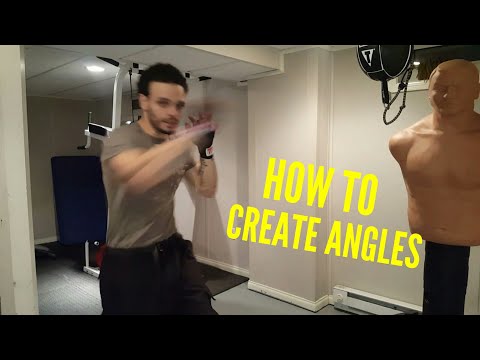
How to create boxing angles. As a amazon associate i earn money from eligible purchases. pride To purchase a century …
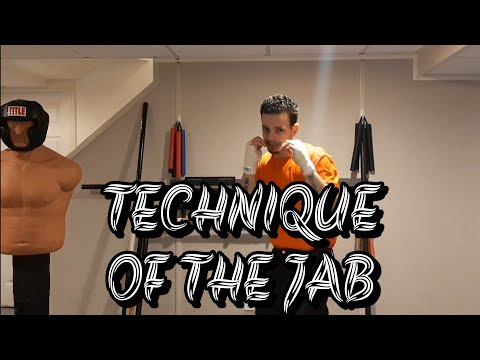
Perfecting the jab for a boxer or mma fighter The jab is the first strike you want to perfect as a fighter As a amazon…
The Standard Angle Off is a fundamental footwork-based evasion technique executed by pivoting the body to move laterally off the opponent's centerline while maintaining offensive capability. PRIDE MARTIAL ARTS demonstrates this through boxing methodology, emphasizing the mechanics of angling to the outside by pushing off the back foot and stepping laterally with the lead foot, creating distance and head movement simultaneously. The instructor details that practitioners should focus on small, controlled steps while maintaining stance integrity—when stepping an inch with the back foot, the front foot steps only an inch to preserve fighting posture. The technique can be performed stationary (jab, then angle) or dynamically (step and angle simultaneously), and is particularly effective when combined with offensive techniques like the jab, which generates power through the ground while creating angular separation from the opponent. PRIDE MARTIAL ARTS notes that angling to the outside prevents linear predictability, moves the head off-line offensively, and provides setup opportunities for combinations. The emphasis across instructional material centers on relaxation, timing, and the development of weight transfer mechanics through repetition in shadow boxing before application on heavy bags or mitts. This contrasts with the pressure-point focused content from Master Yourself, which addresses target vulnerability rather than footwork mechanics, indicating that Standard Angle Off functions as a distance-management evasion independent of striking target selection.
Synthesized from 3 instructors
No instructional courses yet for this technique.
Sign in to suggest a course.
Risk of injury to the person this technique is applied to
Evasion techniques avoid contact entirely; lowest injury risk of all techniques
Skill level needed to execute this technique reliably
Whether this technique is allowed under major competition rule sets
Boxing (Edwin Haislet, 1940)
Alias sources — [1] Championship Fighting (Dempsey, 1950) [2] Boxing Mastery (Hatmaker, 2004) [3] Tao of Jeet Kune Do (Lee, 1975)
Effectiveness sources — [1] Championship Fighting (Dempsey, 1950) [2] Boxing Mastery (Hatmaker, 2004)
Standard katakana transliteration of Western martial arts terminology (外来語) — used in Japanese MMA, boxing, and BJJ communities
Alias sources — [1] Championship Fighting (Dempsey, 1950) [2] Boxing Mastery (Hatmaker, 2004) [3] Tao of Jeet Kune Do (Lee, 1975)
Effectiveness sources — [1] Championship Fighting (Dempsey, 1950) [2] Boxing Mastery (Hatmaker, 2004)
agility, quick directional changes, balance in motion
light feet, strong calves and ankles
calves, tibialis anterior, quadriceps, hip stabilisers
Start by throwing a straight jab and angling to the outside, then return to center. You can practice this by shadow boxing, working on a heavy bag, or using a bob. According to PRIDE MARTIAL ARTS, it's important to work this angle in different ways for different scenarios—you can jab and step, or jab and angle at the same time.
PRIDE MARTIAL ARTS emphasizes that the second you plant after landing your jab and get your hand back to your head, that's when you want to slip left, step left, and pivot to the outside. This timing is critical for maintaining defense while moving forward.
Watch your balance and footing carefully, and really feel where your weight is at—you want to feel balanced throughout the movement. PRIDE MARTIAL ARTS recommends starting with shadow boxing in front of a mirror if you're just beginning, so you can see your reflection and get comfortable before moving to the heavy bag or other equipment.
The Standard Angle Off executes the fundamental angle-off step where the defender pivots on the lead foot and steps the rear foot to the side, rotating the body approximately 45 degrees off the line of attack. This positions the defender to the outside of the attacker's lead hand, creating a dominant angle for counter-strikes while the attacker must turn to re-engage.
The standard angle off is one of the most fundamental defensive footwork techniques in boxing and kickboxing, taught as a basic skill at all levels. Its effectiveness has been demonstrated by elite defensive fighters across all striking disciplines.
Unified MMA: legal — Legal defensive technique; WBC/Boxing: legal — Legal — blocking and evasion are core boxing skills; WKF: legal — Legal — blocking is a fundamental karate skill; Kyokushin: legal — Legal; WT: legal — Legal; WAKO: legal — Legal; K: legal — 1/GLORY — Legal; IFMA: legal — Legal
Danger rating 1/10. Low — evasion techniques avoid contact entirely; lowest injury risk of all techniques
The standard setup chain: Anticipate the Attack → Execute Defence → Recover Stance → Counter or Disengage.
Standard counters include: Timing — attack when the defence is recovering or between movements / Feint — use deception to create openings in the defensive structure / Angle Change — attack from an unexpected angle that the defence does not cover.
Common variants: Standard defence (primary defensive technique from the most common position); Reactive defence (triggered by the opponent's attack, minimal movement for …); Proactive defence (anticipating the attack and positioning to neutralise it …); Counter defence (using the defensive movement to create an immediate count…).
Angle-off footwork is a standard defensive technique in boxing and MMA.
Top errors to watch for: Stepping but not pivoting — without the pivot, you end up facing sideways to the opponent / Moving the feet without maintaining guard — hands stay at chin level throughout / Angling off too slowly — the step must be quick or the opponent adjusts / Not countering from the new angle — the angle-off without offence is just a movement.
The Standard Angle Off is also known as Sutandādo Anguru Ofu, 45-Degree Step, Off-Line Step, Angle Pivot.