How to Throw a Check Left Hook Counter-Punch
0
Check Hook Counter·expertboxing
https://www.expertboxing.com - FREE BOXING TIPS! https://www.secretstopunchingpower.com - SECRET punching techniques! ht…
Translation: Check hook counter — a hook punch delivered while pivoting away from an advancing opponent, 'checking' their forward momentum with the punch while creating a new angle
The Check Hook Counter is a defensive-offensive technique where the fighter pivots on the lead foot while simultaneously delivering a lead hook punch to an advancing opponent, using the opponent's own forward momentum to amplify the impact while the pivot creates a new defensive angle. [1] The technique is called a 'check' hook because it checks (stops) the opponent's forward charge — the advancing fighter runs into the hook while the defender rotates out of the line of attack. [1],[2] The mechanics combine three simultaneous actions: the lead foot pivots approximately 90 degrees (rotating the body to face a new angle), the lead hand delivers a hook punch (timed to land as the opponent steps into range), and the rear foot follows the pivot to re-establish a fighting stance at the new angle. [1] The check hook is most effective against aggressive, forward-moving opponents who charge in with straight punches or lunging attacks, because their forward momentum adds to the hook's impact force while the pivot removes the defender from the path of the opponent's attack. [2],[3] Floyd Mayweather Jr. delivered one of the most famous check hooks in boxing history against Ricky Hatton at the December 2007 WBC Welterweight championship — Hatton charged forward aggressively, Mayweather pivoted left and landed a check left hook that sent Hatton crashing into the corner post, leading to a 10th-round knockout. [3] The technique requires precise timing: the pivot must begin just before the opponent enters punching range, and the hook must land during the pivot rotation, not before or after. [1],[2] If executed too early, the opponent adjusts and the hook misses; too late, the opponent's punch arrives before the pivot is complete. [1]
The check hook has been part of boxing's tactical repertoire since at least the early 20th century, with documented use by counter-punching stylists throughout the sport's history. [1] The technique is inherent to the 'sweet science' philosophy of boxing — using footwork and timing to make the opponent miss and pay. [2] The term 'check hook' became widely used in boxing commentary during the 2000s, particularly in association with Floyd Mayweather Jr.'s use of the technique. [3] The most famous check hook in modern boxing occurred on December 8, 2007, when Mayweather dropped Ricky Hatton with a check left hook in Round 10 of their WBC Welterweight title fight at the MGM Grand in Las Vegas — Hatton's aggressive forward style played directly into Mayweather's pivot-and-hook trap. [3] The technique has since been widely adopted in MMA striking, where its utility is even greater because charging opponents are common and the defensive angle created by the pivot aids takedown defence as well. [2]
The check hook is one of the highest-percentage counter-punches in boxing because it exploits a fundamental truth: aggressive fighters who move forward create their own vulnerability to lateral attacks. [1],[2] The technique's effectiveness scales with the opponent's aggression — the harder they charge, the more devastating the check hook becomes, creating a paradox where the opponent's own effort is their greatest threat. [2] Floyd Mayweather's career-long use of the technique against world-class opposition demonstrates its effectiveness at the highest level. [3] In MMA, the check hook has additional tactical value because the lateral angle created by the pivot also defends against takedowns — an opponent who runs into a check hook while shooting for a takedown is hit at an angle where they cannot complete the shot. [2]
Floyd Mayweather Jr. vs Ricky Hatton, WBC Welterweight Championship, December 8, 2007, MGM Grand — Mayweather dropped Hatton with a check left hook in Round 10, leading to a KO victory. This is widely considered the definitive check hook in modern boxing. || Vasyl Lomachenko uses the check hook extensively, pivoting left after landing it to create angles for combination follow-ups. || In MMA, the check hook has been used to counter aggressive takedown shooters, most notably by strikers with boxing backgrounds.
No images yet for this technique.
Sign in to suggest an image.
https://www.expertboxing.com - FREE BOXING TIPS! https://www.secretstopunchingpower.com - SECRET punching techniques! ht…
FIX YOUR BAD HABITS NOW: https://oracleboxing.com Join the Bali Boxing Camp Aug 2026: https://theboxingcamp.com/oracle-y…
Complete The 6-Week Challenge NOW https://oracleboxing.com/6wc-yt-desc Get My Course NOW https://oracleboxing.com/cours…
How To Throw The Check Hook Using Mayweather's Footwork. Tom Yankello of the @World Class Boxing Channel shows you ho…
If you’re serious about leveling up your boxing, I’ve dropped all the best resources below to guide you. Start with the …
FIX YOUR BAD HABITS NOW: https://oracleboxing.com Join the Bali Boxing Camp Aug 2026: https://theboxingcamp.com/oracle-y…
Beginner Boxing: Check Hook ✅ TeamHayabusa IG: plantbasedboxer #boxing #boxingtraining #boxingworkout
This document contains all playlists at each level of the membership: https://docs.google.com/document/d/1-IiC9KYudG6Tmy…
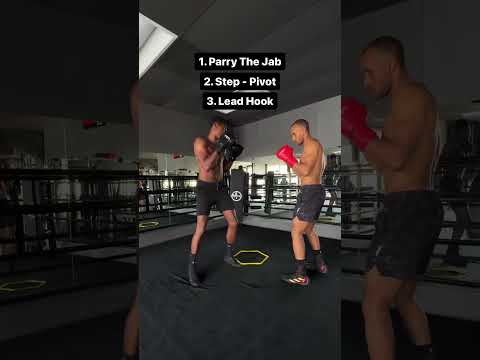
The check hook is a defensive counter-strike employed primarily against opponents advancing with straight shots, particularly crosses. Oracle Boxing emphasizes that the technique exploits the vulnerability fighters experience while throwing punches. The check hook fundamentally involves pivoting and angling off-center while delivering a hook, accomplished through two primary methods: a pull-back pivot without foot movement, or a step-and-pivot variation. In the pull-back method, the fighter drops their heel into the ground while retracting their head and pulling the arms backward—similar to a hammer thrower's motion—which accelerates hand speed and increases power while simultaneously improving defensive range. The step-and-pivot method involves advancing the lead foot toward an angled position, rotating the hips and torso to generate power without pre-rotation, maintaining bent knees for balance. Both Oracle Boxing instructors stress the importance of setup using a jab to provoke the opponent's attack, then timing the hook as the opponent commits to their straight shot. The hook is thrown from roughly elbow height upward, catching the incoming cross over the top. Hayabusa's instruction adds a parry-check-hook variation that defends the jab before executing the counter. Once landed, the fighter pivots approximately 90 degrees off the opponent's centerline to create distance and opportunity for follow-up strikes. The technique prioritizes defensive positioning and range management alongside offensive timing.
Synthesized from 4 instructors
No instructional courses yet for this technique.
Sign in to suggest a course.
Risk of injury to the person this technique is applied to
The check hook is one of boxing's most devastating counter-punches because it combines the opponent's forward momentum with the hook's lateral force — knockdowns and knockouts from check hooks are disproportionately common relative to the technique's power output. The opponent often does not see the hook coming because it arrives from the side as they focus on moving forward.
Skill level needed to execute this technique reliably
Whether this technique is allowed under major competition rule sets
Championship Fighting (Dempsey, 1950) and fight film analysis
description: [1] Dempsey hooking mechanics, [2] Anderson tactical analysis, [3] Mayweather-Hatton fight record
Standard katakana transliteration of Western martial arts terminology (外来語) — used in Japanese MMA, boxing, and BJJ communities
description: [1] Dempsey hooking mechanics, [2] Anderson tactical analysis, [3] Mayweather-Hatton fight record
Requires excellent footwork — the pivot must be smooth, fast, and balanced
Good timing and reflexes to read the opponent's forward movement and initiate the pivot at the correct moment
Lead hand speed for the hook (the punch window during the pivot is brief)
Strong lead ankle for the pivoting motion
Above-average ring IQ to identify when the opponent is about to charge
Does NOT require exceptional power — the opponent's momentum provides the force
The check hook — pivoting away from the opponent's advance while throwing a hook — is the signature counter of Floyd Mayweather Jr. Stops aggressive fighters by making them run into the hook while the counter-puncher moves offline. (Boxing history; boxing technique analysis)
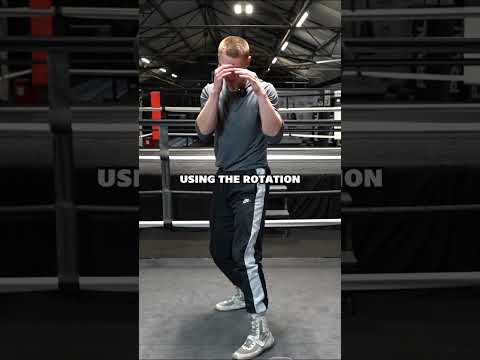
Step back naturally to create space and move your head away from your opponent's incoming attack, while keeping your lead hand in front of your face to block their follow-up strikes. Stepping back also takes firepower off their punch.
Step back to create space while rotating into the hook, sinking your weight into your back leg to free up your lead side to rotate with speed and power. The punch and the step should happen simultaneously, not one after the other.
Pull your hand back first before throwing, similar to a hammer thrower's motion—this causes your knuckles to swing around faster and generates more power through body rotation. You can also slip while throwing to increase power from a neutral guard position.
Coach Anthony recommends dropping your lead hand into a Philly shell position to invite your opponent's right hand, then as they throw it, you throw your hook and pivot at the same time. You can also drop your rear shoulder back slightly to create distance and make them reach farther.
The Check Hook Counter is a defensive-offensive technique where the fighter pivots on the lead foot while simultaneously delivering a lead hook punch to an advancing opponent, using the opponent's own forward momentum to amplify the impact while the pivot creates a new defensive angle. The technique is called a 'check' hook because it checks (stops) the opponent's forward charge — the advancing fighter runs into the hook while the defender rotates out of the line of attack.
The check hook has been part of boxing's tactical repertoire since at least the early 20th century, with documented use by counter-punching stylists throughout the sport's history. The technique is inherent to the 'sweet science' philosophy of boxing — using footwork and timing to make the opponent miss and pay.
Unified MMA: legal — Legal defensive technique; WBC/Boxing: legal — Legal — blocking and evasion are core boxing skills; WKF: legal — Legal — blocking is a fundamental karate skill; Kyokushin: legal — Legal; WT: legal — Legal; WAKO: legal — Legal; K: legal — 1/GLORY — Legal; IFMA: legal — Legal
Danger rating 8/10. The check hook is one of boxing's most devastating counter-punches because it combines the opponent's forward momentum with the hook's lateral force — knockdowns and knockouts from check hooks are disproportionately common relative to the technique's power output. The opponent often does not see the hook coming because it arrives from the side as they focus on moving forward.
The standard setup chain: Establish the jab rhythm (2-3 jabs to draw the opponent into chasing) → Opponent begins timing the jab and stepping forward aggressively → On the next forward step, begin lead foot pivot → Deliver the check hook during the 90° rotation → Hook lands on the opponent's chin as they step into it → Pivot completes, rear foot follows to new angle → Defender is now at 90° to the stunned opponent → Follow up with cross or additional hooks from the new angle → Or create distance and reset.
Standard counters include: Do not charge forward recklessly — the check hook only works against aggressive forward movement; a patient, measured… / Feint the advance — step forward with a feint to draw the pivot, then stop and reset when the defender begins to rotate / Cut off the ring — use lateral movement to prevent the defender from creating pivoting angles / Jab to the body during the pivot — as the defender begins to rotate, their body is momentarily open to straight attacks.
Common variants: Lead check hook (orthodox) (the standard version, pivoting left and hooking with the …); Rear check hook (pivoting in the opposite direction and hooking with the r…); Check hook to the body (pivoting while delivering the hook to the liver or ribs i…); Double check hook (landing the check hook, then immediately throwing a secon…); Check hook to cross (landing the check hook, then following with a rear cross …); MMA check hook with knee (in MMA, following the check hook with an immediate knee a…).
Floyd Mayweather Jr. vs Ricky Hatton, WBC Welterweight Championship, December 8, 2007, MGM Grand — Mayweather dropped Hatton with a check left hook in Round 10, leading to a KO victory.
Top errors to watch for: Pivoting without punching — rotating away without delivering the hook wastes the counter-punching opportunity and sim… / Punching without pivoting — throwing a hook while standing still against a charging opponent means absorbing their at… / Pivoting too early — starting the pivot before the opponent commits to forward movement allows them to adjust and fol… / Pivoting too late — waiting too long means the opponent's punch arrives before the pivot is complete, catching the fi….
The Check Hook Counter is also known as Chekku Fukku Kauntā, Check Hook, Pivot Hook, Pivot Hook Counter, Check Left Hook.