Hap Gar Master Deng NEW television feature (Part 2 of 2)
0
Hop-Gar Crane Wing Block·Rising Crane
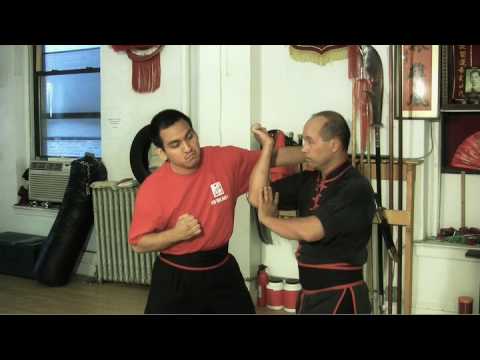
My Sifu, Deng Jan Gong explaining some of the theory and history of the Hap Gar style. Second part. https://www.facebook…
Translation: hop-gar crane wing block
The Hop-Gar Crane Wing Block uses a sweeping wing-like motion of the forearm to deflect wide attacks, mimicking the crane spreading its wings for protection. [1]
Traditional kung fu technique with historical combat application. [1]
Tibetan Lama tradition → Hop-Gar Kung Fu → Ng Yim-Ming lineage. [1]
Traditional martial arts; limited modern competition application
No images yet for this technique.
Sign in to suggest an image.
Not yet documented
My Sifu, Deng Jan Gong explaining some of the theory and history of the Hap Gar style. Second part. https://www.facebook…
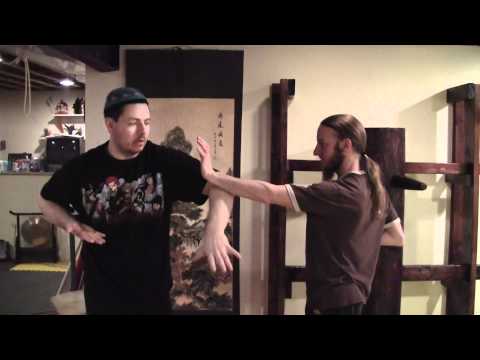
Basic 2 man trapping hands drill using the Close the gate frame and the Crane Opens wing frame..
New York Hung Ga's Informational Series: Talking About Wong Fei Hung's 10 Killing Hands. Most of the information you fi…
The Hop-Gar Crane Wing Block is a defensive technique employed in Hop-Gar (Hap Gar) kung fu systems, particularly within Li Family style variants. According to Abir Hallel Ministries, the technique functions as part of a trapping-hands sequence: the defender closes the front gate—establishing a primary barrier against incoming strikes—then transitions into an open crane block position. This crane configuration serves to redirect and deflect palm strikes while maintaining offensive capability; the practitioner follows the block with a counterstriking palm or hand technique, exemplifying the simultaneous defense-and-offense principle central to kung fu. The crane block positioning involves a characteristic wing-like arm shape that creates a large deflection surface. The technique relies on smooth transitioning between gates and blocks rather than static positions, allowing the defender to redirect force and immediately initiate counterattacks. Speed is emphasized as a critical component of effective execution. While instructors agree on the block's function within trapping-hands sequences and its integration with countering methodology, detailed mechanical variations across different Hop-Gar lineages remain underspecified in available instructional material.
Synthesized from 3 instructors
No instructional courses yet for this technique.
Sign in to suggest a course.
Risk of injury to the person this technique is applied to
Defensive block
Skill level needed to execute this technique reliably
Whether this technique is allowed under major competition rule sets
Hop-Gar Kung Fu (Chin & Staples)
description, historyOrigin: sourced from Chin, D
description, historyOrigin: sourced from Chin, D
Chi cultivation
Finger and hand conditioning
Internal energy development
Hop Gar (Lama Pai / Tibetan White Crane) crane wing block uses a wide sweeping arm motion inspired by the crane's wing spread — deflecting attacks with a broad covering action. (Chinese martial arts texts; kung fu instructionals)
Speed is always important when fighting, and instructors use internal strength to achieve the blocking results effectively.
The technique involves redirecting an incoming attack, popping up to generate power, and then striking or blocking in continuation.
The Hop-Gar Crane Wing Block uses a sweeping wing-like motion of the forearm to deflect wide attacks, mimicking the crane spreading its wings for protection.
Hop-Gar Crane Wing Block originates from the Hop-Gar (Tibetan White Crane) system, brought from Tibet to Southern China. The system was passed through the Lama tradition and refined by Grandmaster Ng Yim-Ming.
Unified MMA: legal — Legal defensive technique; WBC/Boxing: legal — Legal — blocking and evasion are core boxing skills; WKF: legal — Legal — blocking is a fundamental karate skill; Kyokushin: legal — Legal; WT: legal — Legal; WAKO: legal — Legal; K: legal — 1/GLORY — Legal; IFMA: legal — Legal
Danger rating 2/10. Defensive block
The standard setup chain: Stance → Chi direction → Hop-Gar Crane Wing Block → Follow-up.
Standard counters include: Distance management / Blocking / Evasion.
Traditional martial arts; limited modern competition application
Top errors to watch for: Using muscular force instead of Chi / Tensing the arm / Poor stance.
The Hop-Gar Crane Wing Block is also known as Hop-Gar Crane Wing Block, Hok Yik Dong, Wing Block.