Infantry Sword Exercise Manual, 1817, by Henry Angelo
0
Standard Military Sabre Guard·Academy of Historical Fencing
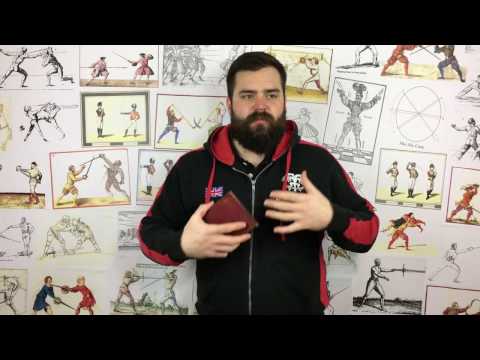
A scan of this famous treatise is now available freely on our website - http://swordfight.uk/resources/ Henry Angelo'…
Перевод: standard military sabre guard
The Standard Military Sabre Guard positions the sabre with the blade raised and angled to protect the head and dominant side, the arm slightly bent, and the point threatening the opponent's face — a balanced position that enables both defence and immediate counter-attack. [1] From this guard the sabre can deliver cuts in any direction or transition to a parry with minimal movement. [1],[2] Period manuals describe this as the 'guard' or 'engage' position from which all offensive and defensive actions originate. [2],[3]
The standard military sabre guard was adopted across European cavalry forces as the default ready position, described in detail in manuals by Hutton, Roworth, and Angelo. [1] Its design reflects the practical need for a single reliable guard position that untrained cavalry troopers could adopt and maintain under stress. [2],[3]
The standard military sabre guard provides baseline head and torso protection while allowing transitions to both offensive and defensive actions. [1]
Standard military sabre guards were taught as the first technique in European army sword training manuals. [1]
Standard military sabre guard positions are used in HEMA military sabre competition. [1]
Изображений для этой техники пока нет.
Войдите, чтобы предложить изображение.
A scan of this famous treatise is now available freely on our website - http://swordfight.uk/resources/ Henry Angelo'…
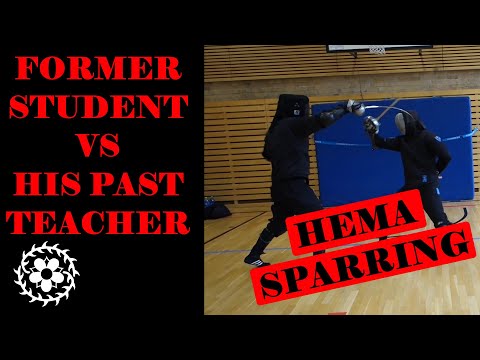
At the Kontrafechten fencing gathering of @die.freifechter I meet an old student of mine. Tobias Thomé from the Karlsgar…
A Rogue Saber Academy Form One Lesson featuring Lightsaber Training on how to fight, spar, duel, and train with real LED…
The standard military sabre guard represents a codified defensive posture systematized in Henry Angelo the Younger's 1817 Infantry Sword Exercise Manual, which became the official standard for British military swordsmanship on foot and remained in use until the late 19th century, as detailed by the Academy of Historical Fencing. Angelo's system, closely descended from his father's 1799 Napoleonic work, introduced numbered foot positions and structured parries corresponding to specific cuts, replacing earlier terminology with more disciplined military organization. The Academy of Historical Fencing notes that while the fundamental mechanics—lunge, slip position, guard structure—remained largely unchanged from Napoleonic practice, the 1817 manual emphasized refined body mechanics and balance. The guard itself serves as the foundational ready position (position two, distinct from position one with feet together and position three in lunge) from which defensive responses are launched. Rogue Saber Academy emphasizes that parries from guard, such as the Royal Wrap deflection, utilize wrist-driven snapping motions to intercept and redirect incoming blade attacks before they reach target zones, maintaining upper body relaxation while keeping feet planted. This guard was employed across multiple blade types including Spadroons, the 1803 Sabre, and later Gothic-hilted infantry sabres introduced in 1822, making it a versatile foundation for military sabre combat across the Napoleonic and Victorian eras.
Сформировано на основе 3 инструкторов
Учебных курсов по этой технике пока нет.
Войдите, чтобы предложить курс.
Риск травмы для человека, к которому применяется техника
Edged weapons cause fatal lacerations; historical battlefield mortality rates >30% (Amberger 1999)
Уровень мастерства, необходимый для надёжного выполнения техники
Разрешена ли техника по основным соревновательным правилам
The Art of Fencing (Luigi Barbasetti, 1932)
Alias sources — [1] Cold Steel (Hutton, 1889) [2] Hoplology (Burton, 1884) [3] Hoplology (Burton, 1884)
Effectiveness sources — [1] The Martial Arts of Renaissance Europe (Anglo, 2000)
Mixed Japanese-Western terminology — combines traditional Japanese terms with katakana loanwords
Alias sources — [1] Cold Steel (Hutton, 1889) [2] Hoplology (Burton, 1884) [3] Hoplology (Burton, 1884)
Effectiveness sources — [1] The Martial Arts of Renaissance Europe (Anglo, 2000)
wrist control for edge alignment, grip endurance, footwork precision
quick wrists, strong forearms, good posture
forearm extensors/flexors, deltoids, core, calves
In the historical infantry sabre system, the term 'parry' is used specifically as a defense against thrusts, while defenses against cuts are called by their own names (such as parry one defending against cut one, parry two defending against cut two). This terminology distinction helps clarify the type of threat being countered.
The overall motion should come from a snapping motion in your wrists in unison, while keeping your upper arms and shoulders relaxed. This allows you to misdirect the opponent's blade efficiently without excessive force.
The Standard Military Sabre Guard positions the sabre with the blade raised and angled to protect the head and dominant side, the arm slightly bent, and the point threatening the opponent's face — a balanced position that enables both defence and immediate counter-attack. From this guard the sabre can deliver cuts in any direction or transition to a parry with minimal movement.
The standard military sabre guard was adopted across European cavalry forces as the default ready position, described in detail in manuals by Hutton, Roworth, and Angelo. Its design reflects the practical need for a single reliable guard position that untrained cavalry troopers could adopt and maintain under stress.
FIE: разрешён — Legal fencing technique — governed by FIE rules for foil, épée, and sabre; HEMA: разрешён — Legal in historical fencing competition
Оценка опасности 9/10. Extreme — edged weapons cause fatal lacerations; historical battlefield mortality rates >30% (Amberger 1999)
Стандартная цепочка подготовки: En Garde → Advance/Lunge Preparation → Attack → Recovery.
Стандартные контрприёмы: Parry (Absetzen) — deflect the incoming blade with a counter-displacement / Void (Step Back) — withdraw from measure to avoid the cutting arc / Counter-Cut (Nachreisen) — strike into the opponent's opening during their attack.
Распространённые варианты: Standard cut (primary cutting angle from the ready stance); Thrust (tsuki) (straight thrust targeting the throat, chest, or face); Rising cut (kiri-age) (upward diagonal cut from low to high); Diagonal cut (kesa-giri) (downward diagonal cut following the kimono line).
Standard military sabre guard positions are used in HEMA military sabre competition.
Основные ошибки, на которые стоит обратить внимание: Standing square to the opponent — the angled stance presents a smaller target / Holding the blade too low — the blade must cover the head, the most common target / Extending the arm fully — the arm should be slightly bent for defensive flexibility / Placing the free hand forward — the free hand is behind the body to avoid being hit.
Standard Military Sabre Guard также известен как Sutandādo Guntō Kamae, Standard Cavalry Guard, Basic Sabre Guard, Guard in Tierce.