Military sabre guards lesson 2
0
Military Sabre Cut·Academy of Historical Fencing
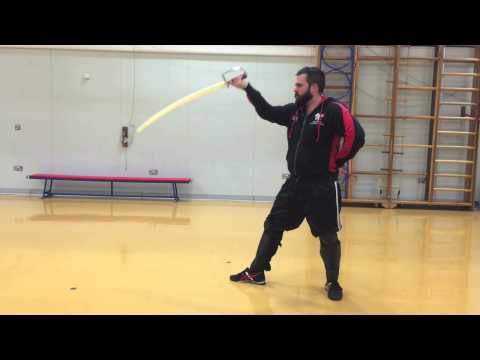
The second of three videos on the guard positions of British Military sabre from the Georgian era, according to Roworth.
Перевод: military sabre cut
The Military Sabre Cut subfamily covers the primary cutting actions of the military sabre, emphasising powerful edge-on strikes delivered with the curved blade's natural geometry. [1] Military sabre cuts include horizontal, diagonal, and vertical slashes optimised for mounted combat, where speed and momentum generate devastating force. [1],[2] Unlike the precision cuts of longsword fencing, military sabre cuts favour gross motor movements that remain effective under battlefield stress and on horseback. [2],[3]
Military sabre cutting technique was standardised in cavalry manuals from the eighteenth century onward, with British, French, and Prussian armies each developing their own cutting systems. [1] The debate between cut and thrust as the primary sabre action influenced sword design throughout the nineteenth century. [2],[3]
Military sabre cuts were designed for mounted and dismounted combat, using heavy curved blades capable of inflicting disabling wounds through cavalry slashes and infantry downward cuts. [1]
Изображений для этой техники пока нет.
Войдите, чтобы предложить изображение.
The second of three videos on the guard positions of British Military sabre from the Georgian era, according to Roworth.
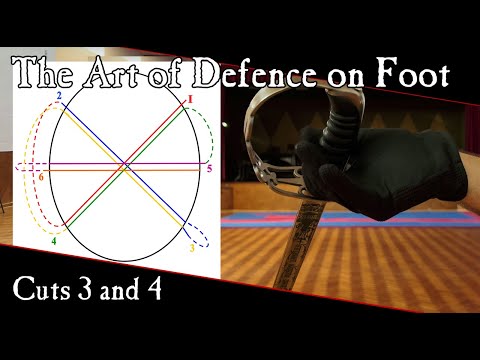
Following our cuts 1 and 2 video, we bring you cuts 3 and 4 to wrap up the upwards cuts of the system. While it may seem…
Учебных курсов по этой технике пока нет.
Войдите, чтобы предложить курс.
Риск травмы для человека, к которому применяется техника
Edged weapons cause fatal lacerations; historical battlefield mortality rates >30% (Amberger 1999)
Уровень мастерства, необходимый для надёжного выполнения техники
Разрешена ли техника по основным соревновательным правилам
The Art of Fencing (Luigi Barbasetti, 1932)
Alias sources — [1] Cold Steel (Hutton, 1889) [2] Hoplology (Burton, 1884) [3] Hoplology (Burton, 1884)
Effectiveness sources — [1] The Martial Arts of Renaissance Europe (Anglo, 2000)
Established Japanese martial arts naming convention — native Japanese term (和語/漢語)
Alias sources — [1] Cold Steel (Hutton, 1889) [2] Hoplology (Burton, 1884) [3] Hoplology (Burton, 1884)
Effectiveness sources — [1] The Martial Arts of Renaissance Europe (Anglo, 2000)
wrist control for edge alignment, grip endurance, footwork precision
quick wrists, strong forearms, good posture
forearm extensors/flexors, deltoids, core, calves
Каждое движение в любом боевом искусстве обладает рядом универсальных свойств. Комбинируйте параметры ниже, чтобы найти нужный инструмент или сравнить аналоги из разных стилей.
The Academy of Historical Fencing identifies four primary guards: outside hanging guard, inside hanging guard, outside half hanging, and inside half hanging. While these guards change the line of defense, the actual angle of the blade remains exactly the same across them.
Outside hanging guard is described as far stronger than other guards, even though outside guard itself is very useful. The Academy of Historical Fencing emphasizes this as one of the strongest defensive positions available.
Half hanging guards are designed primarily to defend against lower targets, particularly against thrusts and some cuts, according to the Academy of Historical Fencing.
Starting from an inside guard makes it easier to drop the point for cuts compared to an outside guard, which requires extra compensatory movement, as explained in British Military Sabre instruction.
The Military Sabre Cut subfamily covers the primary cutting actions of the military sabre, emphasising powerful edge-on strikes delivered with the curved blade's natural geometry. Military sabre cuts include horizontal, diagonal, and vertical slashes optimised for mounted combat, where speed and momentum generate devastating force.
Military sabre cutting technique was standardised in cavalry manuals from the eighteenth century onward, with British, French, and Prussian armies each developing their own cutting systems. The debate between cut and thrust as the primary sabre action influenced sword design throughout the nineteenth century.
FIE: разрешён — Legal fencing technique — governed by FIE rules for foil, épée, and sabre; HEMA: разрешён — Legal in historical fencing competition
Оценка опасности 9/10. Extreme — edged weapons cause fatal lacerations; historical battlefield mortality rates >30% (Amberger 1999)
Стандартная цепочка подготовки: Assume Guard (Kamae/Hut) → Measure Distance (Ma-ai) → Initiate Cut/Thrust → Follow Through (Zanshin).
Стандартные контрприёмы: Parry (Absetzen) — deflect the incoming blade with a counter-displacement / Void (Step Back) — withdraw from measure to avoid the cutting arc / Counter-Cut (Nachreisen) — strike into the opponent's opening during their attack.
Распространённые варианты: Standard cut (primary cutting angle from the ready stance); Thrust (tsuki) (straight thrust targeting the throat, chest, or face); Rising cut (kiri-age) (upward diagonal cut from low to high); Diagonal cut (kesa-giri) (downward diagonal cut following the kimono line).
Military sabre competition existed as an Olympic event (1896–1920) before being replaced by the lighter sporting sabre. HEMA tournaments now feature military sabre bouts.
Основные ошибки, на которые стоит обратить внимание: Cutting with the flat of the blade — edge alignment is critical for effective sabre cuts / Using only arm strength — the sabre cut uses the whole body: step, hip rotation, and arm extension / Not drawing the blade through the target — the curved blade requires a pulling motion for effective cutting / Cutting at the same angle repeatedly — develop all numbered cuts for complete offensive capability.
Military Sabre Cut также известен как Guntō Kiri, Sabre Slash, Cavalry Cut, Szabla Cut.