Learn the Art of Combat: Longsword Guards - Beginners Guide
0
Quarta Guard·Björn Rüther
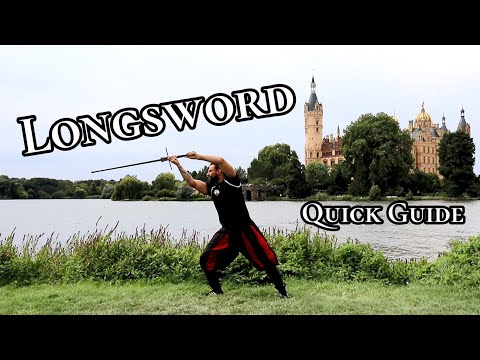
Knowing the guards in the long sword, knowing which techniques and concepts to apply from each posture, and being able t…
Перевод: quarta guard
Quarta (fourth guard) positions the hand with the palm facing upward (supinated), the blade angled across the body to protect the inside low line and threaten a thrust to the opponent's flank or abdomen. [1] Quarta is the guard most commonly used for parrying thrusts to the inside line and is the foundation of the modern fencing parry of quarte. [1],[2] From Quarta, the fencer can deliver a riposte thrust along the inside line with minimal blade movement. [2],[3]
Quarta was described by Italian rapier masters including Agrippa, Capo Ferro, and Salvator Fabris as one of the four primary guard positions. [1]
Quarta is studied and used in HEMA rapier tournaments and historical fencing events worldwide. [1]
Изображений для этой техники пока нет.
Войдите, чтобы предложить изображение.
Knowing the guards in the long sword, knowing which techniques and concepts to apply from each posture, and being able t…
A year ago, I went out to Teylingen castle in 32 degrees of heat, to record all of Figueyredo's simple rules for the mon…
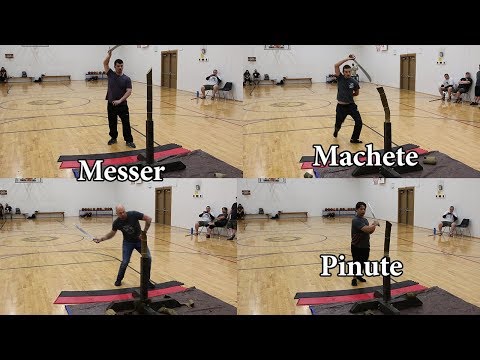
The Short Blades Symposium hosts a variety of fighters from multiple different combat systems, and puts them together ag…
Quarta guard appears minimally in the provided instructional material. Björn Rüther's comprehensive longsword guards overview does not explicitly mention quarta by name, instead organizing instruction around Joachim Meyer's 14 guards (four main and ten secondary), which include positions such as ox, plow, fool, and day guard—structured as both starting positions and transitional postures. The Blood and Iron HEMA transcript provides no instructional content, consisting solely of tournament footage with minimal commentary. Virtual Fechtschule's treatment of Figueiredo's greatsword rules focuses on basic cutting and thrusting sequences rather than named guard positions. None of the three instructors provide direct exposition of quarta guard positioning, mechanics, or applications. Rüther emphasizes that guards serve as memory aids and structural frameworks for understanding fencing concepts, noting that practitioners should flow between guards with intention rather than arbitrary repositioning. The absence of explicit quarta discussion across these sources suggests either that quarta is not a primary guard in the Meyer or Figueiredo systems covered, or that it is addressed under alternative nomenclature within the broader guard taxonomy these instructors employ.
Сформировано на основе 3 инструкторов
Учебных курсов по этой технике пока нет.
Войдите, чтобы предложить курс.
Риск травмы для человека, к которому применяется техника
Edged weapons cause fatal lacerations; historical battlefield mortality rates >30% (Amberger 1999)
Уровень мастерства, необходимый для надёжного выполнения техники
Разрешена ли техника по основным соревновательным правилам
The Art of Fencing (Luigi Barbasetti, 1932)
Alias sources — [1] The Sword and the Centuries (Castle, 1901) [2] Classical Fencing (Rogers, 2014) [3] Classical Fencing (Rogers, 2014)
Effectiveness sources — [1] The Martial Arts of Renaissance Europe (Anglo, 2000) [2] The Swordsman's Companion (Windsor, 2004)
Mixed Japanese-Western terminology — combines traditional Japanese terms with katakana loanwords
Alias sources — [1] The Sword and the Centuries (Castle, 1901) [2] Classical Fencing (Rogers, 2014) [3] Classical Fencing (Rogers, 2014)
Effectiveness sources — [1] The Martial Arts of Renaissance Europe (Anglo, 2000) [2] The Swordsman's Companion (Windsor, 2004)
wrist control for edge alignment, grip endurance, footwork precision
quick wrists, strong forearms, good posture
forearm extensors/flexors, deltoids, core, calves
Instead of cutting all the way through into the guard in front of your face, pull your arms in after cutting through to bring the greatsword into a guard over your right arm, from which you can thrust quite well. (Virtual Fechtschule)
Never change your guard without an idea behind it or an intention, as otherwise your opponent will have many more options to attack openings while you foolishly switch positions. (Björn Rüther)
Quarta (fourth guard) positions the hand with the palm facing upward (supinated), the blade angled across the body to protect the inside low line and threaten a thrust to the opponent's flank or abdomen. Quarta is the guard most commonly used for parrying thrusts to the inside line and is the foundation of the modern fencing parry of quarte.
Quarta is described in all major Italian rapier manuals as the fourth guard position, essential for defending the inside line. Its direct descendant, the parry of quarte, remains the most frequently used parry in modern sport fencing.
FIE: разрешён — Legal fencing technique — governed by FIE rules for foil, épée, and sabre; HEMA: разрешён — Legal in historical fencing competition
Оценка опасности 9/10. Extreme — edged weapons cause fatal lacerations; historical battlefield mortality rates >30% (Amberger 1999)
Стандартная цепочка подготовки: En Garde → Advance/Lunge Preparation → Attack → Recovery.
Стандартные контрприёмы: Beat Parry — deflect the blade with a sharp lateral beat before it reaches target / Displacement — move the body off the line while threatening with the point / Counter-Thrust — extend into the attacker's line during their advance.
Распространённые варианты: Standard cut (primary cutting angle from the ready stance); Thrust (tsuki) (straight thrust targeting the throat, chest, or face); Rising cut (kiri-age) (upward diagonal cut from low to high); Diagonal cut (kesa-giri) (downward diagonal cut following the kimono line).
Quarta is studied and used in HEMA rapier tournaments and historical fencing events worldwide.
Основные ошибки, на которые стоит обратить внимание: Over-pronating the hand — the palm faces down but should not be forced to an extreme position / Not using Quarta defensively — it is the strongest parry guard; use it when the outside line is threatened / Holding Quarta without offensive intent — the point must threaten from every guard position / Not training the Quarta parry-riposte — the parry into counter-thrust is the fundamental Quarta sequence.
Quarta Guard также известен как Kwaruta Kamae, Quarta, Fourth Guard, Guardia di Quarta.