Shomen Uchi, Irimi Entry with an Atemi to the Face
0
Shomen·Joel Lindstrom
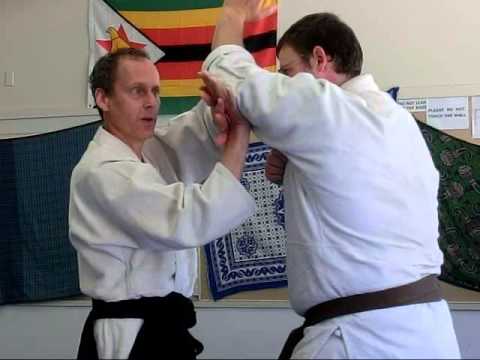
In the video, the defender enters irimi (straight in) to a shomen attack (vertical strike to the head).
Перевод: Front Face
Shomen-uchi (straight overhead cut to the front of the head) is the most fundamental cutting action in Japanese swordsmanship, documented in kenjutsu traditions from the Kamakura period (1185–1333) onward. [1] In kendo, shomen is the first men strike taught to beginners and is considered the purest expression of ki-ken-tai-ichi (unity of spirit, sword, and body), the central principle of kendo practice. [2] The All Japan Kendo Federation's official manual identifies shomen-men as the most important single strike in kendo, serving as both the primary scoring technique in competition and the foundation of all other cutting actions. [3] The technique's straight vertical trajectory descends along the centreline of the opponent's body, targeting the centre of the men (head protector). [2],[3]
Shomen-uchi (frontal head strike) is the fundamental straight downward cut in kendo, targeting the centre of the opponent's men (head protector). [1] It is the most commonly practised and most frequently scored strike in kendo because its direct vertical trajectory is the fastest path to the target and best demonstrates ki-ken-tai-ichi. [2]
Shomen-uchi (front head strike) is the most fundamental kendo strike, descended from the classical kenjutsu overhead cut. It represents the ideal of a single decisive cut. [1]
Shomen-uchi (men strike) is the most commonly scored technique in kendo competition at all levels, from local to World Championship. [1]
Изображений для этой техники пока нет.
Войдите, чтобы предложить изображение.
In the video, the defender enters irimi (straight in) to a shomen attack (vertical strike to the head).
Instructional video with Doug Wedell, Chief Instructor of Seidokan Aikido of South Carolina. This video demonstrates the…
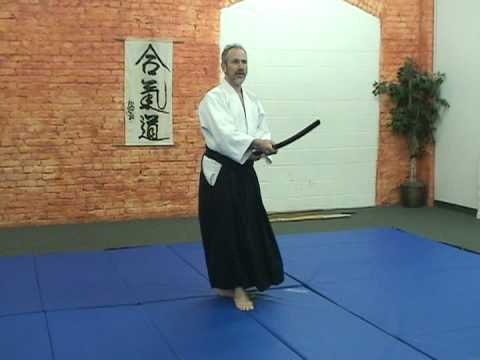
Shomen (shomenuchi) is a straight downward strike directed at the front of the head, one of the foundational attacks in kenjutsu and aikido practice. MasaKatsuAiki emphasizes shomen within the context of kumitachi (paired sword practice), where the defender learns to create openings and counter-attack in a structured 12-step sequence. The instructor stresses maintaining guard posture, executing precise wrist cuts (koteuchi) in response, and developing timing through methodical repetition rather than blade contact. The practice builds defensive awareness by alternating offensive and defensive roles, with the defender gradually building threat positions that force the attacker to respond. Joel Lindstrom approaches shomen from an aikido perspective, focusing on the entry and response to a shomen attack. He emphasizes proper body alignment—remaining upright and centered rather than leaning—and coordinating an atemi (strike to the face) with an elbow control underneath the opponent's striking arm. Both instructors prioritize slow, deliberate practice to develop sensitivity and balance rather than speed or force. While MasaKatsuAiki teaches shomen as both attack and counter-attack within sword forms, Lindstrom demonstrates defensive entry and off-balancing techniques in response to the attack, reflecting their respective martial traditions.
Сформировано на основе 2 инструкторов
Учебных курсов по этой технике пока нет.
Войдите, чтобы предложить курс.
Риск травмы для человека, к которому применяется техника
Edged weapons cause fatal lacerations; historical battlefield mortality rates >30% (Amberger 1999)
Уровень мастерства, необходимый для надёжного выполнения техники
Разрешена ли техника по основным соревновательным правилам
The Book of Five Rings (Miyamoto Musashi, 1645)
Alias sources — [1] Japanese Swordsmanship (Warner & Draeger, 1982) [2] Japanese Swordsmanship (Warner & Draeger, 1982) [3] Japanese Swordsmanship (Warner & Draeger, 1982)
Effectiveness sources — [1] All Japan Kendo Federation, Kendo Official Manual (AJKF) [2] Warner, G. & Draeger, D., Japanese Swordsmanship: Technique and Practice (Weatherhill, 1982)
Established Japanese martial arts naming convention — native Japanese term (和語/漢語)
Alias sources — [1] Japanese Swordsmanship (Warner & Draeger, 1982) [2] Japanese Swordsmanship (Warner & Draeger, 1982) [3] Japanese Swordsmanship (Warner & Draeger, 1982)
Effectiveness sources — [1] All Japan Kendo Federation, Kendo Official Manual (AJKF) [2] Warner, G. & Draeger, D., Japanese Swordsmanship: Technique and Practice (Weatherhill, 1982)
wrist control for edge alignment, grip endurance, footwork precision
quick wrists, strong forearms, good posture
forearm extensors/flexors, deltoids, core, calves
According to Joel Lindstrom, you want to keep your elbow down rather than out to the side, and maintain an erect, straight up and down posture. One hand should come right underneath your uke's elbow to establish proper position.
Joel Lindstrom emphasizes keeping your hands relaxed and open rather than gripping—once you grab on with your fingers, you lose sensitivity to which direction their weight is coming. Keep your weight down to your feet with legs together and hands relaxed to feel the proper direction.
According to MasaKatsuAiki, a common mistake is not moving with your left foot on the fourth count—make sure you step with the left foot on that movement, though muki koteuchi can use the right foot forward as an alternative.
Straight vertical cut descending along the centerline to strike the top of the head.
Shomen-uchi (straight overhead cut to the front of the head) is the most fundamental cutting action in Japanese swordsmanship, documented in kenjutsu traditions from the Kamakura period (1185–1333) onward. In kendo, shomen is the first men strike taught to beginners and is considered the purest expression of ki-ken-tai-ichi (unity of spirit, sword, and body), the central principle of kendo practice.
FIK Kendo: разрешён — Legal, valid strike requires correct form (datotsu-bu), spirit (kiai), and fo…
Оценка опасности 9/10. Extreme — edged weapons cause fatal lacerations; historical battlefield mortality rates >30% (Amberger 1999)
Стандартная цепочка подготовки: Ready Position → Distance Control → Execute Technique → Return to Guard.
Стандартные контрприёмы: Parry (Absetzen) — deflect the incoming blade with a counter-displacement / Void (Step Back) — withdraw from measure to avoid the cutting arc / Counter-Cut (Nachreisen) — strike into the opponent's opening during their attack.
Распространённые варианты: Standard cut (primary cutting angle from the ready stance); Thrust (tsuki) (straight thrust targeting the throat, chest, or face); Rising cut (kiri-age) (upward diagonal cut from low to high); Diagonal cut (kesa-giri) (downward diagonal cut following the kimono line).
Shomen-uchi (men strike) is the most commonly scored technique in kendo competition at all levels, from local to World Championship.
Основные ошибки, на которые стоит обратить внимание: Cutting at an angle instead of vertically — shomen must be perfectly vertical down the centreline / Pulling the cut to one side — the blade must track the centreline throughout the swing / Not raising the sword high enough — sufficient elevation is needed for proper cutting mechanics / Using only arm power — shomen requires coordinated body mechanics: step, hip, arms, and tenouchi.
Shomen также известен как Shomen Uchi, Straight Head Cut, Centre Men.