The Kote Cut targets the opponent's wrist or forearm, striking the area just above the hand to disable the opponent's ability to wield the sword. [1] In kendō, the kote strike targets the right kote when the opponent is in chūdan-no-kamae, requiring less travel distance than a men strike and making it one of the fastest attacks. [1],[2] In kenjutsu the kote cut was a primary battlefield strategy for disabling an opponent without requiring a lethal blow, and it is frequently scored as a counter-technique when the opponent initiates an overhead attack. [2],[3]
Targeting the wrists was a primary kenjutsu strategy for disabling an opponent's sword arm, a tactic that carried directly into kendō's competition framework. [1] The kote became a standard scoring target with the development of padded wrist protectors in the bōgu set during the Edo period. [2],[3]
Страна происхождения· показано в случайном порядке
🇯🇵Япония小手打ちКэндзюцу, Кэндо
Эффективность
Kote (wrist cut) targets the right wrist (or left wrist when in jodan no kamae), striking the opponent's most exposed target — the forward hand gripping the shinai. [1] Kote is often the highest-percentage attack against opponents in chudan no kamae because the forward wrist is the closest target. [2]
Родословная
The kote (wrist/forearm) cut targets the opponent's right forearm and was included as a valid kendo target because disabling the sword hand was a primary tactical objective in classical kenjutsu. [1]
Соревновательные результаты
Kote strikes represent the second most frequently scored technique in kendo competition after men, typically accounting for 25–35% of ippon scored in All Japan Kendo Championship matches. [1]
Изображения
Изображений для этой техники пока нет.
Войдите, чтобы предложить изображение.
Биомеханический механизм
Primary Action — Cutting, thrusting, or striking with a bladed weapon — edge alignment and trajectory determine cutting effectiveness
Joints Involved — Wrists (edge alignment and rotation), elbows (extension for thrusts, chambering for cuts), shoulders (arc of the cut), hips (power generation)
Force Vector — Varies — downward diagonal cut (kesa-giri), horizontal cut (yoko-giri), thrust (tsuki), or rising cut (kiri-age)
Weapon Mechanic — Edge alignment (hasuji) is critical — the blade must travel along its cutting plane for effective cuts
Позиция и вход
From ready stance (chudan-no-kamae or equivalent) — Assume guard position, establish distance (ma-ai), execute the cut or thrust when an opening appears
From engagement distance — Use footwork to close to striking range, execute the technique with proper edge alignment (hasuji)
As counter — Wait for the opponent's attack, deflect or avoid, and counter-cut to the exposed target
Варианты
Standard cut — primary cutting angle from the ready stance
Thrust (tsuki) — straight thrust targeting the throat, chest, or face
Rising cut (kiri-age) — upward diagonal cut from low to high
Diagonal cut (kesa-giri) — downward diagonal cut following the kimono line
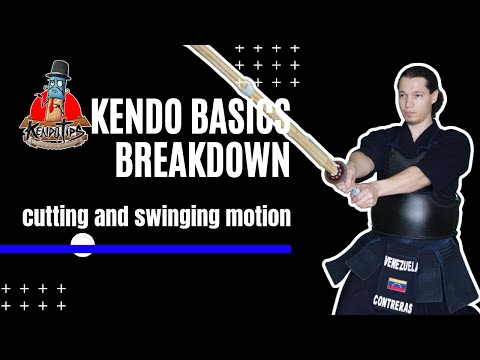
Kendo Basics: How to Cut ( swinging your shinai) A breakdown of the kendo technique to cut/strike
0
Kote Cut·Kendo Tips
#kendo #kendobasics #howtodokendo
I wanted to make this a video breaking down the motions on how to swing the shinai ( …
1 / 2
3 videos
Что говорят инструкторы
The kote cut (腕切り) is a fundamental striking technique in Japanese sword arts, targeting the opponent's forearm or wrist. According to Kendo Tips, the kote cut exemplifies proper cutting mechanics through controlled arm coordination and energy transfer. The technique begins with the left hand pushing the sword tip forward while raising it, with the right arm following rather than pulling. As the cut executes downward, the left arm leads the motion forward toward the target while the right arm provides stable guidance and control. Critical to effectiveness is the concept of 'throwing energy forward rather than down'—the intention must direct force toward the opponent rather than merely striking downward, which reduces impact and momentum. Kendo Tips emphasizes that both hands must extend equally without locking joints, and that the motion should resemble a whip, with energy cascading from shoulder through elbow, wrist, and fingers into the blade tip. The technique incorporates tenochi (手の内), a subtle hand rotation using the pinky and ring finger to add final speed and snap at the moment of impact. Proper form requires extensive slow-motion practice to internalize mechanics, followed by full-speed repetition to develop fluidity while eliminating unnecessary tension. Soke Anshu Christa Jacobson provides complementary instruction on formal sword handling and etiquette within iaido contexts, though her focus differs from combat cutting application.
Сформировано на основе 2 инструкторов
Kendo Tips — Kendo Basics: How to Cut (swinging your shinai) A breakdown of the kendo technique to cut/strike: Comprehensive breakdown of cutting mechanics including arm coordination, hand placement on the middle finger, left-hand forward drive, energy transfer principles, tenochi application, and the progression from slow practice to full-speed execution.
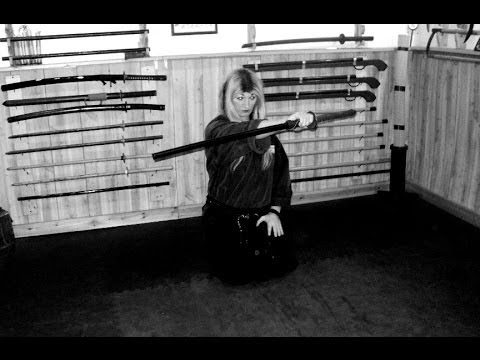
Soke Anshu Christa Jacobson — Samurai Swordsmanship | Correct Sword Etiquette (Rei Waza) | Iaijutsu Training Techniques (Iaido): Formal sword handling protocols and positioning (seza, zhan shin) relevant to traditional sword arts context, though focused on etiquette and draw rather than cutting technique application.
Изучить технику
Учебных курсов по этой технике пока нет.
Войдите, чтобы предложить курс.
Оценки
Уровень опасности
Риск травмы для человека, к которому применяется техника
✓Kote (wrist) cut is a strike to the opponent's forearm or wrist — targeting the kote (glove/gauntlet) area in kendo, representing a disabling strike that removes the opponent's ability to wield the sword (All Japan Kendo Federation, Japanese-English Dictionary of Kendo, 2011)
✓Kote is the fastest of the four kendo techniques: the target is the closest part of the opponent's body, requiring the shortest travel distance
✓In kendo, the primary kote target is the right kote (the leading forearm when in Chudan) — left kote is also valid when the opponent is in Jodan
✓Kote cut execution: from Chudan, raise the sword slightly and strike downward at the opponent's right forearm with a sharp, compact motion
✓Kote is often the first scoring opportunity in a match: the opponent's forearm is constantly exposed in Chudan, making it a perpetual target
✓The kote cut teaches precision: the target is small (the forearm), requiring accurate distance and targeting
✓Kote timing: kote is most effective when the opponent begins to raise their sword (for men) — the rising motion exposes the wrist
Типичные ошибки
!Cutting too far up the arm — the target is the wrist/forearm area near the kote flap, not the upper arm
!Using too much force on kote — the cut is compact and precise, not powerful
!Telegraphing the kote with a large preparation — the cut should begin from Chudan with minimal preparatory movement
!Not cutting with proper hasuji — even on the small kote target, edge alignment matters
!Missing the kote and hitting the opponent's sword — this indicates incorrect distance or timing
!Only attacking the right kote — left kote is valid, especially against Jodan stance
!Not developing kote as a timing technique — kote is most effective against the opponent's raising motion
3Initiate Cut/Thrust — execute the technique with proper edge alignment or point control
4Follow Through (Zanshin) — maintain awareness and readiness after the technique
Источники и ссылки
Основной источник
The Book of Five Rings (Miyamoto Musashi, 1645)
1КнигаThe Book of Five Rings (Musashi, 1645)
Alias sources — [1] Japanese Swordsmanship (Warner & Draeger, 1982) [2] Japanese Swordsmanship (Warner & Draeger, 1982) [3] Japanese Swordsmanship (Warner & Draeger, 1982)
2КнигаThe Art of Fencing (Barbasetti, 1932)
Effectiveness sources — [1] All Japan Kendo Federation, Kendo Official Manual (AJKF) [2] Warner, G. & Draeger, D., Japanese Swordsmanship: Technique and Practice (Weatherhill, 1982)
3ДругоеJapanese Martial Arts Standard Terminology (武道用語)
Established Japanese martial arts naming convention — native Japanese term (和語/漢語)
4ЦитатаThe Book of Five Rings (Musashi, 1645)
Alias sources — [1] Japanese Swordsmanship (Warner & Draeger, 1982) [2] Japanese Swordsmanship (Warner & Draeger, 1982) [3] Japanese Swordsmanship (Warner & Draeger, 1982)
5ЦитатаThe Art of Fencing (Barbasetti, 1932)
Effectiveness sources — [1] All Japan Kendo Federation, Kendo Official Manual (AJKF) [2] Warner, G. & Draeger, D., Japanese Swordsmanship: Technique and Practice (Weatherhill, 1982)
Сообщество
Атлетизм
Requires
wrist control for edge alignment, grip endurance, footwork precision
Favours
quick wrists, strong forearms, good posture
Key muscles
forearm extensors/flexors, deltoids, core, calves
Часто задаваемые вопросы
What's the most common mistake beginners make when raising the sword in kendo?
Many beginners pull with the right arm to bring the sword up, sometimes even toward themselves. Instead, you want a combination of both hands, with the left hand pushing the sword slightly forward to start raising the tip, according to Kendo Tips.
How should I position my arms when executing a kendo cut?
Lead with your left arm to pull the sword toward the opponent while throwing your arms forward with energy directed forward rather than down. Keep your right arm following the sword rather than pushing, and avoid locking your joints or tensing your shoulders to prevent injury, as explained in Kendo Tips.
What if my technique doesn't work perfectly in practice?
It's okay if execution isn't perfect every time—nothing is guaranteed. Learning multiple moves gives you options, so if one technique doesn't fully work out, you can follow through with something else, according to Martial Arts Unlimited.
How can I make my cuts more efficient and effective?
Focus on using less energy while getting better impact and more speed by internalizing proper technique to make your cuts fluid and natural, as Kendo Tips emphasizes. Keep your energy moving forward and ensure your left arm pulls while your right arm stays extended but not locked.
Как работает Kote Cut?
The Kote Cut targets the opponent's wrist or forearm, striking the area just above the hand to disable the opponent's ability to wield the sword. In kendō, the kote strike targets the right kote when the opponent is in chūdan-no-kamae, requiring less travel distance than a men strike and making it one of the fastest attacks.
Откуда происходит Kote Cut?
Targeting the wrists was a primary kenjutsu strategy for disabling an opponent's sword arm, a tactic that carried directly into kendō's competition framework. The kote became a standard scoring target with the development of padded wrist protectors in the bōgu set during the Edo period.
Разрешён ли Kote Cut на соревнованиях?
FIK Kendo: разрешён — Legal, valid strike requires correct form (datotsu-bu), spirit (kiai), and fo…
Насколько опасен Kote Cut?
Оценка опасности 9/10. Extreme — edged weapons cause fatal lacerations; historical battlefield mortality rates >30% (Amberger 1999)
Стандартные контрприёмы: Parry (Absetzen) — deflect the incoming blade with a counter-displacement / Void (Step Back) — withdraw from measure to avoid the cutting arc / Counter-Cut (Nachreisen) — strike into the opponent's opening during their attack.
Какие есть варианты Kote Cut?
Распространённые варианты: Standard cut (primary cutting angle from the ready stance); Thrust (tsuki) (straight thrust targeting the throat, chest, or face); Rising cut (kiri-age) (upward diagonal cut from low to high); Diagonal cut (kesa-giri) (downward diagonal cut following the kimono line).
Насколько эффективен Kote Cut на соревнованиях?
Kote strikes represent the second most frequently scored technique in kendo competition after men, typically accounting for 25–35% of ippon scored in All Japan Kendo Championship matches.
Какие типичные ошибки при выполнении Kote Cut?
Основные ошибки, на которые стоит обратить внимание: Cutting too far up the arm — the target is the wrist/forearm area near the kote flap, not the upper arm / Using too much force on kote — the cut is compact and precise, not powerful / Telegraphing the kote with a large preparation — the cut should begin from Chudan with minimal preparatory movement / Not cutting with proper hasuji — even on the small kote target, edge alignment matters.
Какие ещё названия есть у Kote Cut?
Kote Cut также известен как Kote, Wrist Cut, Forearm Strike.