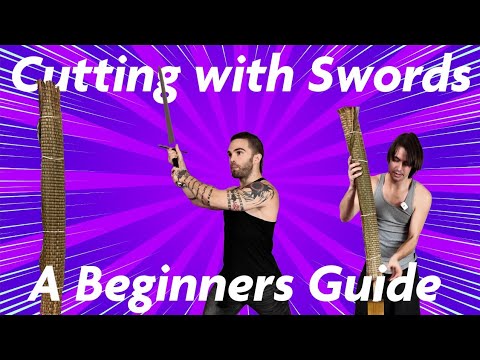
How to Start Cutting with Swords: a Beginners Guide to Test Cutting
0
Do Cut·Sellsword Arts
In this video we break down how to get started with test cutting! We talk about what kind of sword you should buy, how…
Перевод: Torso Strike
The Dō Cut targets the opponent's torso with a diagonal or horizontal cut to the midsection, one of the four primary target areas in both kenjutsu and kendō. [1] The dō cut requires precise blade angle to connect with the relatively flat surface of the torso, and in kendō it demands a distinctive follow-through where the striker passes to the side after contact. [1],[2] In kenjutsu the dō cut is valued as an effective attack against opponents who raise their guard high, exposing the midsection. [2],[3]
The torso cut (dō-uchi) derives from kenjutsu's horizontal and diagonal body cuts, adapted for kendō competition when the dō armour piece was incorporated into standard bōgu in the eighteenth century. [1] It remains one of the most dynamic techniques in both classical and modern Japanese sword arts. [2],[3]
Do (torso cut) is a diagonal or horizontal cut targeting the side of the opponent's torso protector, executed with a sweeping motion that requires precise hasuji (blade angle) to score. [1] Do is considered the most technically difficult of the four kendo targets because it requires cutting across the body while maintaining proper form, and judges demand clear cutting trajectory and zanshin. [2]
The dō (torso) cut in kendo descends from the classical kenjutsu horizontal cut targeting the opponent's midsection. It was included as one of the four valid target areas when kendo rules were standardised. [1]
Do strikes are the least frequently scored of the four kendo targets (men, kote, do, tsuki), typically accounting for 10–15% of ippon, but are valued for their technical difficulty and dramatic execution. [1]
Изображений для этой техники пока нет.
Войдите, чтобы предложить изображение.
In this video we break down how to get started with test cutting! We talk about what kind of sword you should buy, how…
Some thoughts about how we cut in martial arts. How to actually cut and how we execute cuts in training and competition …
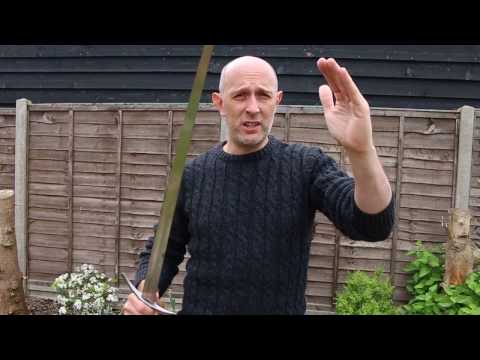
Today I go through how to do a draw cut and some tips and tricks of how to add more force and mass into the strike for a…
The do cut (dorsal or torso cut) is executed with attention to edge alignment, body mechanics, and the center of percussion on the blade. Just a Bug emphasizes that draw cuts—which include downward, sideways, and upward variations—require smooth, continuous motion to avoid self-injury, and that body mass must be incorporated differently depending on direction: upward body movement for downward cuts, rotational body movement for sideways cuts, and lower-to-upper body movement for upward cuts. Scholagladiatoria stresses the importance of striking at an oblique angle rather than perpendicular to the target, as this reduces effective edge angle, allows the blade to slice through and draw across the target, and prevents the blade from stopping completely upon impact. The instructor notes that the most effective cutting occurs in the center of percussion—typically two-thirds to three-quarters along the blade—where force transmission is strongest and edge geometry is most acute. Sellsword Arts reinforces proper body mechanics for cutting, emphasizing that cuts should incorporate the lats, hips, and legs rather than relying on arm strength alone, and that distance and stance (with the opposite-side foot forward from the cut direction) are critical for safety and effectiveness. All three instructors agree that test cutting on prepared targets (tatami mats) is essential for understanding true cutting mechanics, as opposed to sport-oriented tap-based techniques that do not reflect martial cutting principles.
Сформировано на основе 3 инструкторов
Учебных курсов по этой технике пока нет.
Войдите, чтобы предложить курс.
Риск травмы для человека, к которому применяется техника
Edged weapons cause fatal lacerations; historical battlefield mortality rates >30% (Amberger 1999)
Уровень мастерства, необходимый для надёжного выполнения техники
Разрешена ли техника по основным соревновательным правилам
The Book of Five Rings (Miyamoto Musashi, 1645)
Alias sources — [1] Japanese Swordsmanship (Warner & Draeger, 1982) [2] Japanese Swordsmanship (Warner & Draeger, 1982) [3] Japanese Swordsmanship (Warner & Draeger, 1982)
Effectiveness sources — [1] All Japan Kendo Federation, Kendo Official Manual (AJKF) [2] Warner, G. & Draeger, D., Japanese Swordsmanship: Technique and Practice (Weatherhill, 1982)
Established Japanese martial arts naming convention — native Japanese term (和語/漢語)
Alias sources — [1] Japanese Swordsmanship (Warner & Draeger, 1982) [2] Japanese Swordsmanship (Warner & Draeger, 1982) [3] Japanese Swordsmanship (Warner & Draeger, 1982)
Effectiveness sources — [1] All Japan Kendo Federation, Kendo Official Manual (AJKF) [2] Warner, G. & Draeger, D., Japanese Swordsmanship: Technique and Practice (Weatherhill, 1982)
wrist control for edge alignment, grip endurance, footwork precision
quick wrists, strong forearms, good posture
forearm extensors/flexors, deltoids, core, calves
You should always start by training draw cuts with a bokken (wooden sword) before attempting the real technique. Draw cuts are an advanced move, and if you've never done them before, you can really badly hurt yourself, so proper progression is essential.
You want to hit at an oblique angle rather than straight on. When you hit on the slant, the blade will naturally draw through and pass the target, allowing it to slice properly. Hitting straight will not cut well and can cause the blade to stick.
You want to add as much body mass as possible to create a powerful cut, which means your body position has to change slightly for each cut direction. For example, on a downward cut, your body comes up and then turns through to generate more force.
The most common injury is cutting your own leg. To prevent this, remember to position your feet correctly: if you're cutting to the left, have your right foot forward; if cutting to the right, have your left foot forward.
The Dō Cut targets the opponent's torso with a diagonal or horizontal cut to the midsection, one of the four primary target areas in both kenjutsu and kendō. The dō cut requires precise blade angle to connect with the relatively flat surface of the torso, and in kendō it demands a distinctive follow-through where the striker passes to the side after contact.
The torso cut (dō-uchi) derives from kenjutsu's horizontal and diagonal body cuts, adapted for kendō competition when the dō armour piece was incorporated into standard bōgu in the eighteenth century. It remains one of the most dynamic techniques in both classical and modern Japanese sword arts.
FIK Kendo: разрешён — Legal, valid strike requires correct form (datotsu-bu), spirit (kiai), and fo…
Оценка опасности 9/10. Extreme — edged weapons cause fatal lacerations; historical battlefield mortality rates >30% (Amberger 1999)
Стандартная цепочка подготовки: Assume Guard (Kamae/Hut) → Measure Distance (Ma-ai) → Initiate Cut/Thrust → Follow Through (Zanshin).
Стандартные контрприёмы: Parry (Absetzen) — deflect the incoming blade with a counter-displacement / Void (Step Back) — withdraw from measure to avoid the cutting arc / Counter-Cut (Nachreisen) — strike into the opponent's opening during their attack.
Распространённые варианты: Standard cut (primary cutting angle from the ready stance); Thrust (tsuki) (straight thrust targeting the throat, chest, or face); Rising cut (kiri-age) (upward diagonal cut from low to high); Diagonal cut (kesa-giri) (downward diagonal cut following the kimono line).
Do strikes are the least frequently scored of the four kendo targets (men, kote, do, tsuki), typically accounting for 10–15% of ippon, but are valued for their technical difficulty and dramatic execution.
Основные ошибки, на которые стоит обратить внимание: Cutting at the wrong height — do targets the chest protector area, not the stomach or the hips / Not passing through after the cut — the body must continue past the opponent with zanshin after the do cut / Using the cut as a defensive flinch — do must be an offensive, committed technique / Poor edge alignment on the horizontal path — hasuji on the do cut requires specific practice.
Do Cut также известен как Do, Trunk Cut, Body Strike.
![Advanced wakizashi technique-draw cutting [wakizashi tutorial/tameshigiri]](https://img.youtube.com/vi/tD-rXB924CA/hqdefault.jpg)