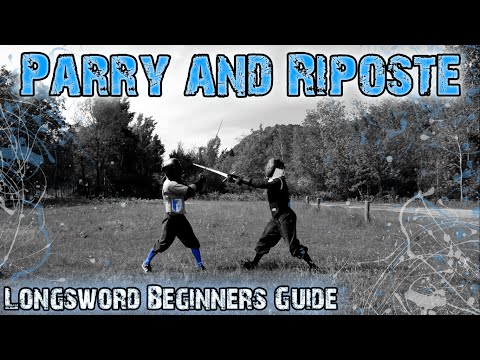
Longsword Beginners Guide #4 - Parry and Riposte
0
Oberhau·Federico Malagutti HEMA
Follow me on: PATREON - https://www.patreon.com/MalaguttiFederico Instagram - https://www.instagram.com/federicom…
Перевод: oberhau (over cut)
The Oberhau (descending cut) is the fundamental overhead cut of German longsword fencing, delivered from a high guard (Vom Tag or similar) downward to the opponent's head, shoulder, or arm. [1] The Oberhau is the most natural and powerful longsword cut, using gravity and the full range of shoulder rotation to generate force. [1],[2] Liechtenauer's system uses the Oberhau as the basis of the Zornhau (wrath cut), the first and most important of the five master cuts. [2],[3]
The Oberhau (Over Cut or Upper Cut) is the most basic and instinctive longsword cut — a powerful descending strike from above delivered with the long (true) edge. [1] Its biomechanical advantage comes from combining gravitational force with the downward rotational arc of the arms, generating maximum impact force. [2] Despite its simplicity, the Oberhau is highly effective and forms the foundation of all cutting technique in the German tradition. [2]
Изображений для этой техники пока нет.
Войдите, чтобы предложить изображение.
Follow me on: PATREON - https://www.patreon.com/MalaguttiFederico Instagram - https://www.instagram.com/federicom…
You can't return to the basics too much. Over the years, Josh and Aaron have often seen that problems students have in …
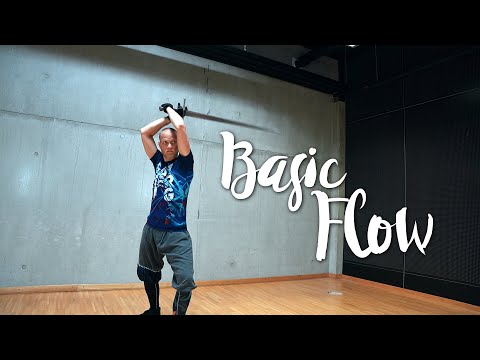
In this HEMA tutorial we will show you how to take the techniques from our beginner's course and combine them to a basic…
The Oberhau is foundational to Liechtenauer longsword technique, serving as one of two primary cuts from which all other techniques derive, according to historical manuscripts. Sword Carolina emphasizes that practitioners must cut toward the opponent's body rather than their sword, as this creates genuine threat and forces defensive response that establishes tempo advantage. Key mechanical principles include leading with the sword extended in front of the body before the feet follow—preventing the common error of stepping first with the sword held back. The cut transitions between guards (Winden into Platz or Alber, for example), with the finishing guard serving as the endpoint rather than an uncontrolled strike requiring correction. Sword Carolina stresses maintaining balance throughout the reach and extension, never overcommitting. Both the Oberhau and its counterpart Unterhau function simultaneously as offense and defense; the sword position itself provides parrying capability while setting aside incoming attacks. HEMATICS contextualizes the Oberhau within broader solo flow training, incorporating it with footwork, stance, and breathing to develop fluent movement. Federico Malagutti's instruction focuses on the riposte mechanics following parry, demonstrating how cuts like the Fendinterverso connect to guard transitions. All three instructors agree on the importance of body mechanics, proper footwork integration, and the cut's dual offensive-defensive nature within the Liechtenauer system.
Сформировано на основе 3 инструкторов
Учебных курсов по этой технике пока нет.
Войдите, чтобы предложить курс.
Риск травмы для человека, к которому применяется техника
Edged weapons cause fatal lacerations; historical battlefield mortality rates >30% (Amberger 1999)
Уровень мастерства, необходимый для надёжного выполнения техники
Разрешена ли техника по основным соревновательным правилам
The Art of Combat (Joachim Meyer, 1570)
Alias sources — [1] Sigmund Ringeck's Knightly Arts of Combat [2] Sigmund Ringeck's Knightly Arts of Combat [3] Sigmund Ringeck's Knightly Arts of Combat
Effectiveness sources — [1] Forgeng, J., The Art of Combat (Palgrave Macmillan, 2003) [2] Tobler, C., In Saint George's Name (Freelance Academy Press, 2010)
Standard katakana transliteration of Western martial arts terminology (外来語) — used in Japanese MMA, boxing, and BJJ communities
Alias sources — [1] Sigmund Ringeck's Knightly Arts of Combat [2] Sigmund Ringeck's Knightly Arts of Combat [3] Sigmund Ringeck's Knightly Arts of Combat
Effectiveness sources — [1] Forgeng, J., The Art of Combat (Palgrave Macmillan, 2003) [2] Tobler, C., In Saint George's Name (Freelance Academy Press, 2010)
wrist control for edge alignment, grip endurance, footwork precision
quick wrists, strong forearms, good posture
forearm extensors/flexors, deltoids, core, calves
According to Sword Carolina, the manuscripts state that the Oberhau and Unterhau are the two most fundamental cuts from which everything else is derived, making them essential to master.
Sword Carolina teaches that you can defend against a basic Oberhau by executing an Oberhau yourself—for example, moving from long tag into plow position to set your opponent's sword aside, which works effectively for many situations.
Every cut, including the Oberhau, involves transitioning from one guard to another, allowing you to move between different defensive and offensive positions.
Sword Carolina emphasizes that when attacking, you want to reach out quickly to the nearest opening, but when defending, you should pull back slightly because extended arms are more vulnerable to attacks coming around your defense.
The Oberhau (descending cut) is the fundamental overhead cut of German longsword fencing, delivered from a high guard (Vom Tag or similar) downward to the opponent's head, shoulder, or arm. The Oberhau is the most natural and powerful longsword cut, using gravity and the full range of shoulder rotation to generate force.
The Oberhau is the most fundamental cut in European swordsmanship, documented in every known longsword manuscript from the German tradition. Ringeck's gloss explicitly states that all sword combat begins from the Oberhau.
FIE: разрешён — Legal fencing technique — governed by FIE rules for foil, épée, and sabre; HEMA: разрешён — Legal in historical fencing competition
Оценка опасности 9/10. Extreme — edged weapons cause fatal lacerations; historical battlefield mortality rates >30% (Amberger 1999)
Стандартная цепочка подготовки: Assume Guard (Kamae/Hut) → Measure Distance (Ma-ai) → Initiate Cut/Thrust → Follow Through (Zanshin).
Стандартные контрприёмы: Parry (Absetzen) — deflect the incoming blade with a counter-displacement / Void (Step Back) — withdraw from measure to avoid the cutting arc / Counter-Cut (Nachreisen) — strike into the opponent's opening during their attack.
Распространённые варианты: Standard cut (primary cutting angle from the ready stance); Thrust (tsuki) (straight thrust targeting the throat, chest, or face); Rising cut (kiri-age) (upward diagonal cut from low to high); Diagonal cut (kesa-giri) (downward diagonal cut following the kimono line).
The Oberhau (overhand cut) is the most fundamental and commonly used cut in HEMA longsword competition. The Zornhau, a specific type of Oberhau, is the most frequent opening attack in tournament bouts.
Основные ошибки, на которые стоит обратить внимание: Using arm strength alone — the Oberhau power comes from the step, hip rotation, and body mass behind the blade / Poor edge alignment — the edge must be perfectly aligned with the direction of travel for an effective cut / Over-committing to the cut — the Oberhau should be controlled enough to allow recovery and follow-up / Not stepping with the cut — the passing step is integral to generating power and closing distance.
Oberhau также известен как Ōbāhau, Over-Cut, High Cut, Descending Strike.