Nerd to Knight: Using Pflug
0
Pflug·Adelaide Sword Academy
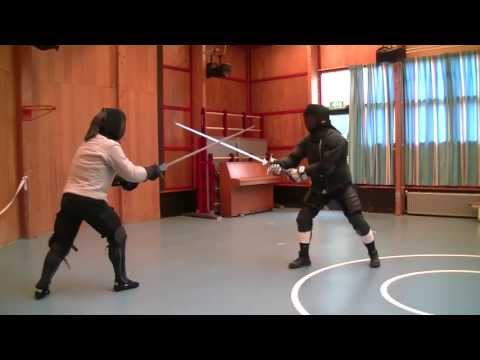
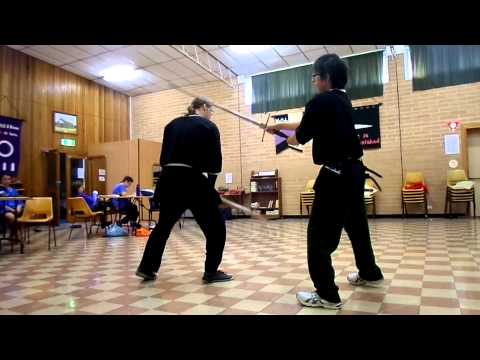
Using the guard Pflug, or plough. Offences, defences, and a couple of cool closes.
Перевод: pflug (plough guard)
Pflug (the plough) positions the longsword at hip level with the point aimed at the opponent's chest or throat, resembling the forward-pointing share of a plough. [1] Pflug is the mirror image of Ochs applied to the lower line, guarding the midsection while threatening a powerful centreline thrust. [1],[2] Like Ochs, Pflug can be held on either side of the body, and transitioning between left and right Pflug is a fundamental defensive movement that redirects incoming attacks. [2],[3]
Pflug (Plough) positions the sword low and to one side with the point aimed at the opponent's face or chest, covering the lower openings while threatening a thrust. [1] It is an excellent guard for controlling the bind (Winden) because the blade is already in the centre line, and the fencer can thrust, wind, or cut from this position with minimal telegraphing. [2] Liechtenauer's tradition considers Pflug one of the strongest defensive guards because it covers the lower body while maintaining an aggressive point threat. [2]
Pflug (plow) is one of the four primary guards in the Liechtenauer system, commonly used as a starting position in HEMA longsword tournament bouts. [1]
Изображений для этой техники пока нет.
Войдите, чтобы предложить изображение.
Using the guard Pflug, or plough. Offences, defences, and a couple of cool closes.
Starting point is binding in pflug, first from the right, then the left, with alternating right-of-way between white and…
Knowing the guards in the long sword, knowing which techniques and concepts to apply from each posture, and being able t…
The Pflug (Plow) is a fundamental longsword guard in historical European martial arts, particularly documented in late medieval and Renaissance sources including Joachim Meyer's 16th-century manuscript. According to Björn Rüther, the Pflug is one of four primary guards in medieval fencing traditions, alongside the Fool, Ox, and Day guards, though Meyer expanded the system to include 14 total guards with various transitions and endpoints. Rüther characterizes the Pflug as a popular and versatile guard frequently encountered in modern HEMA practice, combining defensive capability with offensive threat. The guard's primary strengths include rapid parrying of incoming strikes, quick attacks to the hands and arms, and effective thrust delivery. Rüther emphasizes that the Pflug facilitates thrusts and swift cuts to the extremities as its chief offensive tools, while simultaneously providing good defense through its structural positioning. The guard functions well at medium distances and serves as a common transitional posture during blade binding exchanges with opponents. Rüther notes that Meyer himself recommended practicing primarily from the Day guard rather than the more commonly favored Pflug among contemporary practitioners, though both remain core technical positions. The guard's versatility makes it suitable for flowing between various striking techniques and defensive responses without requiring dramatic repositioning.
Сформировано на основе 3 инструкторов
Учебных курсов по этой технике пока нет.
Войдите, чтобы предложить курс.
Риск травмы для человека, к которому применяется техника
Edged weapons cause fatal lacerations; historical battlefield mortality rates >30% (Amberger 1999)
Уровень мастерства, необходимый для надёжного выполнения техники
Разрешена ли техника по основным соревновательным правилам
The Art of Combat (Joachim Meyer, 1570)
Alias sources — [1] Sigmund Ringeck's Knightly Arts of Combat [2] Sigmund Ringeck's Knightly Arts of Combat [3] Sigmund Ringeck's Knightly Arts of Combat
Effectiveness sources — [1] Forgeng, J., The Art of Combat (Palgrave Macmillan, 2003) [2] Tobler, C., Fighting with the German Longsword (Freelance Academy Press, 2004)
Standard katakana transliteration of Western martial arts terminology (外来語) — used in Japanese MMA, boxing, and BJJ communities
Alias sources — [1] Sigmund Ringeck's Knightly Arts of Combat [2] Sigmund Ringeck's Knightly Arts of Combat [3] Sigmund Ringeck's Knightly Arts of Combat
Effectiveness sources — [1] Forgeng, J., The Art of Combat (Palgrave Macmillan, 2003) [2] Tobler, C., Fighting with the German Longsword (Freelance Academy Press, 2004)
wrist control for edge alignment, grip endurance, footwork precision
quick wrists, strong forearms, good posture
forearm extensors/flexors, deltoids, core, calves
You should never change your guard without an idea or intention behind it. Otherwise, you only give your opponent more options to attack openings while you're caught off-guard.
Pflug is particularly good for striking beautiful crooked hoos (hooked cuts).
Study multiple examples of what to fence from this posture and what concepts apply to it, as instructors like Meijer demonstrate various offensive, defensive, and counter-attack options from the guard.
Pflug (the plough) positions the longsword at hip level with the point aimed at the opponent's chest or throat, resembling the forward-pointing share of a plough. Pflug is the mirror image of Ochs applied to the lower line, guarding the midsection while threatening a powerful centreline thrust.
Pflug is one of Liechtenauer's four principal guards, described by the glossators as the guard that commands the lower openings. The agricultural imagery of the name reflects the medieval German tendency to use familiar objects as mnemonics for guard positions.
Traditional martial arts: разрешён — Practiced in traditional kata/forms and weapon-specific competition under var…; IWUF: разрешён — Legal in wushu taolu if applicable; HEMA: разрешён — Legal in applicable historical weapon categories
Оценка опасности 9/10. Extreme — edged weapons cause fatal lacerations; historical battlefield mortality rates >30% (Amberger 1999)
Стандартная цепочка подготовки: Assume Guard (Kamae/Hut) → Measure Distance (Ma-ai) → Initiate Cut/Thrust → Follow Through (Zanshin).
Стандартные контрприёмы: Parry (Absetzen) — deflect the incoming blade with a counter-displacement / Void (Step Back) — withdraw from measure to avoid the cutting arc / Counter-Cut (Nachreisen) — strike into the opponent's opening during their attack.
Распространённые варианты: Standard cut (primary cutting angle from the ready stance); Thrust (tsuki) (straight thrust targeting the throat, chest, or face); Rising cut (kiri-age) (upward diagonal cut from low to high); Diagonal cut (kesa-giri) (downward diagonal cut following the kimono line).
Pflug (plow) is one of the four primary guards in the Liechtenauer system, commonly used as a starting position in HEMA longsword tournament bouts.
Основные ошибки, на которые стоит обратить внимание: Holding the point too low — the point must be directed at the opponent's face or chest to maintain the threat / Not using both left and right Pflug — each side covers different openings; both must be practised / Keeping the hilt too far from the hip — the hilt should be close to the body for structural support / Not transitioning from Pflug to attack — the thrust from Pflug should be drilled until automatic.
Pflug также известен как Pufurūku, Plow Guard, Plough, Lower Thrust Guard.