Tanto Jutsu Video
0
Standard Tanto-Jutsu·United States Ninpo Academy
Tanto Jutsu Video
Перевод: Tanto Art Fundamentals
The Standard Tantō-Jutsu subfamily covers the core tantō techniques taught in koryū curricula, including forward thrusts, upward stabs, slashing cuts, and the defensive tantō-dori (knife-taking) methods found in arts such as aikidō and jujutsu. [1] Training uses either a wooden tantō (bokken tantō) or a rubber training knife, with kata practised in paired forms where one partner attacks and the other defends. [1],[2] Standard tantō-jutsu emphasises proper grip, distancing (maai), and the coordination of blade work with body movement (tai sabaki). [2],[3]
Standard tantō techniques have been transmitted through koryū kata since the Muromachi period (1336–1573), with Takenouchi-ryū (founded 1532) being one of the oldest documented systems to include tantō methods. [1] Modern budō arts such as aikidō adopted tantō-dori (knife defence) as a regular component of their testing curricula. [2],[3]
Standard tantōjutsu provides close-range offensive and defensive capability with a short blade, emphasising precision thrusting and concealed draws. [1]
Tantōjutsu was transmitted within Japanese koryū schools as a complementary discipline to kenjutsu and jūjutsu. [1]
Tantōjutsu is practised within koryū schools and demonstrated at embu events. [1]
Изображений для этой техники пока нет.
Войдите, чтобы предложить изображение.
Tanto Jutsu Video
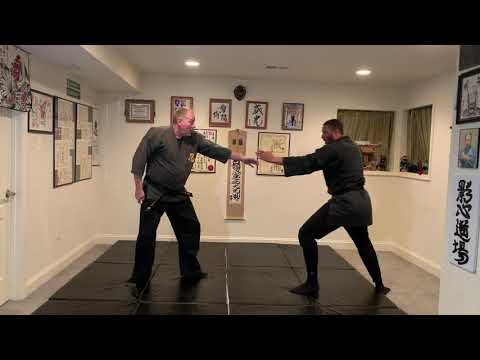
Here is a quick video that was once Patreon members only. Showing some ideas and principles of the Tanto (knife).
Учебных курсов по этой технике пока нет.
Войдите, чтобы предложить курс.
Риск травмы для человека, к которому применяется техника
Knives and short blades are the most common weapon in real-world assaults; high lethality
Уровень мастерства, необходимый для надёжного выполнения техники
Разрешена ли техника по основным соревновательным правилам
Bubishi: The Classic Manual of Combat (Patrick McCarthy, 2008)
Alias sources — [1] Japanese Swordsmanship (Warner & Draeger, 1982) [2] Secrets of the Samurai (Ratti & Westbrook, 1973) [3] Secrets of the Samurai (Ratti & Westbrook, 1973)
Effectiveness sources — [1] Classical Fighting Arts of Japan (Mol, 2001)
Established Japanese martial arts naming convention — native Japanese term (和語/漢語)
Alias sources — [1] Japanese Swordsmanship (Warner & Draeger, 1982) [2] Secrets of the Samurai (Ratti & Westbrook, 1973) [3] Secrets of the Samurai (Ratti & Westbrook, 1973)
Effectiveness sources — [1] Classical Fighting Arts of Japan (Mol, 2001)
wrist control for edge alignment, grip endurance, footwork precision
quick wrists, strong forearms, good posture
forearm extensors/flexors, deltoids, core, calves
Каждое движение в любом боевом искусстве обладает рядом универсальных свойств. Комбинируйте параметры ниже, чтобы найти нужный инструмент или сравнить аналоги из разных стилей.
Hide the knife so your opponent doesn't know what's coming. You can keep it hidden or positioned in front of you, but the key is concealment—your opponent shouldn't know what's going on as they attack.
The first cut should be almost an illusion—it's not meant to just slice. Instead, it's like punching or hitting as hard as you can with the knife, creating a deceptive opening before your real attacks follow.
Use parrying to defend, then turn your elbow in while cutting repeatedly to lock up your opponent and stay in control. This allows you to chain multiple attacks together while managing the threat.
Move effectively rather than fast—the goal is to have at least three different attacks available every time you move with the knife, giving you multiple options to respond to your opponent's movements.
The Standard Tantō-Jutsu subfamily covers the core tantō techniques taught in koryū curricula, including forward thrusts, upward stabs, slashing cuts, and the defensive tantō-dori (knife-taking) methods found in arts such as aikidō and jujutsu. Training uses either a wooden tantō (bokken tantō) or a rubber training knife, with kata practised in paired forms where one partner attacks and the other defends.
Standard tantō techniques have been transmitted through koryū kata since the Muromachi period (1336–1573), with Takenouchi-ryū (founded 1532) being one of the oldest documented systems to include tantō methods. Modern budō arts such as aikidō adopted tantō-dori (knife defence) as a regular component of their testing curricula.
Traditional martial arts: разрешён — Practiced in traditional kata/forms and weapon-specific competition under var…; IWUF: разрешён — Legal in wushu taolu if applicable; HEMA: разрешён — Legal in applicable historical weapon categories
Оценка опасности 9/10. Extreme — knives and short blades are the most common weapon in real-world assaults; high lethality
Стандартная цепочка подготовки: Ready Position → Distance Control → Execute Technique → Return to Guard.
Стандартные контрприёмы: Parry (Absetzen) — deflect the incoming blade with a counter-displacement / Void (Step Back) — withdraw from measure to avoid the cutting arc / Counter-Cut (Nachreisen) — strike into the opponent's opening during their attack.
Распространённые варианты: Standard cut (primary cutting angle from the ready stance); Thrust (tsuki) (straight thrust targeting the throat, chest, or face); Rising cut (kiri-age) (upward diagonal cut from low to high); Diagonal cut (kesa-giri) (downward diagonal cut following the kimono line).
Tantōjutsu is practised within koryū schools and demonstrated at embu events.
Основные ошибки, на которые стоит обратить внимание: Flinching away from the attack — proper tanto defence moves toward the attacker at an angle; retreating straight back… / Trying to grab the blade — control the wrist and arm, never the blade itself / Using only arm blocks — the body must move off the attack line; arms alone cannot reliably stop a committed attack / Not applying the joint lock fully — a partial lock allows the attacker to retain the weapon; full application is esse….
Standard Tanto-Jutsu также известен как Tanto-do, Short Blade Art, Japanese Knife Method.