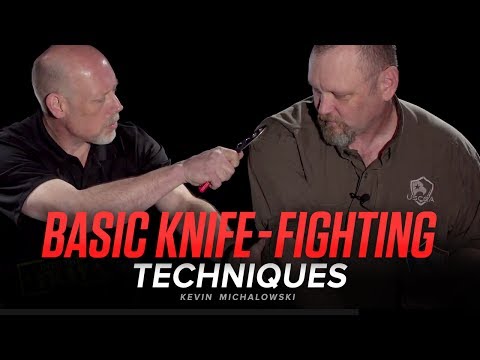
Basic Knife-Fighting Techniques: Into the Fray Episode 168
0
Standard Knife Thrust·USCCA
▶ Gun Law Map (FREE): https://uscca.co/oOyA ▶ Join USCCA: https://uscca.co/Bn62 Thousands of USCCA Members have acted i…
Перевод: standard knife thrust
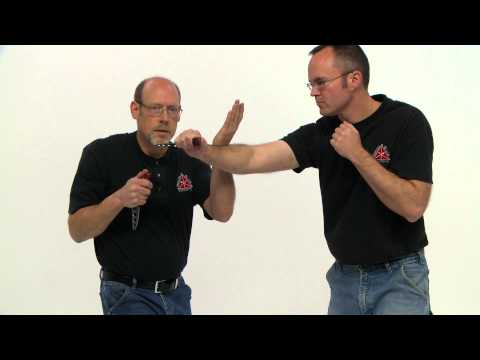
The Standard Knife Thrust drives the blade point directly forward into the target along the centreline, powered by extension of the arm and a forward step or body shift. [1] The thrust is delivered from the forward grip with the blade aligned horizontally or vertically depending on the intended target area. [1],[2] Proper thrusting mechanics emphasise full extension, retraction to guard, and immediate readiness for follow-up cuts or additional thrusts. [2],[3]
The straight thrust is the foundation of virtually all military knife-fighting programs, codified by Fairbairn and Sykes for British commandos and subsequently adopted by military forces worldwide. [1] Filipino martial arts also teach the straight thrust (tusok or saksak) as a core knife technique. [2],[3]
The standard knife thrust is the fundamental forward stabbing action, the most direct and lethal knife technique. [1]
The basic knife thrust is universal across all blade-fighting traditions worldwide. [1]
Standard knife thrusts are the most common scoring action in FMA dagger competition. [1]
Изображений для этой техники пока нет.
Войдите, чтобы предложить изображение.
▶ Gun Law Map (FREE): https://uscca.co/oOyA ▶ Join USCCA: https://uscca.co/Bn62 Thousands of USCCA Members have acted i…
Martial Blade Concepts Volume 5 Reverse-Grip Knife Fighting - The MBC Approach Featuring Michael D. Janich http://www.s…
Use this coupon Code and get 40% OFF my Knife Fighting Course: knifevideo40 Buy here: https://www.kalicenter.training/co…
The standard knife thrust is a foundational offensive technique across multiple fighting systems, executed by driving the blade toward a target along a linear path. StaySafeMedia's Martial Blade Concepts (MBC) emphasizes the thrust as a secondary follow-up after check-and-cut sequences, particularly in reverse-grip applications where the practitioner establishes control before committing to penetration—for instance, checking an incoming angle-one attack, cutting upward to target flexor tendons, then thrusting at the neck once the opponent's arm is managed. Kali Center identifies the thrust as the primary tactical application of the knife, superior to slashing because it penetrates deeper into organs and bone, creating faster physiological shutdown; instructors distinguish between fluid thrusts (which follow through the centerline) and broken thrusts (shorter, jabbing motions). USCCA's Marshall Blade Concepts treats the thrust as an endpoint in a damage-chain sequence: after cutting the forearm to disable grip and the tricep to eliminate extension, the practitioner thrusts into the quadricep above the knee to eliminate mobility, generating downward pressure while rotating the blade in the flesh. All three sources agree the thrust leverages body mechanics and commitment rather than arm strength alone, though they differ in positioning—MBC focuses on thrust as part of asymmetrical drills involving checks and footwork, while Kali Center and USCCA emphasize the thrust's role in target prioritization and finishing sequences.
Сформировано на основе 3 инструкторов
Учебных курсов по этой технике пока нет.
Войдите, чтобы предложить курс.
Риск травмы для человека, к которому применяется техника
Knives and short blades are the most common weapon in real-world assaults; high lethality
Уровень мастерства, необходимый для надёжного выполнения техники
Разрешена ли техника по основным соревновательным правилам
Bubishi: The Classic Manual of Combat (Patrick McCarthy, 2008)
Alias sources — [1] Filipino Martial Arts (Wiley, 1994) [2] Hoplology (Burton, 1884) [3] Comprehensive Asian Fighting Arts (Draeger & Smith, 1969)
Effectiveness sources — [1] Filipino Martial Arts (Wiley, 1997)
Mixed Japanese-Western terminology — combines traditional Japanese terms with katakana loanwords
Alias sources — [1] Filipino Martial Arts (Wiley, 1994) [2] Hoplology (Burton, 1884) [3] Comprehensive Asian Fighting Arts (Draeger & Smith, 1969)
Effectiveness sources — [1] Filipino Martial Arts (Wiley, 1997)
wrist control for edge alignment, grip endurance, footwork precision
quick wrists, strong forearms, good posture
forearm extensors/flexors, deltoids, core, calves
When you thrust and the knife stops suddenly, your hand will continue forward if not properly secured. The Kali Center emphasizes 'capping the knife' with your thumb on top so your hand stops with the blade and doesn't slide down onto the edge, potentially cutting your fingers or thumb.
Place your thumb on top of the knife rather than using a hammer grip. This prevents your hand from sliding down the blade if the knife suddenly stops during impact, protecting you from cutting yourself.
According to USCCA instruction, after you cut, ensure you're positioned to the outside of your opponent's body and limit their mobility by controlling one joint, preventing them from coming back at you.
The Standard Knife Thrust drives the blade point directly forward into the target along the centreline, powered by extension of the arm and a forward step or body shift. The thrust is delivered from the forward grip with the blade aligned horizontally or vertically depending on the intended target area.
The straight thrust is the foundation of virtually all military knife-fighting programs, codified by Fairbairn and Sykes for British commandos and subsequently adopted by military forces worldwide. Filipino martial arts also teach the straight thrust (tusok or saksak) as a core knife technique.
WEKAF: разрешён — Legal in padded stick competition; HEMA: разрешён — Legal in applicable weapon categories
Оценка опасности 9/10. Extreme — knives and short blades are the most common weapon in real-world assaults; high lethality
Стандартная цепочка подготовки: Ready Position → Distance Control → Execute Technique → Return to Guard.
Стандартные контрприёмы: Parry (Absetzen) — deflect the incoming blade with a counter-displacement / Void (Step Back) — withdraw from measure to avoid the cutting arc / Counter-Cut (Nachreisen) — strike into the opponent's opening during their attack.
Распространённые варианты: Standard cut (primary cutting angle from the ready stance); Thrust (tsuki) (straight thrust targeting the throat, chest, or face); Rising cut (kiri-age) (upward diagonal cut from low to high); Diagonal cut (kesa-giri) (downward diagonal cut following the kimono line).
Standard knife thrusts are the most common scoring action in FMA dagger competition.
Основные ошибки, на которые стоит обратить внимание: Bending the wrist — wrist flexion or extension misaligns the blade and reduces penetration; keep the wrist locked and… / Not checking with the non-weapon hand — thrusting without controlling the opponent's weapon invites a mutual exchange / Stepping directly forward into the opponent — step at a slight angle to avoid being on the direct counter-attack line / Using a slow, pushing motion — the thrust must be explosive; velocity is critical for effectiveness.
Standard Knife Thrust также известен как Sutandādo Naifu Tsuki, Saksak Diretso, Straight Stab, Direct Knife Thrust.