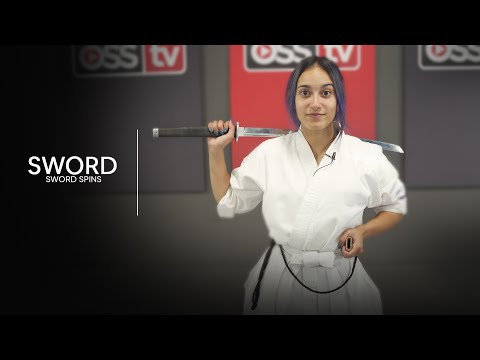
Learn Cool Sword Spins with World Champion Jewelianna Ramos Ortiz
0
Slash Cut·Oss TV
Have you ever wanted to learn cool sword spins?? Jewelianna Ramos-Ortiz is a World Champion Sword Woman and she loves to…
Перевод: slash cut
The Slash Cut is a broad, sweeping knife action that draws the blade edge across the target in a horizontal or diagonal arc, maximising the length of the cutting surface in contact with the target. [1] Unlike a chop, which relies on impact force, the slash uses a pulling or pushing motion to let the blade's edge do the work, making it effective even with moderate force. [1],[2] In Filipino martial arts the slash is a primary offensive tool, often targeting the forearm, hand, or neck. [2],[3]
Slashing techniques are among the most intuitive knife actions and have been documented in Filipino martial arts, European dagger manuscripts, and modern combatives curricula. [1] The slash's effectiveness against unarmoured targets made it a staple of street and battlefield knife use across cultures. [2],[3]
The slash cut is a fast, sweeping cut that prioritises speed over power, useful for targeting exposed areas quickly. [1]
Slashing cuts were part of classical kenjutsu technique, with different schools emphasising different cutting mechanics. [1]
Slash cuts are demonstrated in koryū embu and performed in tameshigiri competition. [1]
Изображений для этой техники пока нет.
Войдите, чтобы предложить изображение.
Have you ever wanted to learn cool sword spins?? Jewelianna Ramos-Ortiz is a World Champion Sword Woman and she loves to…
Work on your thrust and slash! Learn the concept of thrust and slash with Apolo Ladra, founder of iKali, Wika Sports,…
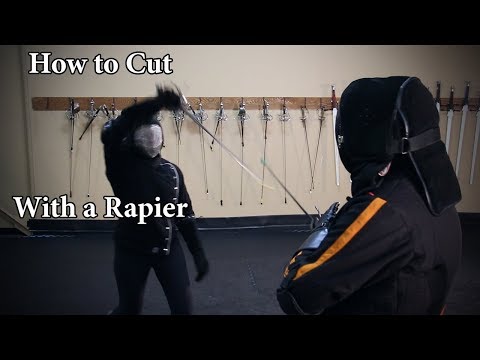
Cutting with a rapier is quite different than say a longsword or a broadsword. It requires a slicing component, which re…
The slash cut is a fundamental striking technique taught across multiple weapon systems, with instructors emphasizing different contexts and mechanics. Oss TV (Jewelianna Ramos Ortiz) demonstrates slash cuts as part of sword spinning combinations, teaching the technique as a chambered finishing movement after spinning low and overhead blocks, executed by hinging the hips forward while driving the blade diagonally across the target. iKali TV presents slash cuts within Filipino martial arts drills, establishing the slash as a complementary counterpart to thrusts—when a thrust cannot be executed from a given body position, the practitioner shifts mechanics to generate a slash instead, with hand positioning (palm side or thumb contact against the body) determining the cut's path and preventing rigidity in flow. Blood and Iron HEMA (Nicole Smith, Jillian Schutze) contextualizes rapier cuts as tactical alternatives when the point is driven offline and disengagement would be inefficient, emphasizing that cuts function as slicing motions rather than percussive hacks, requiring closer measure than thrusts and demanding consistent edge alignment through the blade's travel. All three instructors agree on the importance of proper body mechanics—hip rotation for power generation—and follow-through for effective cutting. Where they diverge is in weapon type and primary application: Oss TV emphasizes spinning transitions and chamber positioning, iKali TV stresses positional adaptability and continuous flow, and Blood and Iron HEMA prioritizes tactical decision-making and slicing mechanics over percussive strikes.
Сформировано на основе 3 инструкторов
Учебных курсов по этой технике пока нет.
Войдите, чтобы предложить курс.
Риск травмы для человека, к которому применяется техника
Knives and short blades are the most common weapon in real-world assaults; high lethality
Уровень мастерства, необходимый для надёжного выполнения техники
Разрешена ли техника по основным соревновательным правилам
Bubishi: The Classic Manual of Combat (Patrick McCarthy, 2008)
Alias sources — [1] Filipino Martial Arts (Wiley, 1994) [2] Hoplology (Burton, 1884) [3] Comprehensive Asian Fighting Arts (Draeger & Smith, 1969)
Effectiveness sources — [1] Classical Bujutsu (Draeger, 1973)
Mixed Japanese-Western terminology — combines traditional Japanese terms with katakana loanwords
Alias sources — [1] Filipino Martial Arts (Wiley, 1994) [2] Hoplology (Burton, 1884) [3] Comprehensive Asian Fighting Arts (Draeger & Smith, 1969)
Effectiveness sources — [1] Classical Bujutsu (Draeger, 1973)
wrist control for edge alignment, grip endurance, footwork precision
quick wrists, strong forearms, good posture
forearm extensors/flexors, deltoids, core, calves
False edge cuts are inherently weaker because it's harder to keep consistent pressure throughout the cut. However, if you have enough percussive force on the blade and enough travel time, you can still make them effective.
Pivoting around your opponent's leg and drawing through is more effective than stepping forward and pulling back, which creates awkward positioning and compromises edge alignment.
Keep moving through your technique instead of stopping between movements—thrust, slash, thrust, slash—so you don't become rigid and break your flow.
The Slash Cut is a broad, sweeping knife action that draws the blade edge across the target in a horizontal or diagonal arc, maximising the length of the cutting surface in contact with the target. Unlike a chop, which relies on impact force, the slash uses a pulling or pushing motion to let the blade's edge do the work, making it effective even with moderate force.
Slashing techniques are among the most intuitive knife actions and have been documented in Filipino martial arts, European dagger manuscripts, and modern combatives curricula. The slash's effectiveness against unarmoured targets made it a staple of street and battlefield knife use across cultures.
WEKAF: разрешён — Legal in padded stick competition; HEMA: разрешён — Legal in applicable weapon categories
Оценка опасности 9/10. Extreme — knives and short blades are the most common weapon in real-world assaults; high lethality
Стандартная цепочка подготовки: Ready Position → Distance Control → Execute Technique → Return to Guard.
Стандартные контрприёмы: Parry (Absetzen) — deflect the incoming blade with a counter-displacement / Void (Step Back) — withdraw from measure to avoid the cutting arc / Counter-Cut (Nachreisen) — strike into the opponent's opening during their attack.
Распространённые варианты: Standard cut (primary cutting angle from the ready stance); Thrust (tsuki) (straight thrust targeting the throat, chest, or face); Rising cut (kiri-age) (upward diagonal cut from low to high); Diagonal cut (kesa-giri) (downward diagonal cut following the kimono line).
Slash cuts are demonstrated in koryū embu and performed in tameshigiri competition.
Основные ошибки, на которые стоит обратить внимание: Hitting with the edge rather than drawing through — the slash must have a pulling component to cut effectively / Swinging too wide — a wide slash telegraphs the attack and leaves the defender open to counter-thrusts / Not using body rotation — the slash derives power from hip rotation; arm-only slashes are slow and weak / Cutting at only one level — vary between high, middle, and low slashes to prevent the opponent from defending a singl….
Slash Cut также известен как Surasshu Kiri, Taga Pahilis, Diagonal Slash, Forehand Knife Cut.