SINAWALI Technique Breakdown | Filipino Martial Arts
0
Single Sinawali·JoeyBslash 3
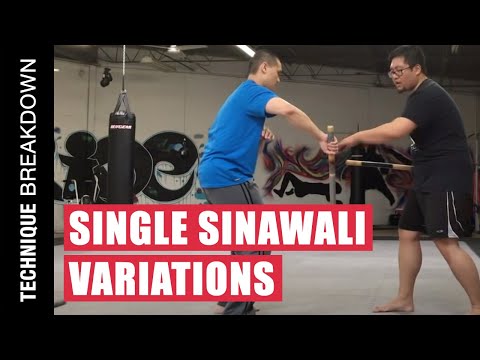
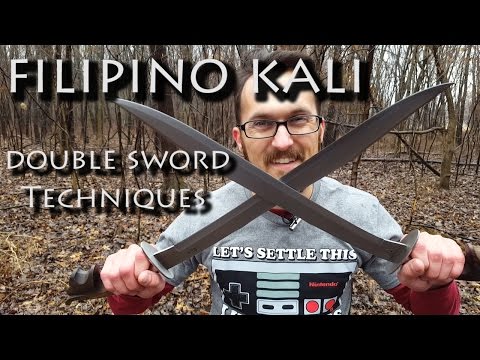
Hey FIT-GAMERS, In this video, we are breaking down two techniques from a previous double sword video, found right here…
Перевод: single sinawali
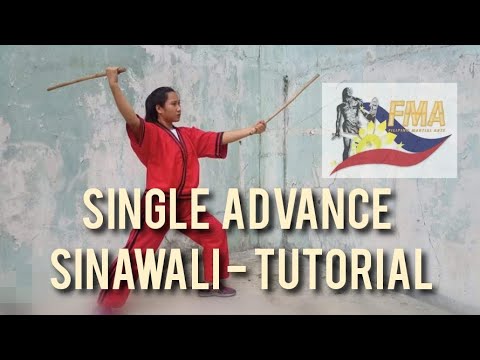
Single Sinawali (also called Heaven Standard or basic X-pattern) is the foundational weaving pattern where the two sticks alternate in a crossing pattern — one stick strikes high on one side while the other passes underneath, then they switch, creating a continuous figure-eight or X-shaped weaving motion. [1] Single sinawali is the first doble baston pattern taught in most Filipino martial arts systems because it establishes the fundamental bilateral coordination and timing that all more advanced patterns build upon. [1],[2] The pattern creates a basic offensive-defensive screen: one stick is always striking while the other is in position to block, maintaining continuous coverage. [2],[3]
Single sinawali is the foundational double-stick weaving pattern in FMA, teaching coordination and timing between both hands. [1]
Single sinawali patterns are the basis of double-stick competition and form work at FMA events. [1]
Изображений для этой техники пока нет.
Войдите, чтобы предложить изображение.
Hey FIT-GAMERS, In this video, we are breaking down two techniques from a previous double sword video, found right here…
TAKE OUR FREE ONLINE COURSE: Fundamentals of Stick Blocks and Counters https://bit.ly/3sLbEAn Breakdown EP 48: There ar…
Single Sinawali is a fundamental coordination drill in Filipino martial arts that teaches alternating forehand and backhand striking patterns with double sticks. FMA Pulse defines the basic progression as a stationary drill combining forehand high strikes with retractions followed by backhand low strikes with retractions, performed in a continuous eight-count rhythm. The instructor emphasizes starting slowly before adding footwork and speed. FMA Pulse also introduces a "tuck" variation where one stick is chambered under the armpit while the other hand strikes, then the hands exchange positions—developing upper and lower body coordination simultaneously. Variations presented include striking the floor between high and low strikes, sliding techniques along the ground, and twirling motions that incorporate stick-to-stick contact. JoeyBslash 3 focuses on weaving applications within Sinawali, demonstrating slash-thrust-slash-jab combinations and diagonal uppercut exchanges where hands cross and uncross in coordinated patterns. JoeyBslash 3 emphasizes maintaining grip security with all fingers rather than relying on thumbs alone, and stresses progression from rattan training sticks to aluminum or dull training blades only after achieving proficiency. Both instructors agree on the importance of slow, stationary practice before advancing complexity, though FMA Pulse provides more detailed drill mechanics while JoeyBslash 3 contextualizes Sinawali within practical blade applications.
Сформировано на основе 3 инструкторов
Учебных курсов по этой технике пока нет.
Войдите, чтобы предложить курс.
Риск травмы для человека, к которому применяется техника
Arnis/Escrima/Kali stick and blade techniques; designed for close-range lethality
Уровень мастерства, необходимый для надёжного выполнения техники
Разрешена ли техника по основным соревновательным правилам
The Filipino Martial Arts (Dan Inosanto, 1980)
Alias sources — [1] Filipino Martial Arts (Wiley, 1994) [2] Filipino Martial Arts (Wiley, 1994) [3] Filipino Martial Arts (Wiley, 1994)
Effectiveness sources — [1] Inosanto, D., The Filipino Martial Arts (Know Now Publishing, 1980)
Standard katakana transliteration of Western martial arts terminology (外来語) — used in Japanese MMA, boxing, and BJJ communities
Alias sources — [1] Filipino Martial Arts (Wiley, 1994) [2] Filipino Martial Arts (Wiley, 1994) [3] Filipino Martial Arts (Wiley, 1994)
Effectiveness sources — [1] Inosanto, D., The Filipino Martial Arts (Know Now Publishing, 1980)
wrist speed, hand coordination (especially double stick), cardiovascular endurance
quick hands, conditioned forearms, coordination
forearms, wrists, shoulders, core rotators
Keep your grip firm with your last two fingers staying on the weapons rather than just holding on with your thumbs or thumb and forefinger. This ensures proper control throughout the weaving movements.
Start with rattan sticks, training sticks, or training swords like aluminum or dull swords to build coordination safely. Only progress to live blades very slowly once you're really proficient with training tools.
Single Sinawali (also called Heaven Standard or basic X-pattern) is the foundational weaving pattern where the two sticks alternate in a crossing pattern — one stick strikes high on one side while the other passes underneath, then they switch, creating a continuous figure-eight or X-shaped weaving motion. Single sinawali is the first doble baston pattern taught in most Filipino martial arts systems because it establishes the fundamental bilateral coordination and timing that all more advanced patterns build upon.
Single sinawali is the most fundamental double-stick pattern in Filipino martial arts, taught as the introductory doble baston technique in virtually every Arnis, Eskrima, and Kali system. It is often the first technique demonstrated to new students and public audiences.
WEKAF: разрешён — Legal in padded stick competition; HEMA: разрешён — Legal in applicable weapon categories
Оценка опасности 8/10. Very High — Arnis/Escrima/Kali stick and blade techniques; designed for close-range lethality
Стандартная цепочка подготовки: Grip and Stance → Chamber → Strike → Recovery.
Стандартные контрприёмы: Umbrella Block — raise the stick overhead to intercept a downward strike / Cross Block — meet the incoming strike with a perpendicular block / Disarm — strip the opponent's weapon through leverage on the hand or wrist.
Распространённые варианты: Angle 1 (forehand diagonal) (downward diagonal strike from the dominant side); Angle 2 (backhand diagonal) (downward diagonal strike from the off side); Angle 5 (thrust) (straight thrust with the tip of the stick); Redonda (continuous) (flowing circular strikes chaining multiple angles).
Single sinawali patterns are the basis of double-stick competition and form work at FMA events.
Основные ошибки, на которые стоит обратить внимание: Making both strikes the same angle — the high and low strikes should clearly target different levels / Not crossing the centreline — the strikes should cross the body's centreline to create the weaving pattern / Using only wrist movement — single sinawali requires whole-arm movement with wrist snap at the end / Not maintaining a consistent rhythm — the one-two timing must be steady; erratic rhythm shows poor control.
Single Sinawali также известен как Shinguru Shinawari, Single Weave, Basic Sinawali, Heaven Six.