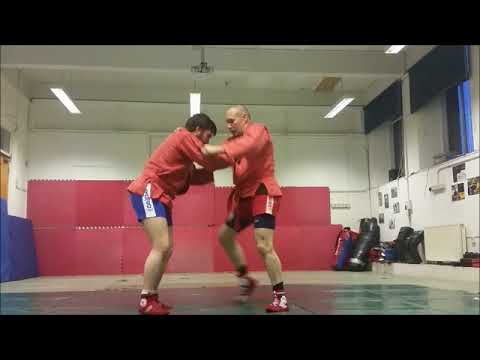
Sambo - How to Throw Uchimata (Podhvat Iznutry)
0
Sambo Throw·Vadim Kolganov Sport
Sambo Wrestling. Podhvat Iznutry ( Uchimata) and variation of Rolling Uchimata. Counter throws : Pick up and side step.…
Перевод: Sambo throwing technique
Sambo Throw is the family of throwing techniques characteristic of sport sambo and combat sambo, which combine elements of judo, Greco-Roman wrestling, freestyle wrestling, and the folk wrestling traditions of the diverse peoples of the former Soviet Union. [1],[2] Sambo throws are distinguished by their permissive rules regarding leg grabs, belt grips, and unorthodox entry angles — techniques that have been restricted or banned in modern judo competition. [2],[3] The sambo throwing arsenal emphasises practical effectiveness, with athletes trained to execute throws from a wide variety of gripping positions including belt holds, collar ties, underhooks, and direct leg attacks. [3],[4] Many throws in sambo resemble judo or wrestling techniques but are adapted to the sambo jacket (kurtka) and the sport's specific scoring criteria, which reward amplitude and decisive finishes. [4]
Sambo's throwing techniques were systematised during the 1920s and 1930s in the Soviet Union by Vasili Oshchepkov, who held a second-dan in Kodokan judo, and Viktor Spiridonov, a military hand-to-hand combat instructor. [1],[2] They combined Japanese judo throws with Georgian chidaoba, Uzbek kurash, Mongolian wrestling, and other Central Asian folk wrestling techniques to create a comprehensive throwing system. [2],[3] FIAS (the International Sambo Federation) now governs the sport internationally. [3]
Изображений для этой техники пока нет.
Войдите, чтобы предложить изображение.
Sambo Wrestling. Podhvat Iznutry ( Uchimata) and variation of Rolling Uchimata. Counter throws : Pick up and side step.…
Учебных курсов по этой технике пока нет.
Войдите, чтобы предложить курс.
Риск травмы для человека, к которому применяется техника
Sambo throws combine judo and wrestling mechanics (Kolychev 1988)
Уровень мастерства, необходимый для надёжного выполнения техники
Разрешена ли техника по основным соревновательным правилам
Japanese Sambo Federation terminology
Japanese Sambo Federation terminology
Mixed Japanese-Western terminology — combines traditional Japanese terms with katakana loanwords
Katakana transliteration used in Japanese Sambo (サンボ)
single-leg balance, hip flexibility, explosive driving power
long legs for hooking reach, strong standing balance
glutes, hip flexors, hamstrings, core, calves (balance)
Каждое движение в любом боевом искусстве обладает рядом универсальных свойств. Комбинируйте параметры ниже, чтобы найти нужный инструмент или сравнить аналоги из разных стилей.
Sambo throws appear in 7 passages across 3 books under 'sambo throw' plus extensive coverage under individual throw names. Sambo combines judo throws with wrestling takedowns and leg attacks — the throwing system allows gripping the legs (unlike modern IJF judo). (3+ books; Sambo competition records)
Sambo Throw is the family of throwing techniques characteristic of sport sambo and combat sambo, which combine elements of judo, Greco-Roman wrestling, freestyle wrestling, and the folk wrestling traditions of the diverse peoples of the former Soviet Union. Sambo throws are distinguished by their permissive rules regarding leg grabs, belt grips, and unorthodox entry angles — techniques that have been restricted or banned in modern judo competition.
Sambo's throwing techniques were systematised during the 1920s and 1930s in the Soviet Union by Vasili Oshchepkov, who held a second-dan in Kodokan judo, and Viktor Spiridonov, a military hand-to-hand combat instructor. They combined Japanese judo throws with Georgian chidaoba, Uzbek kurash, Mongolian wrestling, and other Central Asian folk wrestling techniques to create a comprehensive throwing system.
IJF: запрещён — Banned since 2010 leg grab prohibition — direct hansoku-make; IBJJF: разрешён — Legal at all belt levels; UWW: разрешён — Legal in both freestyle and Greco-Roman; Unified MMA: разрешён — Legal throwing technique; ADCC: разрешён — Legal; FIAS Sport Sambo: разрешён — Legal; FIAS Combat Sambo: разрешён — Legal
Оценка опасности 6/10. High — Sambo throws combine judo and wrestling mechanics (Kolychev 1988)
Стандартная цепочка подготовки: Grip Setup (Kumi-kata) → Off-Balance (Kuzushi) → Entry (Tsukuri) → Execution (Kake).
Стандартные контрприёмы: Lower Centre of Gravity — bend knees and drop hips to make the throw harder to execute / Grip Break — deny the thrower their preferred gripping configuration / Stiff-Arm — maintain distance with straight arms to prevent the entry.
Распространённые варианты: Standard technique (primary execution from standard grip and positioning); No-gi adaptation (modified without gi grips for submission grappling or MMA); Combination entry (entering from a failed attack or chain of techniques); Counter throw (applied as a direct counter to the opponent's throw or at…).
Sambo throws are featured in International Sambo Federation (FIAS) World Championships and are used by MMA fighters with sambo backgrounds, notably Khabib Nurmagomedov and Fedor Emelianenko.
Основные ошибки, на которые стоит обратить внимание: Using only judo-style entries without adapting to sambo's wider grip vocabulary — sambo allows more grip options / Neglecting leg-grab throws, which are sambo's competitive advantage over modern judo / Not training submission defence alongside throws — in sambo, opponents can attack submissions immediately after being… / Relying only on upper-body control without using leg techniques — sambo's leg attacks are what distinguish it.
Sambo Throw также известен как Sanbo Nage-waza, Sambo throws, Russian throws, Combat sambo throws.