Jiu-Jitsu Submissions | Lots of Closed Guard Submissions
0
From Closed Guard·Knight Jiu-Jitsu
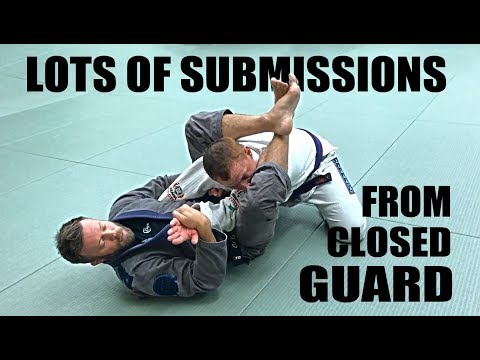
So much more at Patreon.com/KnightJiuJitsu Here are quite a lot of submissions from closed guard. These go from pretty …
Перевод: from closed guard
The radial deviation wrist lock from closed guard applies sideways wrist pressure toward the thumb side while the attacker maintains closed guard control. [1],[2] The attacker isolates the opponent's posting hand from inside closed guard, controls the wrist, and applies radial deviation — pushing the hand toward the thumb — while the guard prevents the opponent from posturing away. [1] This is an opportunistic attack when the opponent posts a hand inside the guard for balance, exposing the wrist to manipulation. [1] Closed guard provides the control needed to finish. [1],[2]
Wrist locks from closed guard have been part of BJJ's arsenal since the art's early development, though they were often considered lower-priority techniques compared to chokes and armlocks. [1],[2] The radial deviation variant is one of several guard-based wrist attacks that gained recognition as wrist lock systems became more refined in modern competition. [1]
The closed guard is one of the most prolific submission-generating positions in BJJ, offering triangles, armbars, cross-collar chokes, and omoplatas. [1]
Closed guard submissions were central to the Gracie family's BJJ system and remain fundamental to the art. [1]
Closed guard submissions (triangles, armbars, collar chokes) are among the most commonly completed submissions in IBJJF competition. [1]
Изображений для этой техники пока нет.
Войдите, чтобы предложить изображение.
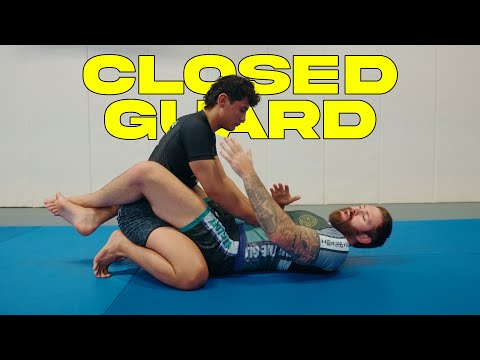
So much more at Patreon.com/KnightJiuJitsu Here are quite a lot of submissions from closed guard. These go from pretty …
Hi everyone, my name is Gordon Ryan. This is a look into my life. If you enjoy it, watch it. If you hate it, watch it. I…
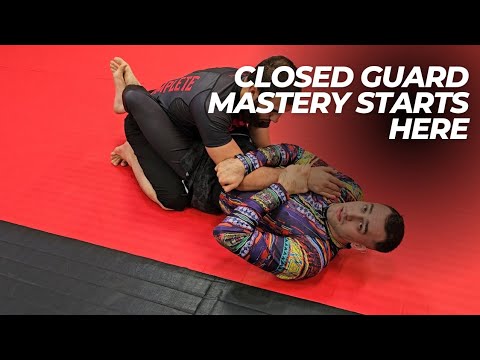
🔺 Welcome to IsakIvanovicjj - Your Gateway to BJJ Mastery! 🔺 📚 Today's Lesson: "Elevated Basics: The Ultimate No-Gi …
From closed guard, wrist-lock radial-deviation attacks emerge as part of a broader submission taxonomy rather than as isolated techniques in these instructional sources. IsakIvanovicjj emphasizes that closed guard provides exceptional control and safety for the superior grappler, with wrist manipulation serving as a foundational grip-fighting tool to establish hand-position dominance before transitioning to higher-percentage submissions. Specifically, IsakIvanovicjj demonstrates peeling the wrist with fingers to expose it for grip control, which precedes the Kimura (a shoulder lock relying on wrist and elbow positioning). Knight Jiu-Jitsu's approach similarly incorporates wrist control as part of sequential submission chains—once the opponent's posture is broken or the guard player gains superior positioning, wrist grips facilitate transitions between collar chokes, armbars, triangles, and shoulder locks. Both instructors treat wrist manipulation as a positional entry point rather than a primary finish, using finger-peeling and wrist-grabbing techniques to set up more kinetically dominant submissions. The radial-deviation pressure (inward wrist rotation) appears implicit in their finishing mechanics for Kimura and shoulder locks rather than as an independent attack. Gordon Ryan's transcript provides no substantive technical content. Agreement centers on wrist control as a prerequisite for establishing grips that enable transitions; difference lies in IsakIvanovicjj's explicit focus on the Kimura finish versus Knight Jiu-Jitsu's broader submission-chaining methodology.
Сформировано на основе 3 инструкторов
Учебных курсов по этой технике пока нет.
Войдите, чтобы предложить курс.
Риск травмы для человека, к которому применяется техника
Wrist lock variant targeting carpal and radioulnar joints through forced deviation or torsion
Уровень мастерства, необходимый для надёжного выполнения техники
Разрешена ли техника по основным соревновательным правилам
Japanese martial arts anatomical terminology
Japanese martial arts anatomical terminology
Standard katakana transliteration of Western martial arts terminology (外来語) — used in Japanese MMA, boxing, and BJJ communities
Japanese terminology sourced from Japanese martial arts anatomical terminology
fine motor control, grip sensitivity, quick hand transitions
dexterous hands with strong fingers
forearm flexors and extensors, intrinsic hand muscles
Closed guard is essentially mount upside down, making it a very safe position to play in jiu-jitsu (IsakIvanovicjj).
Use your knees and legs to pull someone in rather than relying on hand strength—your legs and core are much stronger and make closed guard truly effective (IsakIvanovicjj).
Closed guard is a battle for inside position; when you have your hands in the middle, you can grab the head, go for overhooks, or attack with shoulder crunches, whereas your opponent will try to get his hands in your armpits to stand up (IsakIvanovicjj).
Keep your guard closed and your opponent's elbow pulled tight to your centerline; pulling the elbow inside your hip allows you to climb your legs high and control them with a top lock position (IsakIvanovicjj).
From the top lock, you have multiple offensive options including armbars, triangles, and Kimora attacks; this position is very safe while offering strong finishing opportunities (IsakIvanovicjj).
If your opponent has strong posture with good hand position, look for collar grabs deep inside the back of the collar, then progress to cross chokes, armlocks, and triangles in a linear fashion (Knight Jiu-Jitsu).
The radial deviation wrist lock from closed guard applies sideways wrist pressure toward the thumb side while the attacker maintains closed guard control. The attacker isolates the opponent's posting hand from inside closed guard, controls the wrist, and applies radial deviation — pushing the hand toward the thumb — while the guard prevents the opponent from posturing away.
Wrist locks from closed guard have been part of BJJ's arsenal since the art's early development, though they were often considered lower-priority techniques compared to chokes and armlocks. The radial deviation variant is one of several guard-based wrist attacks that gained recognition as wrist lock systems became more refined in modern competition.
IBJJF: разрешён — Legal at all belt levels; IJF: запрещён — Only elbow joint locks (kansetsu-waza) permitted in judo — all other joint lo…; ADCC: разрешён — Legal — all submissions legal in ADCC; Unified MMA: разрешён — Legal submission technique; FIAS Sport Sambo: разрешён — Legal; FIAS Combat Sambo: разрешён — Legal
Оценка опасности 5/10. Wrist lock variant targeting carpal and radioulnar joints through forced deviation or torsion
Стандартная цепочка подготовки: Establish Position → Create the Threat → Secure the Hold → Finish.
Стандартные контрприёмы: Early Recognition — identify the submission attempt early and begin defence immediately / Posture and Base — maintain strong posture and base to prevent submission setups / Grip Fight — deny the attacker their preferred gripping configuration.
Распространённые варианты: Standard wrist lock (kote gaeshi) (two-handed rotational lock on the wrist); Gooseneck wrist lock (flexion lock bending the wrist down toward the forearm); Standing wrist lock (applied during grip fighting or a standing exchange); Ground wrist lock (catching the opponent's posted hand from mount, side cont…).
Closed guard submissions (triangles, armbars, collar chokes) are among the most commonly completed submissions in IBJJF competition.
Основные ошибки, на которые стоит обратить внимание: Attempting without breaking the opponent's posture — if they're fully postured, they can retract the hand; use the le… / Opening the guard to pursue the wrist lock — maintain closed guard for control; opening the guard sacrifices the posi… / Not transitioning when the wrist lock fails — use the hand control to set up armbars, triangles, and sweeps / Attempting against a fisted hand — wait for the hand to open (which it must do to push or post); a fist is too strong….
From Closed Guard также известен как Kurōzudo Gādo kara, Closed Guard Lock, Fechada Guard Submission.