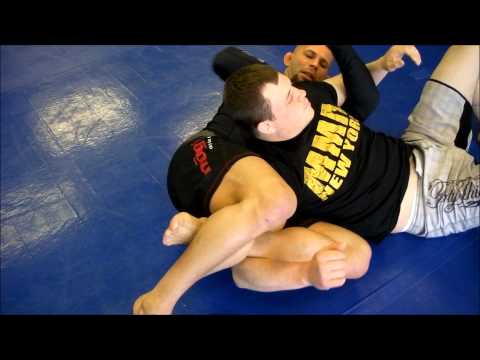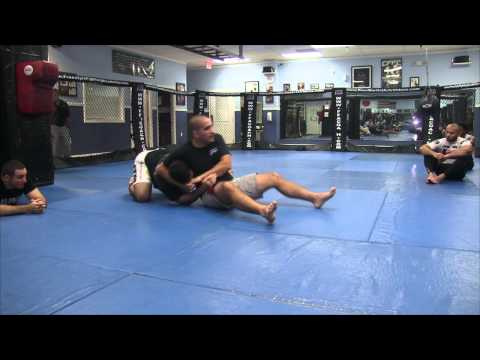
Neck Crank by Avellan (like Josh Barnett vs Dean Lister) MMA BJJ
0
Crank And Twist Lock·Freestyle Fighting Academy
http://www.FFAcoach.com Marcos Avellan explains how to finish a neck crank from the sit-out position (aka head and arm p…
Перевод: Twist-and-Wrench Techniques
Cranks and twists are submission techniques that apply rotational or torsional force to a body segment — most commonly the neck (neck cranks) or the arm — forcing the structure beyond its natural rotational range. [6] Unlike joint locks that target a single joint in a linear direction, cranks apply multidirectional torque that stresses ligaments, intervertebral discs, and surrounding soft tissue simultaneously. [6] Neck cranks can generate submission through cervical spine compression, rotation, or lateral flexion; common examples include the can opener (from closed guard), the twister (attacking the thoracic and cervical spine from back control), and various chin strap positions. Arm cranks apply rotational force along the long axis of the humerus or forearm. Cranks are among the most controversial submissions in competition: the IBJJF prohibits most neck cranks (cervical locks) at all belt levels [1]; judo prohibits them entirely; but ADCC, most no-gi events, and MMA under Unified Rules permit neck cranks. The twister, popularized by Eddie Bravo's 10th Planet Jiu-Jitsu system, is one of the most spectacular but rarely applied crank submissions in professional competition.
Neck cranking techniques have ancient roots in catch wrestling, where they were standard finishing holds in professional matches during the late 19th and early 20th centuries. [8] Catch wrestlers such as Frank Gotch and George Hackenschmidt employed cervical locks and spine-twisting holds as primary submissions. [8] In Japanese martial arts, kubi-nage (neck throw) and related cervical attacks appear in classical jujutsu curricula, though they were largely excluded from Kodokan Judo's competition rules due to injury risk. [7] Eddie Bravo's development of the twister — derived from wrestling's guillotine ride position — within his 10th Planet Jiu-Jitsu system brought renewed attention to spinal submissions in modern grappling. [6]
Crank and twist locks combine rotational force with compression to attack joints and the spine simultaneously. [1]
Combined crank-twist locks appear in catch wrestling and were adopted into submission grappling. [1]
Crank and twist submissions appear in MMA and advanced submission grappling events. [1]
Изображений для этой техники пока нет.
Войдите, чтобы предложить изображение.
http://www.FFAcoach.com Marcos Avellan explains how to finish a neck crank from the sit-out position (aka head and arm p…
Neck Crank Submission from attacking the Quater position. To learn this and other submissions from Brazilian Jiu-Jitsu a…
Учебных курсов по этой технике пока нет.
Войдите, чтобы предложить курс.
Риск травмы для человека, к которому применяется техника
Spinal cranks risk cervical vertebrae injury; considered among the most dangerous submissions
Уровень мастерства, необходимый для надёжного выполнения техники
Разрешена ли техника по основным соревновательным правилам
Mastering Jujitsu — Renzo Gracie, John Danaher (2003)
Crank and torsion technique principles in grappling
Prohibited cervical techniques in judo rules
Catch wrestling neck crank and spine lock heritage
Official Kodokan ground technique classification system
Standard Japanese martial arts terminology (kanji/hiragana)
Established Japanese martial arts naming convention — native Japanese term (和語/漢語)
Crank and torsion technique principles in grappling
Prohibited cervical techniques in judo rules
Catch wrestling neck crank and spine lock heritage
grip strength, joint isolation ability, positional control
strong forearms and stable base
forearm flexors, core stabilisers, hip muscles for base
Каждое движение в любом боевом искусстве обладает рядом универсальных свойств. Комбинируйте параметры ниже, чтобы найти нужный инструмент или сравнить аналоги из разных стилей.
Cranks and twists attack the spine and neck through forced rotation, extension, or lateral flexion. Neck crank appears in 42 passages across 20 books. More dangerous than chokes — the spine tolerates less force than the carotid arteries. The Twister (595 passages/16 books) is the most famous spinal crank. (20+ books; IBJJF Rules v6.0; Bravo, Mastering the Twister)
Place your knee deep between your opponent's arms, ensuring it's positioned right in the middle. If your opponent is keeping very tight and not letting you in, slide your knee into their side to create space and get it in deeper.
Wait for your opponent to start moving and expose the arm naturally rather than going after it too aggressively, as excessive pressure can give them better control and put strain on the knee joint.
Catch higher on the head rather than at the base of the neck—the higher you catch, the more pressure you create on the neck, and you'll get more torque from the crown of the head position.
Avoid positioning your head too far away from your opponent's head, as this allows their leg to come in and their other hand to create problems. Also avoid spreading your leg out, which allows them to hook your leg and use counters. Instead, keep your head close and crawl up high with your leg.
Don't crank the head straight backwards, as this compromises your base and releases pressure. Instead, come around and scoop the elbow with your forearm while locking your hands, then apply pressure by putting weight down on the chest simultaneously as you crank up, like a cat stretch.
Cranks and twists are submission techniques that apply rotational or torsional force to a body segment — most commonly the neck (neck cranks) or the arm — forcing the structure beyond its natural rotational range. Unlike joint locks that target a single joint in a linear direction, cranks apply multidirectional torque that stresses ligaments, intervertebral discs, and surrounding soft tissue simultaneously.
Neck cranking techniques have ancient roots in catch wrestling, where they were standard finishing holds in professional matches during the late 19th and early 20th centuries. Catch wrestlers such as Frank Gotch and George Hackenschmidt employed cervical locks and spine-twisting holds as primary submissions.
IBJJF: запрещён — Neck cranks and spinal locks prohibited at all belt levels; IJF: запрещён — Spinal locks and neck cranks prohibited; ADCC: разрешён — Legal — neck cranks and spinal locks permitted; Unified MMA: разрешён — Legal; FIAS Sport Sambo: запрещён — Twisting of cervical spine prohibited; FIAS Combat Sambo: разрешён — Legal
Оценка опасности 8/10. Spinal cranks risk cervical vertebrae injury; considered among the most dangerous submissions
Стандартная цепочка подготовки: Establish Position → Create the Threat → Secure the Hold → Finish.
Стандартные контрприёмы: Early Recognition — identify the submission attempt early and begin defence immediately / Posture and Base — maintain strong posture and base to prevent submission setups / Grip Fight — deny the attacker their preferred gripping configuration.
Распространённые варианты: Standard variation (primary grip configuration and finishing angle); Gi variation (using the gi material for grip assistance and control); No-gi variation (adapted grips for submission grappling without the gi); Transition variation (applied during a positional change or scramble).
Crank and twist submissions appear in MMA and advanced submission grappling events.
Основные ошибки, на которые стоит обратить внимание: Applying cranks explosively — rotational submissions can cause permanent damage to the spine and joints; controlled a… / Not knowing the competition rules — many cranks are illegal in specific rule sets; know what's allowed before competing / Using cranks as primary attacks — cranks are most effective when the opponent is already controlled; they fail agains… / Applying spinal cranks without controlling the hips — the spine can only be cranked effectively when the hips are imm….
Crank And Twist Lock также известен как Hineri Kujiki Waza, Cranks, Twisting Locks, Spinal Manipulation Submissions.