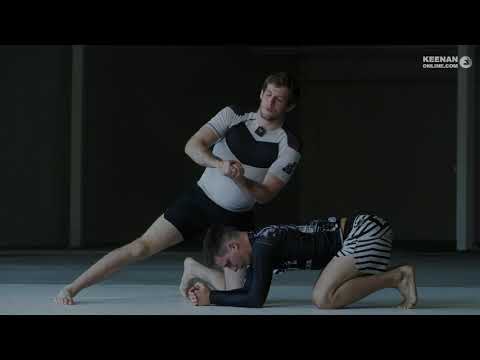
Necktie Lever

Подсемейство

Перевод: Front Headlock Choke (katakana loanword)

Дистанция и классификация

Категория
Удар и защитаЗамкиБлижний бойБой против нескольких
Дистанция
БлижняяСредняяДальняя
Целевая зона
Верхняя частьСредняя частьНижняя часть

Обзор

Necktie-lever chokes use a necktie grip (arm draped over the back of the opponent's neck) combined with a leg or body lever to apply choking pressure. [1] The Peruvian necktie is the primary technique: the attacker secures a front headlock, steps a leg over the opponent's back, and sits back, using the leg as a lever to drive the forearm into the throat. [2],[3]

Также известна как
Necktie Choke[1]Cravate Submission[2]Necktie Lock[3]
Используется в

История и происхождение

The Peruvian necktie was popularized by Tony DeSouza, a Peruvian-American MMA fighter and grappler, who demonstrated its effectiveness in competition in the 2000s. [1],[2] It represents the innovative combination of wrestling-style head control with BJJ submission finishing. [3]

Страна происхождения· показано в случайном порядке

  • БразилияБразильское джиу-джитсу, Сабмишн-грэпплинг, ММА
  • ЯпонияБразильское джиу-джитсу, Дзюдо, Сабмишн-грэпплинг
  • СШАСабмишн-грэпплинг, ММА
  • РоссияСамбо

Эффективность

The necktie lever mechanic — using leg pressure across the back of the neck combined with head-and-arm control — creates one of the most powerful compression chokes in no-gi grappling [1]

Родословная

The lever concept underlying the Peruvian Necktie family; formalized by Tony DeSouza and subsequently analyzed by John Danaher in his front headlock instructional series [1]

Соревновательные результаты

The necktie lever principle has produced finishes across ADCC, no-gi worlds, and MMA at the highest levels since the mid-2000s [1]

Изображения

Изображений для этой техники пока нет.

Войдите, чтобы предложить изображение.

Биомеханический механизм

Primary ActionCompression of the neck structures — restricts blood flow or airway depending on technique application
Joints InvolvedCervical spine, surrounding musculature, and vascular structures of the neck
Force VectorDirected compression against the neck from the choking limb or body position
Finishing MechanicSustained pressure causes either vascular occlusion (unconsciousness) or tracheal restriction (breathing difficulty)

Позиция и вход

From back control with seatbeltEstablish hooks or body triangle, slide choking arm under the chin, connect hands and squeeze
From turtle top (back take)Break down the turtle, insert hooks, secure seatbelt grip, slide to back control and apply the choke
From standing back clinchSecure rear body lock, drag opponent to the mat while inserting hooks, transition to choking position

Видео

The Peruvian Necktie - Use all 4 limbs to finish this exotic choke

0
Necktie Lever·Keenan Cornelius

The Peruvian Necktie strangulation technique will make your opponent helpless. Helpless as you descend upon them with al

1 video

Изучить технику

Учебных курсов по этой технике пока нет.

Войдите, чтобы предложить курс.

Оценки

Уровень опасности

Риск травмы для человека, к которому применяется техника

9
Экстремальный9/10

Necktie chokes use leg pressure over the back combined with front headlock grip for extreme compression

Сложность

Уровень мастерства, необходимый для надёжного выполнения техники

Продвинутый
Допустимость на соревнованиях

Разрешена ли техника по основным соревновательным правилам

Запрещено
FIAS Sport Sambo — All chokes prohibited in Sport Sambo
FIAS International Sambo Competition RulesPDF
Разрешено
IBJJF — Legal at all belt levels, gi and no-gi — chokes a...
IBJJF Rules Book v6.0, June 2024PDF
ADCC — Legal
ADCC Rules Update, April 2025PDF
Unified MMA — Legal — choke submissions are among the mos...
Unified Rules of MMA, August 2025PDF
FIAS Combat Sambo — Legal
FIAS Combat Sambo RulesPDF

Заметки по тренировке

The necktie-lever subfamily organises front headlock chokes that add a structural lever (leg, shin, or shoulder) to a headlock grip — the lever amplifies the strangling force beyond what the arms alone can produce (Danaher, Front Headlock System: Go Further Faster, 2019)
The necktie-lever principle: the headlock grip provides the strangle, and the lever (placed over the back or against the neck) adds compressive force — a two-system attack
This subfamily primarily contains the Peruvian necktie and its variants: each uses the same headlock grip but varies the lever mechanism (shin across neck, leg over back, shoulder post)
The lever concept distinguishes this subfamily from arm-only chokes (guillotine, fulcrum) and arm-triangle chokes (anaconda, D'Arce) — the lever is an external force multiplier
The necktie lever creates a mechanical advantage: the lever arm (leg or shoulder) provides force that compounds with the arm's choking pressure — the total force exceeds either component alone
The subfamily represents an evolution in front headlock technique: adding leg involvement to arm chokes was a technical innovation that expanded the finishing options from front headlock
The necktie-lever approach is biomechanically sound: using the legs (the strongest limbs) to assist the arms (weaker limbs) follows the principle of leveraging the body's strongest muscle groups

Типичные ошибки

!Applying the lever without a proper headlock grip — the grip is the foundation; the lever amplifies what's already there; a lever on a loose headlock doesn't create a submission
!Not understanding which lever to use — shin-across-neck provides the most direct force; leg-over-back provides weight; shoulder-post provides stability — match the lever to the situation
!Using only the lever without the arm strangle — the lever assists the choke; by itself, the lever is a control tool, not a submission
!Not training lever placement — the lever must contact the correct area (neck, upper back); imprecise placement reduces effectiveness
!Attempting necktie-lever techniques without front headlock proficiency — master the basic front headlock before adding levers
!Not transitioning between lever types — if one lever is defended, switch to another; the same grip supports multiple levers
!Neglecting the arm-only chokes from front headlock — the necktie lever is one tool; guillotines, D'Arces, and anacondas remain essential

Связанные техники

Контрприёмы

Цепочка подготовки

1Achieve Controlling Positionsecure the position from which the choke is applied
2Isolate the Neckclear defending hands and establish access to the throat
3Set the Griplock the choking configuration (arm, lapel, or leg placement)
4Apply Pressuresqueeze to compress the carotid arteries for the finish

Источники и ссылки

Основной источник

Wikipedia ja (フロントチョーク); Japanese BJJ community

Japanese Wikipedia — martial arts technique articles

2ДругоеJapanese Combat Sports Katakana Convention

Standard katakana transliteration of Western martial arts terminology (外来語) — used in Japanese MMA, boxing, and BJJ communities

3ЦитатаWikipedia ja (フロントチョーク); Japanese BJJ community

Japanese terminology sourced from Wikipedia ja (フロントチョーク); Japanese BJJ community

Сообщество

Атлетизм

Requires

grip or squeeze strength, positional control

Favours

strong upper body for sustained compression

Key muscles

forearms, biceps, pectorals, core stabilisers

Подтехники

Ищите по тому, что делает техника, — а не по её названию

Каждое движение в любом боевом искусстве обладает рядом универсальных свойств. Комбинируйте параметры ниже, чтобы найти нужный инструмент или сравнить аналоги из разных стилей.

Категория
Дистанция
Целевая зона

Часто задаваемые вопросы

When should I use the Peruvian necktie instead of a regular front headlock choke?

The Peruvian necktie is especially effective when your opponent is turtled up tight or defending aggressively, and you can't get solid shoulder pressure or secure neck positioning. According to Keenan Cornelius, if your opponent is fighting your hands and you can only connect your hands without really solid positioning, the Peruvian necktie becomes a viable option.

How do I get maximum leverage when finishing the Peruvian necktie?

Keenan Cornelius emphasizes falling backwards toward your top leg so your bottom leg comes off the ground—this creates more space and leverage to drop your leg into your opponent's neck. If you stay upright, you only have leverage until your leg hits the mat, but by falling back, you gain significantly more mechanical advantage.

Как работает Necktie Lever?

Necktie-lever chokes use a necktie grip (arm draped over the back of the opponent's neck) combined with a leg or body lever to apply choking pressure. The Peruvian necktie is the primary technique: the attacker secures a front headlock, steps a leg over the opponent's back, and sits back, using the leg as a lever to drive the forearm into the throat.

Откуда происходит Necktie Lever?

The Peruvian necktie was popularized by Tony DeSouza, a Peruvian-American MMA fighter and grappler, who demonstrated its effectiveness in competition in the 2000s. It represents the innovative combination of wrestling-style head control with BJJ submission finishing.

Разрешён ли Necktie Lever на соревнованиях?

IBJJF: разрешён — Legal at all belt levels, gi and no-gi — chokes are the safest submission cat…; IJF: разрешён — Legal (shime-waza) — strangulation techniques are one of three permitted subm…; ADCC: разрешён — Legal; Unified MMA: разрешён — Legal — choke submissions are among the most common finishes in MMA; FIAS Sport Sambo: запрещён — All chokes prohibited in Sport Sambo; FIAS Combat Sambo: разрешён — Legal

Насколько опасен Necktie Lever?

Оценка опасности 9/10. Necktie chokes use leg pressure over the back combined with front headlock grip for extreme compression

Как подготовить Necktie Lever?

Стандартная цепочка подготовки: Achieve Controlling Position → Isolate the Neck → Set the Grip → Apply Pressure.

Как защититься от Necktie Lever?

Стандартные контрприёмы: Tuck Chin — protect the neck by lowering the chin to prevent the choke from sinking / Two-on-One Grip Fight — use both hands to strip the choking grip before it locks / Turn Into — rotate toward the choking arm to relieve carotid pressure / Posture Up — straighten the spine and create distance to break the choking angle.

Какие есть варианты Necktie Lever?

Распространённые варианты: Standard grip variation (primary hand configuration for maximum choking pressure); Gi variation (uses the lapel or collar as an anchor for additional fric…); No-gi variation (adapted grip and positioning for submission grappling wit…); Transition finish (applied during a positional change to catch the opponent …).

Насколько эффективен Necktie Lever на соревнованиях?

The necktie lever principle has produced finishes across ADCC, no-gi worlds, and MMA at the highest levels since the mid-2000s

Какие типичные ошибки при выполнении Necktie Lever?

Основные ошибки, на которые стоит обратить внимание: Applying the lever without a proper headlock grip — the grip is the foundation; the lever amplifies what's already th… / Not understanding which lever to use — shin-across-neck provides the most direct force; leg-over-back provides weight… / Using only the lever without the arm strangle — the lever assists the choke; by itself, the lever is a control tool, … / Not training lever placement — the lever must contact the correct area (neck, upper back); imprecise placement reduce….

Какие ещё названия есть у Necktie Lever?

Necktie Lever также известен как Furonto Heddorokku Chōku, Necktie Choke, Cravate Submission, Necktie Lock.