The Bolo Strike
0
Bolo Punch·Dog Brothers
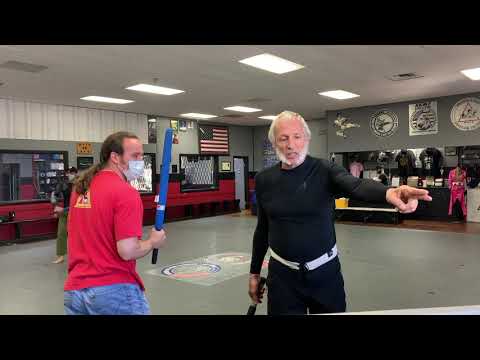
A five minute freebie at Punong Guro Crafty's fire house that is simply an intro into over 33 minutes of empty hand Kali…
Перевод: bolo punch
The bolo punch is a wide, looping uppercut-style punch thrown with an exaggerated circular wind-up motion, named after the bolo knife used in Filipino agriculture and combat. [1] The technique was originated by Cuban welterweight Gerardo 'Kid Gavilan' Gonzalez in the late 1940s-1950s, who incorporated the sweeping arm motion (reportedly inspired by his experience cutting sugar cane) into his boxing repertoire. [2] The bolo punch later became a signature technique of Sugar Ray Leonard, who used it as a showpiece weapon during his career in the 1970s-1980s, most notably in his bouts against Thomas Hearns and Roberto Duran. [3] While often dismissed as a showboat technique, the bolo punch can be effective because its exaggerated wind-up disguises the actual punching angle. [1]
The bolo punch uses a wide, sweeping circular motion to generate power from an unexpected angle. [1]
The bolo punch was popularised by Filipino boxers Kid Gavilan and Sugar Ray Leonard. [1]
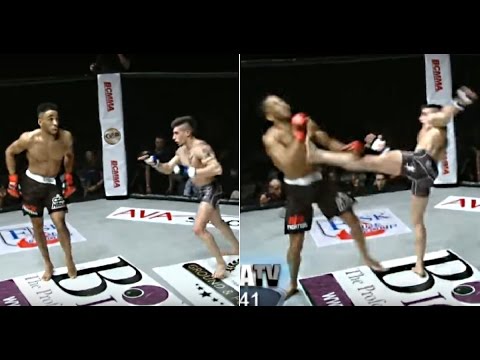
The bolo punch is occasionally used in boxing and MMA competition. [1]
Изображений для этой техники пока нет.
Войдите, чтобы предложить изображение.
A five minute freebie at Punong Guro Crafty's fire house that is simply an intro into over 33 minutes of empty hand Kali…
When you understand position, feinting, and drawing, you can do amazing things in a fight. But often, the inexperienced …
Учебных курсов по этой технике пока нет.
Войдите, чтобы предложить курс.
Риск травмы для человека, к которому применяется техника
Hooks/uppercuts; generate rotational force, high KO rate (Walilko et al. 2005)
Уровень мастерства, необходимый для надёжного выполнения техники
Разрешена ли техника по основным соревновательным правилам
Karate-Do Kyohan: The Master Text (Gichin Funakoshi, 1935)
Alias sources — [1] Championship Fighting (Dempsey, 1950) [2] Boxing (Fleischer, 1958) [3] The Arc of Boxing (Boddy, 2012)
History sources — [1] Championship Fighting (Dempsey, 1950) [2] Boxing's Greatest Fighters (Sugar, 2006) [3] The Sweet Science (Liebling, 1956)
Standard katakana transliteration of Western martial arts terminology (外来語) — used in Japanese MMA, boxing, and BJJ communities
Alias sources — [1] Championship Fighting (Dempsey, 1950) [2] Boxing (Fleischer, 1958) [3] The Arc of Boxing (Boddy, 2012)
History sources — [1] Championship Fighting (Dempsey, 1950) [2] Boxing's Greatest Fighters (Sugar, 2006) [3] The Sweet Science (Liebling, 1956)
hand speed, hip rotation, wrist alignment on impact
proportional reach, strong wrists, fast-twitch shoulder muscles
deltoids, pectorals, triceps, core rotators, forearms
Каждое движение в любом боевом искусстве обладает рядом универсальных свойств. Комбинируйте параметры ниже, чтобы найти нужный инструмент или сравнить аналоги из разных стилей.
You need to disguise it by connecting your elbow close to your body rather than winding it up from far away, which makes it telegraphed. Ramsey Dewey emphasizes keeping the punch compact and close so opponents can't anticipate the movement.
Keep your other hand stuck to your head to block incoming counters, since throwing a bolo punch leaves you momentarily exposed. You need defensive coverage every time you commit to the technique.
The Dog Brothers note that you can disguise the bolo as a descending strike but then surprise your opponent with a rising strike instead, using a change in height, speed, and direction to freeze them up before you step in.
A dramatic, winding punch that uses a large circular arm motion to generate momentum and disguise the actual strike, popularized by fighters like Kid Gavilan and Sugar Ray Leonard.
The bolo punch is a wide, looping uppercut-style punch thrown with an exaggerated circular wind-up motion, named after the bolo knife used in Filipino agriculture and combat. The technique was originated by Cuban welterweight Gerardo 'Kid Gavilan' Gonzalez in the late 1940s-1950s, who incorporated the sweeping arm motion (reportedly inspired by his experience cutting sugar cane) into his boxing repertoire.
Unified MMA: разрешён — Legal striking technique; WBC/Boxing: разрешён — Legal — punches are the core technique of boxing; WKF: разрешён — Legal, jodan/chudan punch scores 1 point (yuko) — controlled contact required; Kyokushin: ограничен — Body punches legal at full power, head punches banned; WT: ограничен — Punches to trunk only (1 point), punches to head banned; ITF: разрешён — Legal — hand techniques to head and body both permitted; WAKO: разрешён — Legal in Full Contact and Low Kick formats; K: разрешён — 1/GLORY — Legal — full power punches to head and body; IFMA: разрешён — Legal
Оценка опасности 6/10. High — hooks/uppercuts; generate rotational force, high KO rate (Walilko et al. 2005)
Стандартная цепочка подготовки: Assume Fighting Stance → Generate Power → Execute Strike → Recover to Guard.
Стандартные контрприёмы: Slip — move the head off the centre line to evade the punch / Parry — deflect the incoming punch with a quick hand redirection / Counter Cross — time a straight punch over the incoming attack.
Распространённые варианты: Standard variation (primary execution of the strike from the most common stance); Power variation (modified mechanics for maximum force generation); Speed variation (minimised telegraph for a faster, harder-to-read attack); Counter variation (timed to exploit the opponent's offensive commitment).
The bolo punch is occasionally used in boxing and MMA competition.
Основные ошибки, на которые стоит обратить внимание: Using the bolo as a primary weapon — it is a trick shot and loses value with repetition / Dropping the guard hand during the wind-up, turning a deception into a double vulnerability / Winding up so long that the opponent simply steps back out of range or times a counter during the rotation / Not committing to the final strike after the wind-up — the bolo must end with a sharp, powerful punch.
Bolo Punch также известен как Boro Panchi, Corkscrew Uppercut, Windmill Punch, Bolo Uppercut.