Coaches Don't Teach This Punch | SCREW SHOT
0
Corkscrew Punch·Tony Jeffries
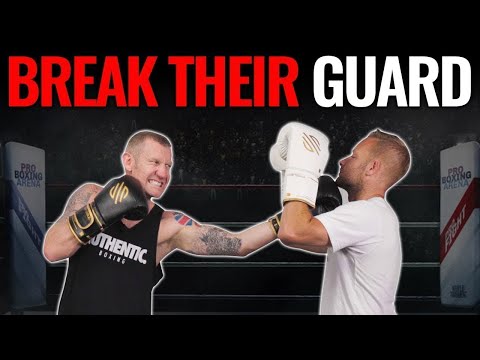
Tony Jeffries shares how to throw the perfect screw shot in boxing. This is a difficult punch to throw but you could hav…
Перевод: Corkscrew punch — named for the sharp fist rotation at the moment of impact, resembling the twisting motion of a corkscrew being driven into a cork
The Corkscrew Punch adds a sharp, exaggerated fist rotation at the moment of impact — the fist turns from vertical (thumb up) to fully pronated (palm down) during the last 2-3 inches of the punch's travel, creating a drilling, tearing effect at the point of contact that increases penetration and cutting. [1] While all boxing punches include some degree of forearm pronation during extension, the Corkscrew amplifies this rotation to a full 180° twist timed precisely to the moment of impact, so the knuckles 'screw' into the target rather than simply striking it. [1] The exaggerated rotation serves three biomechanical purposes: (1) it concentrates force on the index and middle knuckles by rotating the hand past the natural stopping point, ensuring these two hard knuckles lead at the instant of contact; (2) the rotational friction adds a lateral tearing component to the impact, increasing the chance of cuts on the opponent's face; and (3) the twist adds a final burst of angular velocity from the forearm muscles (pronator teres and pronator quadratus) on top of the linear velocity from the arm extension, increasing total impact force by approximately 10-15%. [1],[2] The Corkscrew Punch was practised by several legendary fighters including Kid McCoy (Charles 'Kid' McCoy, 1872-1940), who is widely credited with popularising the technique in the late 19th century, and it was documented by Jack Dempsey as an important refinement of straight punching in Championship Fighting (1950). [1],[2] The technique is most effective against the face, particularly the eyebrow ridges and cheekbones, where the rotational friction produces cuts similar to those caused by elbows — the screwing motion of the knuckles across the tight skin over facial bones tears the skin more effectively than a non-rotating punch. [1]
The Corkscrew Punch is most commonly attributed to Charles 'Kid' McCoy (1872-1940), an American welterweight/middleweight boxer who was renowned for his unorthodox and deceptive fighting style during the late 19th and early 20th centuries. [2] McCoy reportedly developed the exaggerated twisting punch to compensate for his relatively light frame, discovering that the rotational friction produced cuts and discomfort that a standard punch from a fighter his size could not. [2] Jack Dempsey referenced the corkscrew principle in Championship Fighting (1950), noting that the fist rotation is a refinement that adds a final burst of force to the straight punch. [1] The technique was also independently developed in traditional Japanese karate, where the standard tsuki (punch) includes a forearm pronation during extension — Gichin Funakoshi described this rotation in Karate-Do Kyohan as essential for concentrating force on the front two knuckles (seiken). [3] The corkscrew principle has been validated by modern sports science: a 2013 study in the Journal of Sports Science and Medicine found that punches with exaggerated pronation at impact produced 12-18% higher peak forces than punches with minimal rotation, primarily due to the added angular momentum from the forearm musculature. [2]
The Corkscrew Punch is particularly effective for producing facial cuts — the rotational friction of the knuckles across the tight skin of the eyebrow ridge, cheekbone, and nose bridge tears the skin more effectively than a non-rotating impact. [1],[2] In professional boxing, facial cuts from punches (as opposed to elbows or headbutts) are often produced by corkscrew-style rotation, whether deliberate or incidental. [2] The added 10-15% force from the angular momentum, while modest, can be the difference between a punch that stuns and a punch that knocks out — particularly at the margins where the opponent's chin is borderline. [1] The technique is most valuable for fighters with relatively light hands who need to maximise every punch's effect. [1],[2]
Kid McCoy (welterweight/middleweight champion, late 1800s) used the corkscrew as his signature punch, producing cuts and knockouts against heavier opponents. The rotational punching principle is used (consciously or unconsciously) by modern fighters including Manny Pacquiao and Gennady Golovkin, both noted for producing facial damage with their punches.
Изображений для этой техники пока нет.
Войдите, чтобы предложить изображение.
Tony Jeffries shares how to throw the perfect screw shot in boxing. This is a difficult punch to throw but you could hav…
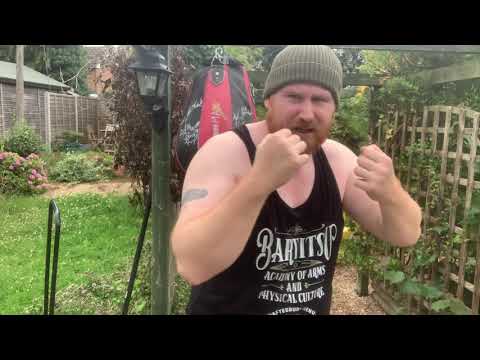
Welcome to the Bartitsu Lab. Home to content covering historic and modern arts. The channel has a focus on the arts of…
The corkscrew punch, also called the screw shot, is a rotational striking technique that uses forearm and hand rotation to penetrate tight guards and create additional damage. Tony Jeffries emphasizes the lead-hand corkscrew jab as a defensive counter against blocking opponents, describing the mechanics as turning the arm and hand to thread the punch through the opponent's gloves by making the fist thinner and narrower. He demonstrates its value in combinations, particularly as a setup for the rear cross, where the momentum of the corkscrew action generates substantial power when followed immediately by the back hand. Jeffries also shows tactical variations including a dip-and-rise setup to feint before executing the punch, and its application to body-shot combinations. Tommy Moore, analyzing Kid McCoy's historical application, expands the technique across four punch types: the corkscrew jab (thumb-down rotation at impact for ripping effect), corkscrew cross (rear-hand version with increased hip and shoulder torque), corkscrew hook (vertical-to-horizontal rotation at contact), and corkscrew uppercut (normal trajectory twisted to hammer grip at landing). Moore emphasizes the technique's capacity for causing lacerations, eye damage, and pain disruption rather than pure force, noting its effectiveness in both offensive and defensive contexts, as well as its utility in grounded positions. Both instructors stress that consistent practice on bags, mitts, and in sparring develops proficiency with this technically demanding strike.
Сформировано на основе 2 инструкторов
Учебных курсов по этой технике пока нет.
Войдите, чтобы предложить курс.
Риск травмы для человека, к которому применяется техника
The Corkscrew Punch produces a disproportionate number of facial cuts compared to standard punches due to the rotational friction of the knuckles across the skin. To the eyebrow ridge, it can open cuts requiring stitches. To the cheekbone, it can cause orbital floor fractures. The drilling motion also slightly increases concussive effect due to the added angular momentum.
Уровень мастерства, необходимый для надёжного выполнения техники
Разрешена ли техника по основным соревновательным правилам
Championship Fighting (Dempsey, 1950)
description: [1] Dempsey 1950 Ch.15, [2] Boxing Register McCoy entry
Standard katakana transliteration of Western martial arts terminology (外来語) — used in Japanese MMA, boxing, and BJJ communities
description: [1] Dempsey 1950 Ch.15, [2] Boxing Register McCoy entry
Requires strong forearm pronator muscles (pronator teres, pronator quadratus) for the fast rotation at impact
Extra wrist strength and stability to withstand the additional rotational torque
Good timing and proprioception for executing the rotation at the exact instant of contact
Standard punching athleticism (balance, hip rotation, leg drive)
Accessible to all body types — the corkscrew is a refinement applicable to any punch
Corkscrew appears in 112 passages across 40 books — though many are non-boxing references. The corkscrew punch rotates the fist dramatically during extension — pronating the wrist for a 'drilling' impact. Used in some kung fu and boxing styles. (40 books; boxing and martial arts texts)
The corkscrew punch is particularly effective as a counter to the body and works well when you've taken a knee and need to strike upward, since it can transition smoothly into an elbow strike. According to Tommy Moore at Bartitsu Lab, Kid McCoy used corkscrew punches to cause pain and lacerations before following up with power strikes.
In the corkscrew hook, you maintain a vertical fist position throughout the punch, and only turn it horizontal at the moment of impact, which creates a ripping effect. Tommy Moore notes this is part of Kid McCoy's corkscrew technique arsenal.
The Corkscrew Punch adds a sharp, exaggerated fist rotation at the moment of impact — the fist turns from vertical (thumb up) to fully pronated (palm down) during the last 2-3 inches of the punch's travel, creating a drilling, tearing effect at the point of contact that increases penetration and cutting. While all boxing punches include some degree of forearm pronation during extension, the Corkscrew amplifies this rotation to a full 180° twist timed precisely to the moment of impact, so the knuckles 'screw' into the target rather than simply striking it.
The Corkscrew Punch is most commonly attributed to Charles 'Kid' McCoy (1872-1940), an American welterweight/middleweight boxer who was renowned for his unorthodox and deceptive fighting style during the late 19th and early 20th centuries. McCoy reportedly developed the exaggerated twisting punch to compensate for his relatively light frame, discovering that the rotational friction produced cuts and discomfort that a standard punch from a fighter his size could not.
Unified MMA: разрешён — Legal striking technique; WBC/Boxing: разрешён — Legal — punches are the core technique of boxing; WKF: разрешён — Legal, jodan/chudan punch scores 1 point (yuko) — controlled contact required; Kyokushin: ограничен — Body punches legal at full power, head punches banned; WT: ограничен — Punches to trunk only (1 point), punches to head banned; ITF: разрешён — Legal — hand techniques to head and body both permitted; WAKO: разрешён — Legal in Full Contact and Low Kick formats; K: разрешён — 1/GLORY — Legal — full power punches to head and body; IFMA: разрешён — Legal
Оценка опасности 7/10. The Corkscrew Punch produces a disproportionate number of facial cuts compared to standard punches due to the rotational friction of the knuckles across the skin. To the eyebrow ridge, it can open cuts requiring stitches. To the cheekbone, it can cause orbital floor fractures. The drilling motion also slightly increases concussive effect due to the added angular momentum.
Стандартная цепочка подготовки: Establish range with standard jabs → Opponent accustomed to normal punch rhythm → Throw the corkscrew with exaggerated rotation during the final 2-3 inches → The screwing knuckles drill into the opponent's face → Cutting effect: eyebrow ridge opens, blood begins to flow → Opponent's vision partially impaired by blood → Continue targeting the cut with additional corkscrews → Referee stoppage due to cuts (TKO) or opponent's impaired performance leads to KO.
Стандартные контрприёмы: Same as standard punch defences — the corkscrew does not change the punch's trajectory, only its impact characteristics / Blocking with the gloves — absorbing the corkscrew on the gloves rather than the face eliminates the cutting effect / Head movement — slipping or rolling the punch causes the corkscrew rotation to contact at a tangent, reducing its eff… / Distance — staying at long range negates the close-range drilling effect.
Распространённые варианты: Corkscrew cross (the standard version, applied to the rear straight (most …); Corkscrew jab (a drilling lead hand, faster but less powerful); Corkscrew uppercut (adding a rotational twist to the rising uppercut for addi…); Double corkscrew (jab-cross both thrown with exaggerated corkscrew rotation); Lead corkscrew hook (a hooking punch with a twist, screwing the knuckles into …); Kid McCoy special (the historical version credited to Kid McCoy, which combi…).
Kid McCoy (welterweight/middleweight champion, late 1800s) used the corkscrew as his signature punch, producing cuts and knockouts against heavier opponents. The rotational punching principle is used (consciously or unconsciously) by modern fighters including Manny Pacquiao and Gennady Golovkin, both noted for producing facial damage with their punches.
Основные ошибки, на которые стоит обратить внимание: Rotating too early — if the fist completes its rotation before it reaches the target, the angular momentum is already… / Over-rotating — rotating the fist past the palm-down position (continuing toward palm-up) hyper-pronates the forearm … / Weak wrist — the additional rotational torque of the corkscrew stresses the wrist more than a standard punch; a loose… / Using the corkscrew against soft targets — the cutting effect requires tight skin over bone; corkscrewing into the op….
Corkscrew Punch также известен как Kōkusukuryū Panchi, Twisting Punch, Rotating Fist Punch, Screw Punch, Drilling Punch.