Jumping Front Kick and Jumping Round House Kick
0
Tsumasaki Geri·Shorin Ryu Family Karate
Learn how to Kick jumping Mae Geri and Jumping Mawashi Geri
Перевод: toe tip kick
Tsumasaki Geri is a front kick delivered with the tips of the toes as the striking surface, rather than the ball of the foot (chusoku) or instep (haisoku). [1] The toes are pulled tightly together and curled slightly upward to create a compact point of impact. [1] This technique concentrates the entire force of a front kick into the small surface area of the toe tips, allowing it to penetrate between the ribs, into the solar plexus, or under the chin. [1] Common in Okinawan karate and some Kyokushin lineages, tsumasaki geri requires extensive toe conditioning — practitioners traditionally trained by kicking bundles of straw (makiwara) and sand to toughen the toes over years. [1]
Tsumasaki geri originates in Okinawan karate, where it was practiced as a standard kicking technique before the ball-of-foot (chusoku) became the dominant impact surface in Japanese mainland karate. [1] Okinawan masters trained their toes by kicking bundles of straw, sand-filled containers, and wooden posts. [1] When karate was introduced to mainland Japan in the 1920s-30s, the toe-tip kick was gradually replaced by the safer ball-of-foot variant for widespread teaching, though it survives in traditional Okinawan lineages and some Kyokushin dojo. [1]
Devastating penetrating power when properly conditioned — the concentrated force can rupture organs and penetrate between ribs. [1] However, the technique is largely impractical in modern sport contexts and requires years of conditioning that most practitioners no longer undertake. In street self-defense with shoes or boots, the toe tip becomes a natural and powerful striking surface without special conditioning. [1]
Primarily a training, demonstration, and point-fighting technique. Rarely seen in full-contact MMA or kickboxing due to acrobatic risk and telegraphing. Appears occasionally in TKD and point-fighting karate tournaments. [1]
Изображений для этой техники пока нет.
Войдите, чтобы предложить изображение.
Learn how to Kick jumping Mae Geri and Jumping Mawashi Geri
Uechiryu (Uechi-ryu) has two kicks (in kata), the primary one being ‘sokusen’ or pointed toe kick. Thinking that this …
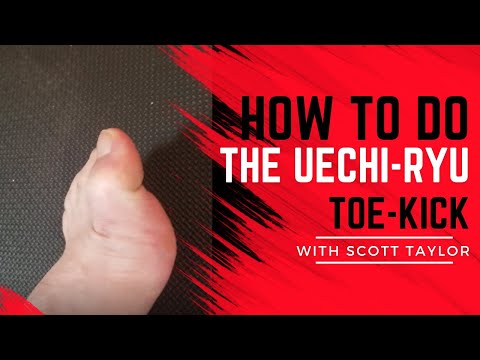
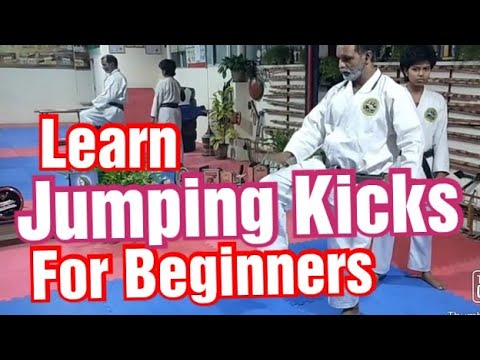
Tsumasaki geri, or pointed toe-kick, is a striking technique distinguished by its use of the tip of the toe rather than the ball of the foot. Scott Taylor emphasizes that this kick is unique to Uechi-ryu karate and differs significantly from traditional mainland Japanese karate front kicks. The distinctive foot conditioning involves flexing the second knuckle of all toes inward to create a straight line from the toe tip through the foot, forming what Taylor calls the 'tiger's tooth.' This knuckle flexion protects the striker's toes from injury while concentrating force into a penetrating point strike. Taylor notes the kick produces an inherent rising motion due to the curled toe position, which remains slight even when targeting the torso or groin. He stresses the technique's lethality and unsuitability for competition, recommending practice progression from wall work to heavy bags as conditioning develops. Shorin Ryu Family Karate's video addresses jumping front kicks (tobi mae geri) rather than the pointed toe variant specifically, focusing instead on jumping mechanics, hip rotation, foot positioning during landing, and height control. While both instructors discuss front kick mechanics, Taylor's detailed foot-conditioning methodology for tsumasaki geri contrasts with Shorin Ryu's broader jumping kick pedagogy, which emphasizes balance and proper weight distribution.
Сформировано на основе 2 инструкторов
Учебных курсов по этой технике пока нет.
Войдите, чтобы предложить курс.
Риск травмы для человека, к которому применяется техника
Concentrated toe-tip impact can penetrate between ribs and rupture internal organs. Self-injury risk: unconditioned toes will break on contact.
Уровень мастерства, необходимый для надёжного выполнения техники
Разрешена ли техника по основным соревновательным правилам
Oyama, M. This Is Karate / Essentials of Karate.
[1] Oyama / Higaonna / McCarthy — traditional Okinawan karate technique documentation
Official karate technique names (和語/漢語)
Established Japanese martial arts naming convention — native Japanese term (和語/漢語)
[1] Oyama / Higaonna / McCarthy — traditional Okinawan karate technique documentation
extensive toe conditioning (months to years), strong ankle dorsiflexion, precise targeting
strong toe structure, thick foot bones
toe flexors (lock), ankle dorsiflexors (positioning), hip flexors (chamber), quadriceps (extension)
Tsumasaki geri (toe tip kick) uses the tips of the toes — a traditional Okinawan technique requiring years of toe conditioning. Modern karate replaced it with ball-of-foot contact for safety. Survives in Kyokushin and traditional Okinawan lineages. (Oyama, This Is Karate; Higaonna, Traditional Karatedo: Okinawa Goju Ryu)
Many people lift their hands back during the kick, but you should control your hand position and keep it steady instead. Additionally, keep your feet straight and avoid lowering them as you kick—bend forward with your body instead.
You need to turn your body backward as you bend, while keeping your eyes on the target in front. When you turn to face back, you'll kick with your back leg, and it's important to keep your head up and your body straight throughout the motion.
Feel as if you're going to touch the ground or your hand with your leg, but keep your head always up and your body straight and steady. Before practicing the full kick, first focus on learning how to jump and land properly.
Both feet should be turned toward the opposite side as you jump. Make sure to practice the jumping and landing mechanics before attempting the full kicking technique.
Tsumasaki Geri is a front kick delivered with the tips of the toes as the striking surface, rather than the ball of the foot (chusoku) or instep (haisoku). The toes are pulled tightly together and curled slightly upward to create a compact point of impact.
Tsumasaki geri originates in Okinawan karate, where it was practiced as a standard kicking technique before the ball-of-foot (chusoku) became the dominant impact surface in Japanese mainland karate. Okinawan masters trained their toes by kicking bundles of straw, sand-filled containers, and wooden posts.
WKF Karate: Not explicitly banned but impractical: запрещён — foot protectors cover toes; Unified MMA: Impractical with required footwear in some jurisdictions {src:Unified Rules of MMA, August 2025|/sources/Unified: запрещён — MMA-Rules-August-2025.pdf}; Kyokushin: Permitted in bare: разрешён — foot kumite
Оценка опасности 7/10. High — concentrated toe-tip impact can penetrate between ribs and rupture internal organs. Self-injury risk: unconditioned toes will break on contact.
Стандартная цепочка подготовки: Jab to face → opponent raises guard → tsumasaki geri to exposed solar plexus between ribs → Grab opponent's collar → pull forward → tsumasaki geri to floating ribs → Mae geri feint high → opponent raises guard → drop level and tsumasaki geri to lower abdomen.
Стандартные контрприёмы: Side step — avoid the linear trajectory / Low block (gedan barai) — deflect the kick downward before it reaches the target / Check with knee — raise the knee to intercept the kick at the shin level.
Распространённые варианты: Straight tsumasaki geri (forward drive to solar plexus); Rising tsumasaki geri (upward angle under the chin); Low tsumasaki geri (targeting the inner thigh or groin); Oi tsumasaki geri (stepping forward tsumasaki geri with full body momentum).
Primarily a training, demonstration, and point-fighting technique. Rarely seen in full-contact MMA or kickboxing due to acrobatic risk and telegraphing.
Основные ошибки, на которые стоит обратить внимание: Attempting without toe conditioning — guaranteed toe fractures on any resistance / Loose toe lock — toes splay on impact and break individually / Kicking bone (ribs, sternum) instead of soft tissue — the technique is designed for gaps between bones / Insufficient ankle dorsiflexion — toes don't align properly with the force vector.
Tsumasaki Geri также известен как Tsumasaki Geri, Tsumasaki-Geri, Toe Kick, Toe Tip Front Kick, Tip of Toes Kick.