Elbows & Hands. What’s a Crescent Kick for? Re-chamber your front kicks.
0
Front Leg Crescent Kick·Ramsey Dewey
Q&A with the coach Let’s talk technique
Перевод: Front leg crescent kick
The Front Leg Crescent Kick delivers the inside crescent kick from the lead leg using a skip-step or direct lift, offering faster delivery than the rear-leg version. [1] It is effective as a quick strike to the face or as a blocking/deflecting tool against incoming punches. [1]
Offers specific tactical advantages over the standard crescent kick in appropriate situations. [1]
Cross-style martial arts kicking tradition; documented in kick compendiums. [1]
Frequently used in MMA (UFC, ONE Championship, Bellator), kickboxing (GLORY, K-1), and Muay Thai (Lumpinee, Rajadamnern). One of the most commonly thrown kicks in professional striking competition. [1]
Изображений для этой техники пока нет.
Войдите, чтобы предложить изображение.
Q&A with the coach Let’s talk technique
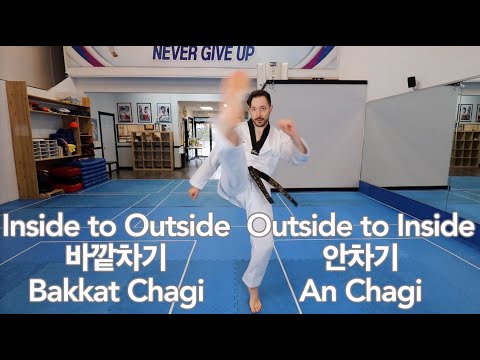
Crescent Kick, also known as An Chagi안차기 (Outside-to-inside) and Bakkat Chagi 바깥차기 (Inside-to-outside) is a great begin…
The front leg crescent kick is a close-range head strike with two primary directional variations: the inside-to-outside (pocket chucky) and outside-to-inside (an chucky) patterns. TaekwondoShawn emphasizes that crescent kicks excel in competitive sparring (kyorugi) due to their high-scoring head-strike potential, though they require significant hip mobility and dynamic flexibility to execute effectively. The technique is also useful in self-defense for disrupting an opponent's guard—either by dropping a raised guard or creating openings for follow-up strikes—and serves as an accessible beginner kick that doesn't require extreme static flexibility. Ramsey Dewey frames crescent kicks as close-range clinch techniques, particularly effective when executed from inside the opponent's guard where collar-tie distance permits the kick to land. Dewey highlights their value in combination work: the crescent kick can function as a feint to raise the opponent's guard, opening lanes for secondary attacks like body round kicks. Both instructors agree the kick requires practice to generate power and timing precision; TaekwondoShawn details foot engagement and ankle rotation to prevent injury, while Dewey stresses the importance of infighting confidence and proper re-chambering mechanics to avoid having the kick caught. The instructors converge on the technique's application in controlled, close-quarters scenarios rather than long-range striking.
Сформировано на основе 2 инструкторов
Учебных курсов по этой технике пока нет.
Войдите, чтобы предложить курс.
Риск травмы для человека, к которому применяется техника
Crescent Kick variant with standard striking power
Уровень мастерства, необходимый для надёжного выполнения техники
Разрешена ли техника по основным соревновательным правилам
Essential Book of Martial Arts Kicks (De Bremaeker & Faige, 2010)
[1] De Bremaeker & Faige, Essential Book of Martial Arts Kicks (2010)
Requires solid crescent kick foundation
Good balance and coordination
Documented in De Bremaeker & Faige, Section 6.2. The crescent kick delivered with the front leg via a sliding step — faster but less powerful than the rear leg version. Used as a guard-clearing tool in point-fighting. (De Bremaeker & Faige, Essential Book of Martial Arts Kicks, 2010)
The crescent kick has two variations considered the same technique: the an chucky (inward kick, outside to inside) and the pocket chucky (outward kick, inside to outside). TaekwondoShawn emphasizes that you should practice both variations to be well-rounded.
When kicking with the inside of your foot, rotate your ankle so you're hitting with the inside of your foot while keeping the foot muscles engaged toward the target. TaekwondoShawn notes this foot engagement prevents injury and allows you to train taekwondo sustainably throughout your life.
The pocket crescent kick is effective as a counter when your opponent charges in after you've thrown a kick with one leg and it comes down. TaekwondoShawn explains that if your opponent charges into it, you can score points with minimal power needed.
Yes, Ramsey Dewey recommends re-chambering rather than letting your leg drop, because front kicks that aren't re-chambered are easy for opponents to catch.
The Front Leg Crescent Kick delivers the inside crescent kick from the lead leg using a skip-step or direct lift, offering faster delivery than the rear-leg version. It is effective as a quick strike to the face or as a blocking/deflecting tool against incoming punches.
The Front Leg Crescent Kick is a specialised variant documented in cross-style kicking methodology. It represents an advanced development of the standard crescent kick.
Unified MMA: разрешён — Legal striking technique; WBC/Boxing: запрещён — All kicks prohibited in boxing; WKF: разрешён — Legal, chudan (body) kick scores 2 points, jodan (head) kick scores 3 points; Kyokushin: разрешён — Legal at full power to body and head; WT: разрешён — Legal, body kick 2 points, head kick 3 points, spinning body 4 points, spinni…; WAKO: разрешён — Legal in Full Contact and Low Kick formats; K: разрешён — 1/GLORY — Legal; IFMA: разрешён — Legal — kicks are a core Muay Thai technique
Оценка опасности 6/10. Crescent Kick variant with standard striking power
Стандартная цепочка подготовки: Feint → Front Leg Crescent Kick → Follow-up combination.
Стандартные контрприёмы: Step inside range / Block and counter / Low kick to support leg.
Распространённые варианты: High variant; Mid variant; Low variant.
Frequently used in MMA (UFC, ONE Championship, Bellator), kickboxing (GLORY, K-1), and Muay Thai (Lumpinee, Rajadamnern). One of the most commonly thrown kicks in professional striking competition.
Основные ошибки, на которые стоит обратить внимание: Attempting without solid crescent kick foundation / Poor balance / Insufficient power generation.
Front Leg Crescent Kick также известен как Furonto Reggu Kuresento Kikku, Lead Crescent Kick.