Standard Inside Axe Kick

Род

Перевод: standard inside axe kick

Дистанция и классификация

Категория
Удар и защитаЗамкиБлижний бойБой против нескольких
Дистанция
БлижняяСредняяДальняя
Угол конечности
Ноль180–135°135–90°90–45°45–0°
Целевая зона
Верхняя частьСредняя частьНижняя часть

Обзор

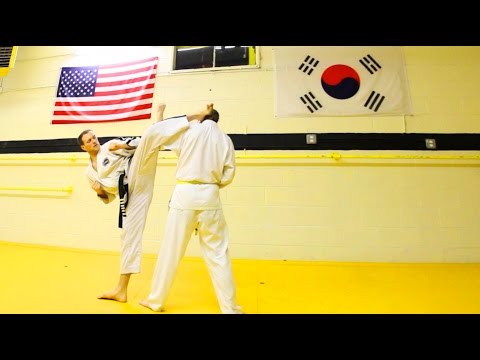
The Standard Inside Axe Kick is executed by swinging the kicking leg upward along the body's centreline, passing inside the opponent's guard, and then driving the heel straight down onto the opponent's collarbone, shoulder, or head. [1] The kicker uses hip flexion and adductor engagement to lift the leg along the medial path before gravity and active hip extension accelerate the downward strike. [1],[2] This variant is commonly used in taekwondo sparring as a scoring technique targeting the head. [2],[3]

Также известна как
An Naeryeo ChagiKR[1]Standard Descending Heel Kick[2]Inside Kakato OtoshiJP[3]
Используется в

История и происхождение

The standard inside axe kick was developed within taekwondo sport competition as an effective way to score with a downward technique that could penetrate the opponent's guard from an unexpected inside angle. [1] It has been a regular feature of World Taekwondo championship competition. [2],[3]

Страна происхождения· показано в случайном порядке

  • КореяТхэквондо
  • БразилияММА
  • СШАММА
  • Японияスタンダード内踵落とし(Sutandādo Uchi Kakato Otoshi)Карате
  • КитайСаньда

Эффективность

Standard inside axe kick. [1]

Родословная

A TKD/karate technique. [1]

Соревновательные результаты

Used in competition. [1]

Изображения

Изображений для этой техники пока нет.

Войдите, чтобы предложить изображение.

Биомеханический механизм

Primary ActionBallistic leg extension or rotation — the shin or foot impacts the target at high velocity
Joints InvolvedHip (flexion/rotation), knee (extension for front kicks, flexion-extension for roundhouse), ankle (stabilised)
Force VectorLinear (front kick/teep — hip flexion and knee extension) or rotational (roundhouse — hip rotation with shin contact)
Kinetic ChainPivot foot rotation → hip turn → femur whip → shin contact — the leg acts as a heavy bat with the hip as the pivot

Позиция и вход

From fighting stanceRaise the leg high (straight or crescent), drive the heel down onto the target (collarbone, shoulder, or head)
From close rangeShort-arc axe kick brought down quickly when the opponent's hands are low
As counter (after opponent's kick)Raise the leg as the opponent recovers from their kick, bring the heel down

Варианты

Outside axe kickraising the leg outside and bringing the heel straight down
Inside axe kickraising the leg inside in a crescent arc before chopping down
Spinning axe kickadding a spin before the downward chop

Видео

Elbows & Hands. What’s a Crescent Kick for? Re-chamber your front kicks.

0
Standard Inside Axe Kick·Ramsey Dewey

Q&A with the coach Let’s talk technique

TAEKWONDO HOOK KICK TUTORIAL

0
Standard Inside Axe Kick·Simon Scher

In this tutorial you will learn how to perform and perfect a FULL RANGE OF MOTION hook kick. You will be surprised at th

VLOG#2: Basic Fundamentals of Boxing Tutorial | Footwork & Punches | LOOK the Description Below

0
Standard Inside Axe Kick·PJSPORTS TV VLOGS

Please Hit Like, Comment, Share and Subscribe to my Channel 👍 Sport (or sports) is all forms of usually competitive ph

1 / 2
3 videos

Что говорят инструкторы

The standard inside axe kick does not receive direct instruction in the provided transcripts. Ramsey Dewey discusses crescent kicks as close-range head strikes executed from inside clinch distance, emphasizing their application in combinations and their use as fakes to set up secondary attacks like liver kicks. Simon Scher provides extensive technical instruction on the hook kick, covering chamber mechanics, hip and glute engagement, hand positioning, pivot footwork, target accuracy, striking surface variation (heel versus toe), and re-chambering for combination execution. While Scher's hook kick methodology—particularly chamber-extend-retract sequencing, hip drive engagement, and re-chambering discipline—shares biomechanical principles common to axe-kick variants, none of the instructors directly address the inside axe kick specifically. PJSPORTS TV VLOGS transcript contains only boxing fundamentals and is not applicable to kicking technique instruction.

Сформировано на основе 3 инструкторов

  • Ramsey DeweyElbows & Hands. What's a Crescent Kick for? Re-chamber your front kicks.: Discusses crescent kicks as close-range head techniques from clinch position; emphasizes re-chambering for kick safety and catchability prevention; addresses infighting development.
  • Simon ScherTAEKWONDO HOOK KICK TUTORIAL: Provides detailed technical framework for kicking mechanics including full-range chamber-extend-retract sequence, hip/glute engagement for power generation, hand stability, pivot mechanics, re-chambering discipline for combination execution, and target practice methodology.
  • PJSPORTS TV VLOGSVLOG#2: Basic Fundamentals of Boxing Tutorial | Footwork & Punches | LOOK the Description Below: Not applicable—transcript covers boxing fundamentals only.

Изучить технику

Учебных курсов по этой технике пока нет.

Войдите, чтобы предложить курс.

Оценки

Уровень опасности

Риск травмы для человека, к которому применяется техника

6
Высокий6/10

Downward heel strike; collarbone/head impact risk

Сложность

Уровень мастерства, необходимый для надёжного выполнения техники

Продвинутый
Допустимость на соревнованиях

Разрешена ли техника по основным соревновательным правилам

Запрещено
WBC/Boxing — All kicks prohibited in boxing {srcWBC Rules of Boxing}
Разрешено
Unified MMA — Legal striking technique
Unified Rules of MMA, August 2025PDF
Kyokushin — Legal at full power to body and head {srcIKO Kyokushin Tournament Rules}
WT — Legal, body kick 2 points, head kick 3 points, spinn...
WT Competition Rules 2024PDF
WAKO — Legal in Full Contact and Low Kick formats
WAKO Competition RulesPDF
K-1/GLORY — Legal {srcK-1/GLORY Kickboxing Rules}
IFMA — Legal — kicks are a core Muay Thai technique
IFMA Muay Thai RulesPDF

Заметки по тренировке

From fighting stance, swing the rear or lead leg inward and upward across the body in an arcing path
At the peak of the arc, the leg should be at or above the opponent's head height
Chop the heel straight down onto the target — collarbone, shoulder, or top of the guard
The standing leg must be slightly bent and firmly planted, with weight centred for balance
The arms stay in guard position — resist the urge to swing them for counterbalance
The downward force combines gravity, hip flexor contraction, and hamstring pull — all accelerating the heel downward
Practise by lifting the leg slowly over a chair-height object, then gradually increasing the speed and height of the target

Типичные ошибки

!Not completing the full arc — the leg must go up and over, not just swing across at one height
!Landing with the ankle or instep instead of the heel — the heel is the hardest surface and the correct impact point
!Falling toward the opponent after the chop because of poor balance on the support leg
!Not chopping aggressively enough — the downward motion must be forceful, not a gentle lowering
!Keeping the kicking leg too bent during the chop, reducing reach and impact
!Swinging the arms wildly, which disrupts balance and opens the guard
!Attempting the kick on a moving opponent who is circling away — the axe kick works best against stationary or forward-moving targets

Связанные техники

Контрприёмы

Цепочка подготовки

1Stance and Rangeverify correct distance for the kick to land at full extension
2Chamber the Leglift the knee to prepare the kicking trajectory
3Execute the Kickextend the leg through the target with the appropriate striking surface
4Recoverretract the leg and return to fighting stance

Источники и ссылки

Основной источник

Karate-Do Kyohan: The Master Text (Gichin Funakoshi, 1935)

1КнигаMuay Thai: The Art of Fighting (Kraitus, 2002)

Alias sources — [1] Kukkiwon Taekwondo Textbook (Kukkiwon, 2006) [2] Taekwondo: The State of the Art (Park, 1989) [3] Karate-Do Kyohan (Funakoshi, 1935)

2КнигаKarate-Do Kyohan (Funakoshi, 1935)

Effectiveness sources — [1] Comprehensive Asian Fighting Arts (Draeger & Smith, 1969)

3ДругоеJapanese Martial Arts Hybrid Terminology

Mixed Japanese-Western terminology — combines traditional Japanese terms with katakana loanwords

4ЦитатаMuay Thai: The Art of Fighting (Kraitus, 2002)

Alias sources — [1] Kukkiwon Taekwondo Textbook (Kukkiwon, 2006) [2] Taekwondo: The State of the Art (Park, 1989) [3] Karate-Do Kyohan (Funakoshi, 1935)

5ЦитатаKarate-Do Kyohan (Funakoshi, 1935)

Effectiveness sources — [1] Comprehensive Asian Fighting Arts (Draeger & Smith, 1969)

Сообщество

Атлетизм

Requires

exceptional hip flexibility, hamstring length, leg raising speed

Favours

extremely flexible hips for raising the leg above head height

Key muscles

hip flexors, hamstrings (eccentric), quadriceps, core

Часто задаваемые вопросы

What's the difference between using my toes versus my heel when throwing a hook kick?

According to Simon Scher, when sparring you point your foot and strike with your toes to be courteous and avoid excessive power, but when breaking boards or hitting pads to demonstrate real power, you use the back of the heel with a flexed foot.

Why should I re-chamber my leg after a hook kick instead of just dropping it?

Simon Scher emphasizes that re-chambering is essential because it keeps you from rotating fully and presenting your center to your opponent, and it's necessary for chaining multiple kicks together.

How should my hands move when I'm throwing a hook kick?

Simon Scher advises that your hands should remain separate from the kick and should not move or serve as a counterbalance when you're executing the technique.

What makes the hook kick effective even if my opponent tries to block it?

Simon Scher notes that the hook kick is a sneaky kick because if you throw it in close range, your knee can make contact with your opponent's block and the foot will still curve around and strike the target.

Как работает Standard Inside Axe Kick?

The Standard Inside Axe Kick is executed by swinging the kicking leg upward along the body's centreline, passing inside the opponent's guard, and then driving the heel straight down onto the opponent's collarbone, shoulder, or head. The kicker uses hip flexion and adductor engagement to lift the leg along the medial path before gravity and active hip extension accelerate the downward strike.

Откуда происходит Standard Inside Axe Kick?

The standard inside axe kick was developed within taekwondo sport competition as an effective way to score with a downward technique that could penetrate the opponent's guard from an unexpected inside angle. It has been a regular feature of World Taekwondo championship competition.

Разрешён ли Standard Inside Axe Kick на соревнованиях?

Unified MMA: разрешён — Legal striking technique; WBC/Boxing: запрещён — All kicks prohibited in boxing; WKF: разрешён — Legal, chudan (body) kick scores 2 points, jodan (head) kick scores 3 points; Kyokushin: разрешён — Legal at full power to body and head; WT: разрешён — Legal, body kick 2 points, head kick 3 points, spinning body 4 points, spinni…; WAKO: разрешён — Legal in Full Contact and Low Kick formats; K: разрешён — 1/GLORY — Legal; IFMA: разрешён — Legal — kicks are a core Muay Thai technique

Насколько опасен Standard Inside Axe Kick?

Оценка опасности 6/10. High — downward heel strike; collarbone/head impact risk

Как подготовить Standard Inside Axe Kick?

Стандартная цепочка подготовки: Stance and Range → Chamber the Leg → Execute the Kick → Recover.

Как защититься от Standard Inside Axe Kick?

Стандартные контрприёмы: Check (Shin Block) — raise the shin to intercept the kick before it lands / Catch and Sweep — catch the kicking leg and sweep the standing leg / Step Inside — close distance inside the kick's effective range to smother it.

Какие есть варианты Standard Inside Axe Kick?

Распространённые варианты: Outside axe kick (raising the leg outside and bringing the heel straight down); Inside axe kick (raising the leg inside in a crescent arc before chopping …); Spinning axe kick (adding a spin before the downward chop).

Насколько эффективен Standard Inside Axe Kick на соревнованиях?

Used in competition.

Какие типичные ошибки при выполнении Standard Inside Axe Kick?

Основные ошибки, на которые стоит обратить внимание: Not completing the full arc — the leg must go up and over, not just swing across at one height / Landing with the ankle or instep instead of the heel — the heel is the hardest surface and the correct impact point / Falling toward the opponent after the chop because of poor balance on the support leg / Not chopping aggressively enough — the downward motion must be forceful, not a gentle lowering.

Какие ещё названия есть у Standard Inside Axe Kick?

Standard Inside Axe Kick также известен как Sutandādo Uchi Kakato Otoshi, An Naeryeo Chagi, Standard Descending Heel Kick, Inside Kakato Otoshi.