Standard Front Headlock Turtle

Род

Перевод: standard front headlock turtle

Дистанция и классификация

Категория
Удар и защитаЗамкиБлижний бойБой против нескольких
Дистанция
БлижняяСредняяДальняя
Целевая зона
Верхняя частьСредняя частьНижняя часть

Обзор

The Standard Front Headlock Turtle positions the attacking fighter in front of and over the turtled opponent, with one arm wrapped around the head and the other controlling the near arm or reaching under the body. [1] The standard front headlock provides a stable attacking platform for guillotine and d'arce choke entries while maintaining the ability to spin to the back for back takes. [1],[2] The head control prevents the turtled fighter from posturing up or sitting out. [2],[3]

Также известна как
Basic Front HeadlockWrestling[1]Classic Front Head Control[2]

История и происхождение

The standard front headlock from turtle is a fundamental attacking position derived from wrestling and expanded with BJJ's submission attacks. [1] It is a standard part of the turtle-attacking curriculum in modern grappling. [2],[3]

Страна происхождения· показано в случайном порядке

  • БразилияБразильское джиу-джитсу, ММА, Сабмишн-грэпплинг
  • Японияスタンダードフロントヘッドロック亀(Sutandādo Furonto Heddorokku Kame)Бразильское джиу-джитсу, Сабмишн-грэпплинг
  • СШАММА, Борьба, Сабмишн-грэпплинг, Кэтч-реслинг
  • ГрецияБорьба
  • АнглияКэтч-реслинг

Эффективность

The standard front headlock turtle is the baseline front headlock control from turtle. [1]

Родословная

A fundamental wrestling position adapted into BJJ. [1]

Соревновательные результаты

Used in wrestling and MMA competition. [1]

Изображения

Изображений для этой техники пока нет.

Войдите, чтобы предложить изображение.

Биомеханический механизм

Primary ActionControlling the opponent from behind — seatbelt grip and hooks restrict movement while exposing the neck
Joints InvolvedAttacker's hooks (inside the opponent's thighs), seatbelt arm (over-under chest control), hips (body triangle or hooks)
Force VectorRearward control — opponent cannot see or effectively counter attacks from behind
Positional MechanicBack control is the highest-value position — direct access to rear chokes with minimal defensive options for the opponent

Позиция и вход

From arm drag or duck underCreate an angle behind the opponent, secure seatbelt grip, insert hooks to establish back control
From turtle (opponent turtles)When the opponent turtles to avoid guard pass, take the back by inserting hooks and securing the seatbelt
From sweep (taking the back during the sweep)During a sweep, circle behind and establish back control instead of ending on top

Варианты

Back control with hooksboth feet hooked inside the opponent's thighs
Body triangle back controllegs locked in a figure-four around the torso
Rear mountmounted on the back with both hooks, opponent face-down
Chair sit back controlsitting behind the opponent with hooks, upright position

Видео

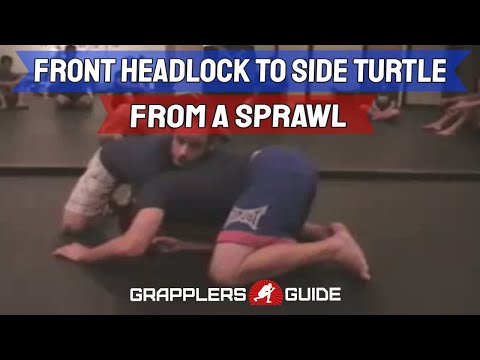
Front Headlock to Side Turtle from Sprawl - Grapplers Guide

0
Standard Front Headlock Turtle·The Grapplers Guide by Jason Scully·Added by Admin

http://www.grapplersguide.com

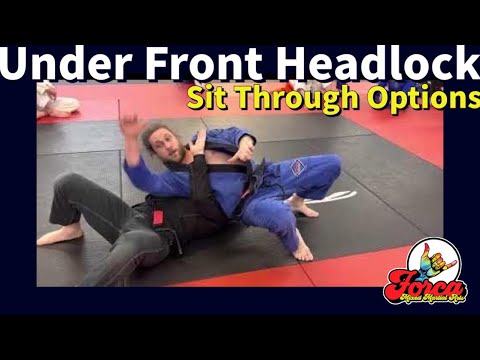
Sit-Through Overview from Under Front Headlock

0
Standard Front Headlock Turtle·Força Martial Arts & Fitness·Added by Admin

This video highlights several sit through options we have been covering in our adult Jiu Jitsu classes for when you fail

2 videos

Что говорят инструкторы

The Standard Front Headlock Turtle is a transitional position and escape sequence that arises commonly when a defender sprawls successfully against a takedown attempt. Both Força Martial Arts & Fitness and The Grapplers Guide by Jason Scully emphasize that this position typically occurs when an opponent shoots a double-leg takedown and the defender sprawls, landing chest-on-back with the opponent's head locked. The Grapplers Guide provides detailed mechanics on establishing and controlling the position post-sprawl: the top arm wraps the opponent's head while the bottom arm goes under and controls the arm, with control applied lower near the elbow rather than the tricep to prevent escape. Força Martial Arts expands the scope by covering multiple entry scenarios—not just sprawls but also situations where the opponent grabs the chest or applies submissions like a Darce choke or guillotine. From these grips, the instructor demonstrates wrapping the opponent's arm and expanding the chest to break the grip and achieve a reversal toward side control or back position. Both instructors agree on the importance of arm control and maintaining pressure on the opponent's back to prevent head extraction or sit-through escapes. The Grapplers Guide specifically notes that a front headlock grip (head and arm) makes sit-through escape significantly more difficult than when the opponent has both arms around the waist. Timing and positioning awareness—avoiding centerline knee placement and recognizing when to initiate the technique—emerge as critical details across both presentations.

Сформировано на основе 2 инструкторов

  • Força Martial Arts & FitnessSit-Through Overview from Under Front Headlock: Covers multiple entry scenarios for front headlock position including sprawls, chest grabs, and submissions (Darce, guillotine, arm-in). Demonstrates arm wrapping and chest expansion techniques to break grips and achieve reversals to side control or back position. Emphasizes timing and avoiding centerline knee placement.
  • The Grapplers Guide by Jason ScullyFront Headlock to Side Turtle from Sprawl - Grapplers Guide: Provides detailed post-sprawl mechanics for establishing front headlock position with proper arm placement (head and arm control). Explains why controlling near the elbow prevents opponent's push-back power and demonstrates the progression to securing a hardest grip and controlling the back. Contrasts front headlock grip difficulty versus two-arm waist grip in terms of opponent escape difficulty.

Изучить технику

Учебных курсов по этой технике пока нет.

Войдите, чтобы предложить курс.

Оценки

Уровень опасности

Риск травмы для человека, к которому применяется техника

3
Умеренный3/10

Turtle is a defensive shell position; vulnerable to back takes and chokes

Сложность

Уровень мастерства, необходимый для надёжного выполнения техники

Начинающий
Допустимость на соревнованиях

Разрешена ли техника по основным соревновательным правилам

Ограничено
Разрешено
IBJJF — Legal — common transitional position
IBJJF Rules Book v6.0, June 2024PDF
Unified MMA — Legal
Unified Rules of MMA, August 2025PDF
UWW — Legal — bottom position, opponent works to turn/pin
UWW International Wrestling Rules, January 2026PDF
FIAS Sport Sambo — Legal
FIAS International Sambo Competition RulesPDF

Заметки по тренировке

Standard front headlock turtle execution: from in front of the turtled opponent, wrap one arm around their neck (chin in the elbow crease), control their near arm with the other hand, and drive forward pressure to maintain the position (Danaher, Front Headlocks, 2019)
Step 1: face the turtled opponent from the front or front-angle position
Step 2: wrap the near arm around their neck — the chin should be trapped in the crook of your elbow
Step 3: control the opponent's near arm with your free hand — grip the wrist or tricep
Step 4: sprawl or drive forward to press the opponent flat — the pressure prevents them from posturing
Step 5: from here, attack: guillotine (lock the hands and squeeze), anaconda choke (feed the arm under the neck and lock), or go-behind (spin to back control)
The forward pressure is critical: without it, the opponent will posture up and escape the headlock
Drill: from front headlock on a turtled opponent, alternate between guillotine and go-behind — 5 reps each

Типичные ошибки

!Not trapping the chin — if the chin escapes the elbow crease, the chokes don't work
!Wrapping the neck too loosely — the arm must be tight around the neck for submission pressure
!Not sprawling to maintain pressure — the hips must drive forward to keep the opponent down
!Attempting the guillotine without hand lock — the hands must be properly locked before squeezing
!Pulling up on the head without driving down first — drive down and then squeeze for the choke
!Standing over the opponent — stay low with chest pressure on their back
!Not transitioning to the go-behind when the choke is defended — the spin to back control is the primary alternative

Связанные техники

Контрприёмы

Цепочка подготовки

1Achieve Positiontransition into this position through passing, sweeping, or scrambling
2Stabilizeestablish controlling grips and weight distribution
3Maintainadjust to the opponent's escape attempts to hold position
4Attacklaunch offensive techniques from the stabilized position

Источники и ссылки

Основной источник

Advanced Brazilian Jiu-Jitsu Techniques (Marcelo Garcia, 2011)

1КнигаKodokan Judo (Kano, 1986)

Alias sources — [1] Mastering Jujitsu (Gracie & Danaher, 2003) [2] UWW Wrestling Rules

2КнигаJiu-Jitsu University (Ribeiro, 2008)

Effectiveness sources — [1] Wrestling Physical Conditioning Encyclopedia (Petrov, 1977)

Official Kodokan ground technique classification system

4ДругоеJapanese Martial Arts Hybrid Terminology

Mixed Japanese-Western terminology — combines traditional Japanese terms with katakana loanwords

5ЦитатаKodokan Judo (Kano, 1986)

Alias sources — [1] Mastering Jujitsu (Gracie & Danaher, 2003) [2] UWW Wrestling Rules

6ЦитатаJiu-Jitsu University (Ribeiro, 2008)

Effectiveness sources — [1] Wrestling Physical Conditioning Encyclopedia (Petrov, 1977)

Сообщество

Атлетизм

Requires

hook control, seatbelt grip endurance, hip connection

Favours

long legs for deep hooks, strong grip for seatbelt

Key muscles

hip adductors, biceps, forearms, core

Часто задаваемые вопросы

How do I prevent my opponent from pulling their head out of the front headlock?

Keep your ribs and body down tight against them. If you maintain pressure with your ribs down, they will have difficulty pulling their head out. Jason Scully emphasizes that once you control their arm underneath their body and keep your shoulder on top, it becomes much harder for them to escape.

What should I do if my opponent tries to sprawl while I have the front headlock?

Time your escape before getting pinned under their weight. If they're sprawling out, you can squeeze out and they'll fall over, especially if you've lost position on a double leg attempt.

How do I control my opponent's arm once I have them in the front headlock?

Grab their tricep closer to the elbow with your hand, positioning yourself lower by their elbow so you can get their arm underneath their body. Keep your shoulder on top of them to make it harder for them to move their arm out or pull their head free.

Как работает Standard Front Headlock Turtle?

The Standard Front Headlock Turtle positions the attacking fighter in front of and over the turtled opponent, with one arm wrapped around the head and the other controlling the near arm or reaching under the body. The standard front headlock provides a stable attacking platform for guillotine and d'arce choke entries while maintaining the ability to spin to the back for back takes.

Откуда происходит Standard Front Headlock Turtle?

The standard front headlock from turtle is a fundamental attacking position derived from wrestling and expanded with BJJ's submission attacks. It is a standard part of the turtle-attacking curriculum in modern grappling.

Разрешён ли Standard Front Headlock Turtle на соревнованиях?

IBJJF: разрешён — Legal — common transitional position; IJF: ограничен — Legal position but extended turtle without attacking penalized for non-combat…; ADCC: разрешён — Legal; Unified MMA: разрешён — Legal; UWW: разрешён — Legal — bottom position, opponent works to turn/pin; FIAS Sport Sambo: разрешён — Legal

Насколько опасен Standard Front Headlock Turtle?

Оценка опасности 3/10. Moderate — turtle is a defensive shell position; vulnerable to back takes and chokes

Как подготовить Standard Front Headlock Turtle?

Стандартная цепочка подготовки: Achieve Position → Stabilize → Maintain → Attack.

Как защититься от Standard Front Headlock Turtle?

Стандартные контрприёмы: Hand Fight — grip-fight the choking hand to prevent the rear naked choke / Shoulder Walk — walk shoulders to the mat to escape back control / Turn into Guard — rotate to face the attacker and recover guard position.

Какие есть варианты Standard Front Headlock Turtle?

Распространённые варианты: Back control with hooks (both feet hooked inside the opponent's thighs); Body triangle back control (legs locked in a figure-four around the torso); Rear mount (mounted on the back with both hooks, opponent face-down); Chair sit back control (sitting behind the opponent with hooks, upright position).

Насколько эффективен Standard Front Headlock Turtle на соревнованиях?

Used in wrestling and MMA competition.

Какие типичные ошибки при выполнении Standard Front Headlock Turtle?

Основные ошибки, на которые стоит обратить внимание: Not trapping the chin — if the chin escapes the elbow crease, the chokes don't work / Wrapping the neck too loosely — the arm must be tight around the neck for submission pressure / Not sprawling to maintain pressure — the hips must drive forward to keep the opponent down / Attempting the guillotine without hand lock — the hands must be properly locked before squeezing.

Какие ещё названия есть у Standard Front Headlock Turtle?

Standard Front Headlock Turtle также известен как Sutandādo Furonto Heddorokku Kame, Basic Front Headlock, Classic Front Head Control.