The ONLY Lasso Guard Guide You’ll Ever Need
0
Standard Lasso Guard·Precision MMA ·Added by Admin
One of the strongest guards in the sport, Lasso Guard can take you all the way from white to black belt! In this video …
Перевод: standard lasso guard
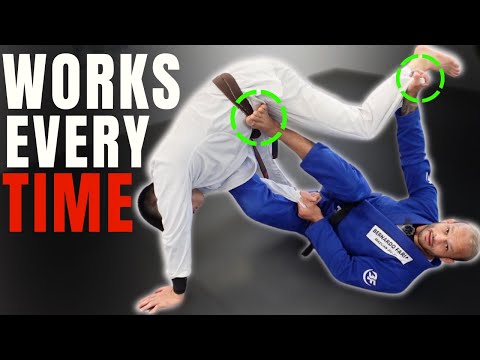
The Standard Lasso Guard uses a single lasso wrap on one side, with the other leg positioned as a secondary control (on the hip, bicep, or in spider guard configuration). [1] The standard single lasso provides strong one-sided control while maintaining enough mobility for the guard player to sweep, attack, and transition. [1],[2] It is the most commonly used lasso guard configuration, balancing control with offensive versatility. [2],[3]
The standard lasso guard wraps the shin around the opponent's arm while gripping the sleeve, creating strong control and sweep opportunities. [1]
Lasso guard was developed in competitive gi BJJ as an effective distance-management guard. [1]
Standard lasso guard is common in IBJJF competition. [1]
Изображений для этой техники пока нет.
Войдите, чтобы предложить изображение.
One of the strongest guards in the sport, Lasso Guard can take you all the way from white to black belt! In this video …
on this video i show you all 4 ways to sweep your opponents 2 ways when they stands from your lasso and 2 when they stay…
The standard lasso guard is an open-guard position where the bottom player hooks one foot across the opponent's shoulder or upper body while controlling the same-side sleeve, creating a mechanical lock that prevents the opponent from easily disengaging or advancing. Both Precision MMA and BIG OSS Jiu-Jitsu emphasize the critical importance of hand positioning: the controlling hand should maintain a palm-up hook grip on the opponent's cuff rather than a closed fist, as this orientation exponentially increases resistance to the opponent's attempts to rotate out of the grip. Precision MMA stresses that grip strength should be modulated throughout longer matches to prevent fatigue, using full-force gripping only sparingly. The position exists on a spectrum from shallow lasso (foot positioned on the shoulder) to full lasso (foot deeper across the chest), with tactical transitions between them based on opponent movement. Both instructors teach that the shallow lasso serves primarily as a positional maintenance tool when the opponent attempts to pass laterally, while the full lasso enables sweeping and attacking sequences. Sweeping mechanics differ slightly between the sources: Precision MMA emphasizes combinations including knee lever, reverse de la Hiva, tripod sweep, and spinning transitions to back control or leg lock entries, often incorporating secondary hooks such as butterfly or X-guard mechanics. BIG OSS Jiu-Jitsu focuses on four primary sweep options—two from standing opponents (collar-sleeve to ankle sweep variations) and two from kneeling opponents (half-guard lasso transitions with knee shoots and foot locks)—prioritizing leverage and hip positioning. Both instructors agree that the lasso guard functions most effectively when combined with other guard structures and that successful execution requires constant positional adjustment based on the opponent's base, weight distribution, and defensive choices.
Сформировано на основе 2 инструкторов
Учебных курсов по этой технике пока нет.
Войдите, чтобы предложить курс.
Риск травмы для человека, к которому применяется техника
Guard positions are defensive; injury risk comes from transitions, not the position itself
Уровень мастерства, необходимый для надёжного выполнения техники
Разрешена ли техника по основным соревновательным правилам
Jiu-Jitsu University (Saulo Ribeiro, 2008)
Alias sources — [1] IBJJF Rules (2024) [2] Jiu-Jitsu University (Ribeiro, 2008) [3] The Guard (Moreira & Beneville, 2003)
Effectiveness sources — [1] Jiu-Jitsu University (Ribeiro, 2008)
Standard katakana transliteration of Western martial arts terminology (外来語) — used in Japanese MMA, boxing, and BJJ communities
Alias sources — [1] IBJJF Rules (2024) [2] Jiu-Jitsu University (Ribeiro, 2008) [3] The Guard (Moreira & Beneville, 2003)
Effectiveness sources — [1] Jiu-Jitsu University (Ribeiro, 2008)
hip flexibility, active legs, grip management
long legs for distance control and guard retention
hip flexors, adductors, quadriceps, core, grip
Hand positioning is critical in lasso guard. According to Precision MMA, if your hand is turned down, it's easy for your opponent to loop their hand out and pop the grip. Instead, you should set your hand in a specific position that prevents this escape and maintains effective control.
Precision MMA recommends learning shallow lasso guard as a valuable foundational structure when starting out with the position, as it teaches important defensive concepts before progressing to more complex variations.
When your opponent tries to walk in that direction and flare their elbow to push your foot off their shoulder, Precision MMA advises closing your thigh down and catching their hip to prevent your guard from being passed.
According to Precision MMA, the primary counter to lasso guard is when your opponent builds up their base, uses their knee to scrape your foot out from underneath their shoulder, and then flares their elbow to set up a pass.
The Standard Lasso Guard uses a single lasso wrap on one side, with the other leg positioned as a secondary control (on the hip, bicep, or in spider guard configuration). The standard single lasso provides strong one-sided control while maintaining enough mobility for the guard player to sweep, attack, and transition.
The standard lasso guard is the primary lasso guard configuration, widely used in gi competition as an effective open guard control position. It has been a staple of gi guard play for decades.
IBJJF: разрешён — Legal — guard is fundamental to BJJ, sweeps from guard score 2 points; IJF: ограничен — Guard pulling penalized as non-combativity — groundwork from guard permitted …; ADCC: разрешён — Legal, guard pull penalized -1 point in points portion; Unified MMA: разрешён — Legal — no penalty for playing guard; FIAS Sport Sambo: разрешён — Legal
Оценка опасности 2/10. Low — guard positions are defensive; injury risk comes from transitions, not the position itself
Стандартная цепочка подготовки: Achieve Guard Contact → Control Grips → Manage Distance → Threaten Submissions/Sweeps.
Стандартные контрприёмы: Guard Pass — systematically work to clear the legs and establish a dominant position / Leg Pin — control one or both legs to neutralize guard retention / Pressure Passing — use heavy chest pressure to flatten and immobilize the guard player.
Распространённые варианты: Spider guard (gripping both sleeves with feet on the biceps for distanc…); De la Riva guard (one hook behind the opponent's lead leg with opposite foo…); Lasso guard (lasso grip wrapping the leg around the opponent's arm); Collar-sleeve guard (controlling collar with one hand and sleeve with the othe…).
Standard lasso guard is common in IBJJF competition.
Основные ошибки, на которые стоит обратить внимание: Threading the leg without securing the sleeve grip first — the grip must be established before the wrap / Wrapping too shallow — aim for the foot behind the shoulder blade for maximum control / Not controlling the opposite side — single-point lasso control is insufficient for attacks / Keeping the hips flat while playing lasso — angle the hips for better sweep and submission angles.
Standard Lasso Guard также известен как Sutandādo Rassō Gādo, Full Lasso, Classic Lasso Guard, Inside Lasso.