Understanding the De La Riva Guard
0
De La Riva Guard·JonThomasBJJ
Overview of the basic attacks and controls of the de la riva guard
Перевод: De La Riva guard
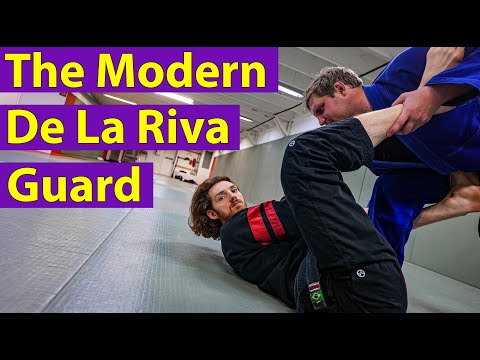
The De La Riva Guard subfamily covers the open guard position where the guard player hooks one leg around the opponent's lead leg from the outside, wrapping the foot behind the knee, while controlling the ankle of that leg with the hand. [1] The DLR guard provides powerful off-balancing leverage through the hook and ankle control combination, which can stretch the opponent's base and create sweep, back take, and submission opportunities. [1],[2] The DLR guard is one of the most important and widely used open guard positions in modern BJJ. [2],[3]
The De La Riva guard was developed by and named after Ricardo De La Riva, who used the position innovatively in competition in the 1980s and 1990s. [1] De La Riva's guard innovation spawned an entire family of techniques and is considered one of the most significant contributions to guard play in BJJ history. [2],[3]
The De La Riva guard is one of the most versatile open guard positions, providing sweep, back take, and submission opportunities through the outside leg hook and ankle control. [1] The position is effective because the hook creates powerful leverage that disrupts the opponent's base from the outside, making it difficult for the passer to maintain balance. [2]
The De La Riva guard was developed by Ricardo De La Riva in the 1980s, who used the outside hook innovatively in competition against larger opponents. [1] The Mendes Brothers (Rafael and Guilherme) evolved the DLR guard into the berimbolo system in the 2010s, creating one of the most influential guard innovations in modern BJJ. [2]
Ricardo De La Riva used his eponymous guard to defeat much larger opponents in open-weight BJJ competition, including notable victories over Royler Gracie. [1] The Mendes Brothers' berimbolo system from DLR guard powered multiple IBJJF World Championship titles, with Rafael Mendes winning multiple weight divisions. [2]
Изображений для этой техники пока нет.
Войдите, чтобы предложить изображение.
Overview of the basic attacks and controls of the de la riva guard
This is an overview of understanding the de la riva guard in modern jiu jitsu. The de la riva is one of the most useful…
Учебных курсов по этой технике пока нет.
Войдите, чтобы предложить курс.
Риск травмы для человека, к которому применяется техника
Guard positions are defensive; injury risk comes from transitions, not the position itself
Уровень мастерства, необходимый для надёжного выполнения техники
Разрешена ли техника по основным соревновательным правилам
Jiu-Jitsu University (Saulo Ribeiro, 2008)
Alias sources — [1] IBJJF Rules (2024) [2] Jiu-Jitsu University (Ribeiro, 2008) [3] Jiu-Jitsu University (Ribeiro, 2008)
Effectiveness sources — [1] Jiu-Jitsu University (Ribeiro, 2008) [2] The Guard (Moreira & Beneville, 2003)
Standard katakana transliteration of Western martial arts terminology (外来語) — used in Japanese MMA, boxing, and BJJ communities
Alias sources — [1] IBJJF Rules (2024) [2] Jiu-Jitsu University (Ribeiro, 2008) [3] Jiu-Jitsu University (Ribeiro, 2008)
Effectiveness sources — [1] Jiu-Jitsu University (Ribeiro, 2008) [2] The Guard (Moreira & Beneville, 2003)
hip flexibility, active legs, grip management
long legs for distance control and guard retention
hip flexors, adductors, quadriceps, core, grip
Каждое движение в любом боевом искусстве обладает рядом универсальных свойств. Комбинируйте параметры ниже, чтобы найти нужный инструмент или сравнить аналоги из разных стилей.
The Reverse De La Riva positions the guard player with the DLR hook wrapped around the opponent's lead leg from the inside rather than the outside, with the foot hooking behind the knee from the opposite direction. [1] The reverse DLR provides different sweeping angles than the standard DLR and is frequently used as a transitional position to berimbolo attacks, kiss of the dragon entries, and deep half guard. [1,2] It is particularly effective against opponents who step their leg back to counter the standard DLR hook. [2,3]
The Standard De La Riva establishes the classic DLR guard with the outside hook wrapped around the opponent's lead leg, foot behind the knee, near hand controlling the ankle, and the far hand gripping the collar or sleeve. [1] This is the base DLR guard configuration from which all DLR attacks originate — sweeps, berimbolo entries, back takes, and transitions to other guard positions. [1,2] The standard DLR provides a comprehensive platform for both gi and no-gi guard play. [2,3]
De La Riva guard appears in 46 passages across 6 books. Named after Ricardo de la Riva, who developed the hook guard in the 1980s. Jiu Jitsu Style (2015) reports: 'Nearly 40% of [top competitor] sweeps started in the spider guard' and notes that 'de la Riva and reverse de la Riva might be considered trends that are still in frequent use today. Modern athletes must know these positions.' The Miyao Brothers are described as centering their game around 'de la Riva and berimbolo attacks.' (Jiu Jitsu Style 28–30, 2015–2016)
De La Riva is one of the most important guards in modern jiu-jitsu because it's easy to get to and extremely effective for controlling your opponent. According to JonThomasBJJ, it's versatile with many attack variations including single legs, baron bolos, X guard transitions, and ankle locks.
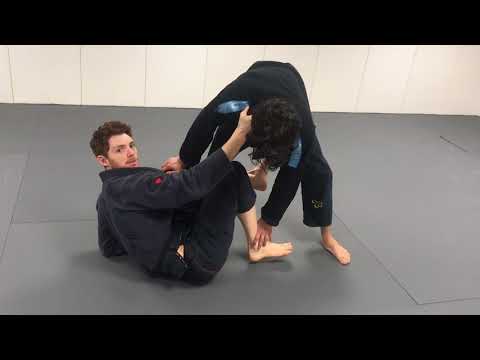
Distance is the most important factor for setting a good De La Riva hook. You need to create space so your foot can come up to the hip; if your hip is too close, your leg will have to go back before it can go forward. You can create this distance by pushing off the hip or using knee pressure to alternate your hips out.
Once you have the hook high on the hip, you can use it to off-balance your opponent, take them backwards, and create torque on the knee. You can block their foot with your forearm or elbow to prevent them from regaining balance, then swing out and push to create space for the sweep, or transition into attacks like De La Riva X.
When you attack submissions like triangles or armbars from the guard, opponents defend by putting one leg forward and using their elbow to defend. Additionally, when you pull and off-balance an opponent, they naturally need one leg forward and one back to create counter-pressure, which naturally leads to De La Riva hook access.
The De La Riva Guard subfamily covers the open guard position where the guard player hooks one leg around the opponent's lead leg from the outside, wrapping the foot behind the knee, while controlling the ankle of that leg with the hand. The DLR guard provides powerful off-balancing leverage through the hook and ankle control combination, which can stretch the opponent's base and create sweep, back take, and submission opportunities.
The De La Riva guard was developed by and named after Ricardo De La Riva, who used the position innovatively in competition in the 1980s and 1990s. De La Riva's guard innovation spawned an entire family of techniques and is considered one of the most significant contributions to guard play in BJJ history.
IBJJF: разрешён — Legal — guard is fundamental to BJJ, sweeps from guard score 2 points; IJF: ограничен — Guard pulling penalized as non-combativity — groundwork from guard permitted …; ADCC: разрешён — Legal, guard pull penalized -1 point in points portion; Unified MMA: разрешён — Legal — no penalty for playing guard; FIAS Sport Sambo: разрешён — Legal
Оценка опасности 2/10. Low — guard positions are defensive; injury risk comes from transitions, not the position itself
Стандартная цепочка подготовки: Achieve Guard Contact → Control Grips → Manage Distance → Threaten Submissions/Sweeps.
Стандартные контрприёмы: Guard Pass — systematically work to clear the legs and establish a dominant position / Leg Pin — control one or both legs to neutralize guard retention / Pressure Passing — use heavy chest pressure to flatten and immobilize the guard player.
Распространённые варианты: Spider guard (gripping both sleeves with feet on the biceps for distanc…); De la Riva guard (one hook behind the opponent's lead leg with opposite foo…); Lasso guard (lasso grip wrapping the leg around the opponent's arm); Collar-sleeve guard (controlling collar with one hand and sleeve with the othe…).
Ricardo De La Riva used his eponymous guard to defeat much larger opponents in open-weight BJJ competition, including notable victories over Royler Gracie. The Mendes Brothers' berimbolo system from DLR guard powered multiple IBJJF World Championship titles, with Rafael Mendes winning multiple weight divisions.
Основные ошибки, на которые стоит обратить внимание: Hooking without controlling the far sleeve — the far-side grip prevents the opponent from disengaging / Using a passive hook — the DLR hook must actively pull and off-balance the opponent's leg / Not controlling the opponent's ankle on the hooked side — ankle control prevents them from retreating / Playing DLR against a kneeling opponent — DLR is designed for standing opponents; transition to another guard if they….
De La Riva Guard также известен как Dera Hība Gādo, De La Riva, DLR Guard, Guarda De La Riva.