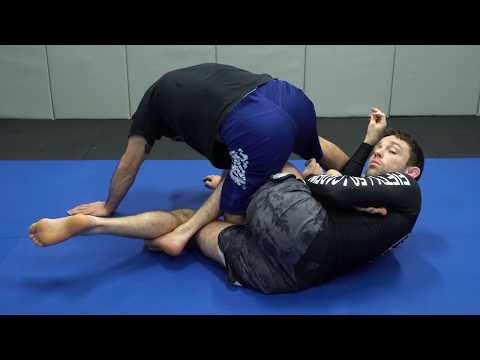
An Introduction To The Backside 50/50 Position
0
Back Position Transition·Ryan Hall Online
This is your premium finishing position from the 50/50 guard, and one I have used successfully in the UFC against the le…
Not yet documented
The Back Position Transition family covers techniques for transitioning to and maintaining back control — the second-most dominant position in grappling (after mount in some hierarchies, or the most dominant by many modern accounts) where the attacker controls the opponent from behind with hooks (legs around the waist) and a seatbelt grip (over-under arm control). [1] Back control is unique because the defender cannot see the attacker, limiting their defensive options and creating the primary platform for the rear naked choke — the most commonly finished submission in combat sports history. [1],[2] This family covers the transitions that achieve back control: from guard (berimbolo, kiss-of-the-dragon, back take from closed guard), from top position (mount-to-back transition when the opponent turns), from scrambles, and from the standing position (back clinch from takedowns and throws). [2],[3] The modern back attack system — combining hooks, body triangle, and systematic choking — has been developed most comprehensively by Marcelo Garcia (back take from butterfly guard) and John Danaher's 'Back Attack' system. [3]
Back control has been recognised as a dominant position throughout martial arts history, but systematic back taking and back attacking were refined in modern BJJ. [1] Marcelo Garcia's butterfly-to-back-take system (2000s-2010s) revolutionised how grapplers approach the back position. [1],[2] John Danaher's 'Back Attack' system further systematised back control, back maintenance, and choking sequences into a comprehensive curriculum. [2],[3] The berimbolo back take, developed by the Mendes brothers and Miyao brothers, added an entirely new pathway to the back from guard positions. [3]
Back control is arguably the most dominant position in grappling — the rear naked choke is the most commonly finished submission in both BJJ and MMA competition history. [1] In the UFC, rear naked chokes account for more submission victories than any other single technique. [2] Back control with 4 points in IBJJF is the joint-highest scoring position alongside mount. [3]
Изображений для этой техники пока нет.
Войдите, чтобы предложить изображение.
This is your premium finishing position from the 50/50 guard, and one I have used successfully in the UFC against the le…
Учебных курсов по этой технике пока нет.
Войдите, чтобы предложить курс.
Риск травмы для человека, к которому применяется техника
Very high for the defender — back control enables the rear naked choke (the most commonly finished submission in MMA and BJJ) and provides devastating ground-and-pound angles in MMA; the defender cannot see the attacker's choking attempts, making defence extremely difficult
Уровень мастерства, необходимый для надёжного выполнения техники
Разрешена ли техника по основным соревновательным правилам
Jiu-Jitsu University (Saulo Ribeiro, 2008)
Description sources — [1] Jiu-Jitsu University (Ribeiro, 2008) [2] Marcelo Garcia back-taking career [3] Danaher Back Attack system and berimbolo evolution
Standard katakana transliteration of Western martial arts terminology (外来語) — used in Japanese MMA, boxing, and BJJ communities
Description sources — [1] Jiu-Jitsu University (Ribeiro, 2008) [2] Marcelo Garcia back-taking career [3] Danaher Back Attack system and berimbolo evolution
chest-to-back adherence, hook maintenance (leg dexterity), seatbelt grip strength
long arms (easier to establish seatbelt and choke), strong grip, leg dexterity for hook insertion
forearms (seatbelt grip and choke), adductors (squeezing hooks or body triangle), core (maintaining chest-to-back contact), biceps (choking squeeze)
Каждое движение в любом боевом искусстве обладает рядом универсальных свойств. Комбинируйте параметры ниже, чтобы найти нужный инструмент или сравнить аналоги из разных стилей.
Ryan Hall emphasizes that the trick is to stay long and use the back of your thigh as a frame to prevent your opponent from pressing into you. Your weight itself becomes the control mechanism—their leg gets stapled in place by your body weight rather than relying solely on a heel hook lock.
Use your right hand to block and keep their legs apart—this is an active control you want to maintain throughout the position to prevent them from closing their legs and escaping.
According to Ryan Hall, a heel hook lock isn't a prerequisite for the position like it is in many other positions. You can add it for redundancy in your control, but strong positional control through weight and framing may be sufficient.
Ryan Hall advises staying relaxed and not forcing things in an overpowered situation, as this causes submissions to miss. Instead, focus on marking and checking your opponent's position with techniques like the inside of your calf before finishing.
The Back Position Transition family covers techniques for transitioning to and maintaining back control — the second-most dominant position in grappling (after mount in some hierarchies, or the most dominant by many modern accounts) where the attacker controls the opponent from behind with hooks (legs around the waist) and a seatbelt grip (over-under arm control). Back control is unique because the defender cannot see the attacker, limiting their defensive options and creating the primary platform for the rear naked choke — the most commonly finished submission in combat sports history.
Back control has been recognised as a dominant position throughout martial arts history, but systematic back taking and back attacking were refined in modern BJJ. Marcelo Garcia's butterfly-to-back-take system (2000s-2010s) revolutionised how grapplers approach the back position.
IBJJF: разрешён — Legal — guard is fundamental to BJJ, sweeps from guard score 2 points; IJF: ограничен — Guard pulling penalized as non-combativity — groundwork from guard permitted …; ADCC: разрешён — Legal, guard pull penalized -1 point in points portion; Unified MMA: разрешён — Legal — no penalty for playing guard; FIAS Sport Sambo: разрешён — Legal
Оценка опасности 9/10. Very high for the defender — back control enables the rear naked choke (the most commonly finished submission in MMA and BJJ) and provides devastating ground-and-pound angles in MMA; the defender cannot see the attacker's choking attempts, making defence extremely difficult
Стандартная цепочка подготовки: Identify Back Take Opportunity → Establish Seatbelt → Insert Hooks or Body Triangle → Maintain Chest-to-Back Contact → Attack the Neck → Finish.
Стандартные контрприёмы: Seatbelt Escape — stripping the seatbelt grip to begin the escape / Slide Hips to Mat — dropping the hips to the mat on the choking side to escape hooks / Turn Into the Opponent — rotating to face the opponent to escape back control to guard / Hook Strip — removing one hook at a time to begin disentangling.
Распространённые варианты: Standard back control (hooks in) (both feet hooked inside the opponent's thighs with seatbe…); Body triangle back control (figure-four leg lock around the torso instead of hooks; m…); Rear mount (back mount) (seated behind the opponent with hooks in; the full back m…); Chair sit (seated behind the opponent without hooks, using the seatb…); Truck to back (transitioning from the 10th Planet Truck position to stan…); Gift wrap back control (wrapping the opponent's arm across their own neck for add…).
Back control scores 4 points in IBJJF (highest alongside mount) and 3 points in ADCC. The rear naked choke from back control is the most commonly finished submission in UFC history.
Основные ошибки, на которые стоит обратить внимание: Reaching for the choke before establishing control — secure the seatbelt and hooks first, then attack the neck; rushi… / Allowing space between chest and back — any space between the bodies allows the opponent to slide their hips to the m… / Crossing ankles in back mount — crossed ankles expose a straight ankle lock; keep ankles uncrossed or use body triangle / Focusing only on the rear naked choke — collar chokes (gi), arm triangles, and body triangle compression are alternat….
Back Position Transition также известен как Back Take, Back Transition, Taking the Back.