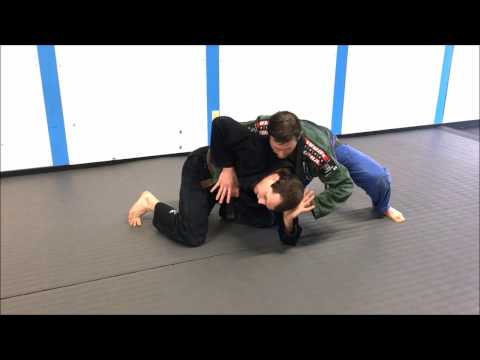
Escaping the turtle position in a fight or BJJ with a stand-up
0
Stand Up From Turtle·Ben Egli
This is the first video in a short series of videos that will highlight escape or reversals from the turtle position. Th…
Перевод: stand up from turtle
The Stand Up From Turtle family covers techniques for transitioning from the turtle position directly to a standing position, escaping the ground entirely. [1] Standing up from turtle is particularly important in MMA, where returning to the feet can be the highest-priority escape goal, and in wrestling, where the stand-up is a primary escape from the bottom position. [1],[2] This family includes the switch (a direction-changing standup) and the technical standup from turtle, each providing a different pathway to the feet while defending against the opponent's attempts to maintain ground control. [2],[3]
Standing up from turtle/bottom position has been a fundamental skill in wrestling throughout its history, as returning to the feet is often the primary defensive goal. [1] MMA further emphasised the importance of turtle-to-standing transitions as fighters needed to escape ground control and return to striking range. [2],[3]
Standing from turtle draws from wrestling and BJJ standup techniques. [1]
Standing up from turtle is a critical escape in MMA and wrestling. [1]
Изображений для этой техники пока нет.
Войдите, чтобы предложить изображение.
This is the first video in a short series of videos that will highlight escape or reversals from the turtle position. Th…
Учебных курсов по этой технике пока нет.
Войдите, чтобы предложить курс.
Риск травмы для человека, к которому применяется техника
Turtle escapes involve rolling and granby movements; neck strain risk
Уровень мастерства, необходимый для надёжного выполнения техники
Разрешена ли техника по основным соревновательным правилам
Mastering Jujitsu (Renzo Gracie & John Danaher, 2003)
Alias sources — [1] Wrestling Physical Conditioning Encyclopedia (Welker, 2010) [2] NCAA Wrestling Rules and Interpretations
Effectiveness sources — [1] Wrestling Physical Conditioning Encyclopedia (Petrov, 1977) [2] Mastering Jujitsu (Gracie & Danaher, 2003)
Standard Japanese martial arts terminology (kanji/hiragana)
Established Japanese martial arts naming convention — native Japanese term (和語/漢語)
Alias sources — [1] Wrestling Physical Conditioning Encyclopedia (Welker, 2010) [2] NCAA Wrestling Rules and Interpretations
Effectiveness sources — [1] Wrestling Physical Conditioning Encyclopedia (Petrov, 1977) [2] Mastering Jujitsu (Gracie & Danaher, 2003)
hip mobility, explosive bridge/shrimp power, timing
flexible hips and strong glutes for escape movements
glutes, hip flexors, core, triceps (framing)
Каждое движение в любом боевом искусстве обладает рядом универсальных свойств. Комбинируйте параметры ниже, чтобы найти нужный инструмент или сравнить аналоги из разных стилей.
The Switch From Turtle subfamily covers the wrestling-derived escape where the turtled fighter performs a 'switch' — a direction-changing standup that reverses the facing direction to escape the opponent's control. [1] The switch involves quickly rotating the hips and changing the direction the fighter faces, which breaks the opponent's grip and creates an angle for the standup. [1,2] The switch is particularly effective against opponents who are driving forward with their weight, as the direction change uses their momentum against them. [2,3]
The Technical Standup From Turtle subfamily covers the escape where the turtled fighter performs a technical standup — posting one hand behind, stepping up with one leg, and rising to a standing position while maintaining a defensive frame against the opponent. [1] The technical standup from turtle is adapted from the standard technical standup but begins from the hands-and-knees turtle position rather than from sitting. [1,2] This standup is important in MMA where returning to the feet is often the primary defensive objective from turtle. [2,3]
Standing up from turtle is the simplest escape — post the hands, drive one leg forward, and stand. In wrestling, this is the 'stand-up' from referee's position. In BJJ, standing up from turtle often leads to a guard pull or re-engagement. (Coaching Wrestling Successfully, Gable)
Cover your head to protect it from strikes, especially the free hand of your opponent. Ben Egli emphasizes that hand protection is critical whether you're escaping in a fight or in BJJ.
Fight for wrist control early or as you step up, then try to block their arm from entering and wrapping around your waist. Ben Egli recommends controlling the wrist as your primary hand-fighting priority during the escape.
Push back hard into your opponent as they push forward into you—use their forward pressure and counterbalance to assist your stand. Ben Egli notes that driving back into them and matching their pressure is essential for creating the leverage needed to get to your feet.
The Stand Up From Turtle family covers techniques for transitioning from the turtle position directly to a standing position, escaping the ground entirely. Standing up from turtle is particularly important in MMA, where returning to the feet can be the highest-priority escape goal, and in wrestling, where the stand-up is a primary escape from the bottom position.
Standing up from turtle/bottom position has been a fundamental skill in wrestling throughout its history, as returning to the feet is often the primary defensive goal. MMA further emphasised the importance of turtle-to-standing transitions as fighters needed to escape ground control and return to striking range.
Unified MMA: разрешён — Legal defensive/transitional technique; IBJJF: разрешён — Legal; IJF: разрешён — Legal; ADCC: разрешён — Legal; UWW: разрешён — Legal, escape scores 1 point (freestyle), reversal scores 1 point; FIAS Sport Sambo: разрешён — Legal; NCAA Folkstyle: разрешён — Legal, escape scores 1 point, reversal scores 2 points
Оценка опасности 3/10. Moderate — turtle escapes involve rolling and granby movements; neck strain risk
Стандартная цепочка подготовки: Create Space → Disrupt Control → Execute Escape → Recover Position.
Стандартные контрприёмы: Maintain Pressure — keep consistent weight distribution to limit escape space / Anticipate Direction — read escape attempt direction and block early / Transition — flow to a new position when the current one is threatened.
Распространённые варианты: Standard escape (primary escape mechanic using frames, bridges, or hip mov…); Combination escape (chaining two escape directions or methods); Counter escape (using the opponent's attack attempt to create the escape …); Competition variation (modified for rule-set optimisation).
Standing up from turtle is a critical escape in MMA and wrestling.
Основные ошибки, на которые стоит обратить внимание: Standing up without hand fighting — the opponent will pull you back down without frame control / Standing up with the back turned — maintain awareness of the opponent's position; keep them in front / Rising too high without base — maintain a low, athletic stance as you rise / Not creating distance before standing — a direct standup into the opponent's clinch is ineffective.
Stand Up From Turtle также известен как Kame kara no Tachi-agari, Turtle Standup, Base Out.