Standard De La Riva Sweep

Род

Перевод: standard De La Riva sweep

Дистанция и классификация

Категория
Удар и защитаЗамкиБлижний бойБой против нескольких
Дистанция
БлижняяСредняяДальняя

Обзор

The Standard De La Riva Sweep executes the fundamental DLR guard sweep by using the DLR hook to stretch and off-balance the opponent backward, controlling the ankle of the hooked leg while pulling the opponent forward with the upper body grip, then sweeping them over the hook. [1] The guard player extends the DLR hook to push the opponent's leg away, breaking their base, while simultaneously pulling the upper body forward with a collar or belt grip. [1],[2] The combination of the push on the leg and the pull on the upper body creates a rotational force that tips the opponent over. [2],[3]

Также известна как
Basic DLR Sweep[1]Standard De La Riva[2]
Используется в

История и происхождение

The standard DLR sweep is the foundational technique of Ricardo De La Riva's guard system, the first sweep developed from the DLR hook position. [1] It remains one of the most commonly used open guard sweeps in gi competition. [2],[3]

Страна происхождения· показано в случайном порядке

  • БразилияБразильское джиу-джитсу, ММА
  • ЯпонияБразильское джиу-джитсу
  • СШАММА

Эффективность

The standard De La Riva sweep — using the DLR hook combined with a collar and ankle grip to sweep the opponent — is one of the most reliable sweeps in gi competition. [1] It is effective against standing opponents and can be chained with back takes and other sweep variations. [1],[2]

Родословная

The standard De La Riva sweep is a fundamental open guard sweep using the DLR hook. [1]

Соревновательные результаты

De La Riva sweeps are commonly scored in IBJJF competition. [1]

Изображения

Изображений для этой техники пока нет.

Войдите, чтобы предложить изображение.

Биомеханический механизм

Primary ActionBreaking the opponent's leg control to advance to a more dominant position
Joints InvolvedHips (posture and pressure), knees (opening the guard with knee-in or standing), hands (grip fighting)
Force VectorForward pressure (stack/smash) or backward posture (stand-up break) to open the closed guard
Passing MechanicOnce the guard is opened, speed passing, pressure passing, or toreando passing advances the position

Позиция и вход

From bottom (opponent has back control)Fight the hands to prevent the choke, slide hips to the mat on the choking side, escape the hooks and turn into the opponent
From standing (opponent has back clinch)Drop the hips, peel the hands, turn and face the opponent
From body triangleAddress the body triangle first by positioning the trapped leg to pry it open, then escape the hooks

Варианты

Standard sweepprimary off-balancing and reversal technique from the guard
Combination sweepchaining two sweep directions to catch the opponent's adjustment
Counter sweepsweeping as the opponent initiates a guard pass attempt
Competition sweepoptimised for point-scoring in tournament settings

Видео

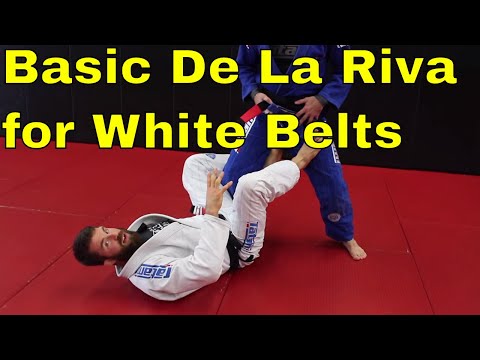
Basic De La Riva Sweep for White Belts with Position Details

0
Standard De La Riva Sweep·Chewjitsu·Added by Admin

Today's question is from Andrew who requested a De La Riva Sweep. In this video I first talk about some basic ideas of

1 video

Изучить технику

Учебных курсов по этой технике пока нет.

Войдите, чтобы предложить курс.

Оценки

Уровень опасности

Риск травмы для человека, к которому применяется техника

3
Умеренный3/10

Sweeps reverse position from bottom; moderate impact on landing for top player

Сложность

Уровень мастерства, необходимый для надёжного выполнения техники

Средний
Допустимость на соревнованиях

Разрешена ли техника по основным соревновательным правилам

Заметки по тренировке

Standard de la Riva sweep: establish the DLR hook, grip the far ankle, pull the ankle toward you while elevating with the hook, and follow the opponent to top position as they fall backward (Ricardo de la Riva, DLR Guard System)
Step 1: from open guard facing a standing opponent, hook the outside of their lead leg with your outside foot (DLR hook)
Step 2: grip the opponent's far ankle with your bottom hand
Step 3: place the free foot on the opponent's near hip for distance control
Step 4: pull the far ankle toward you while lifting with the DLR hook — this removes both base points
Step 5: the opponent falls backward — follow them to top position immediately
The pull-and-lift coordination is the key: the ankle pull removes forward base, the hook lift removes backward stability
The free foot on the hip prevents the opponent from stepping over your guard
Drill: partner stands in your DLR guard, execute the sweep — 10 reps per side

Типичные ошибки

!Pulling the ankle without lifting with the hook — both actions must be simultaneous
!Not gripping the far ankle — the near ankle doesn't provide the correct sweep angle
!Hooking too low on the shin instead of behind the knee — the hook must be high for maximum leverage
!Not using the free foot on the hip — without hip control, the opponent steps over
!Pulling the ankle too far (past your body) — pull just enough to compromise their balance
!Not following to top position — the sweep must result in you on top
!Keeping the DLR hook after the sweep — release the hook to come to top position

Связанные техники

Контрприёмы

Цепочка подготовки

1Control Gripsestablish the controlling grips needed to load the sweep
2Off-Balanceshift the opponent's weight to the target direction
3Execute Sweepapply the sweeping mechanic to topple the opponent
4Follow to Topride the sweep momentum to establish top position

Источники и ссылки

Основной источник

Jiu-Jitsu University (Saulo Ribeiro, 2008)

1КнигаThe Guard (Moreira & Beneville, 2008)

Alias sources — [1] Common abbreviation in BJJ community [2] Named after Ricardo De La Riva

2КнигаJiu-Jitsu University (Ribeiro, 2008)

Effectiveness sources — [1] Brazilian Jiu-Jitsu: Theory and Technique (Renzo Gracie & Royler Gracie, 2001) [2] Jiu-Jitsu University (Saulo Ribeiro, 2008)

3ДругоеJapanese Combat Sports Katakana Convention

Standard katakana transliteration of Western martial arts terminology (外来語) — used in Japanese MMA, boxing, and BJJ communities

4ЦитатаThe Guard (Moreira & Beneville, 2008)

Alias sources — [1] Common abbreviation in BJJ community [2] Named after Ricardo De La Riva

5ЦитатаJiu-Jitsu University (Ribeiro, 2008)

Effectiveness sources — [1] Brazilian Jiu-Jitsu: Theory and Technique (Renzo Gracie & Royler Gracie, 2001) [2] Jiu-Jitsu University (Saulo Ribeiro, 2008)

Сообщество

Атлетизм

Requires

timing, hip power, off-balancing skill

Favours

strong hips and active legs for sweeping leverage

Key muscles

hip flexors, glutes, quadriceps, core rotators

Часто задаваемые вопросы

What grip should I use to start the De La Riva sweep as a beginner?

Chewjitsu recommends starting with a cross grip on the sleeve and controlling the same side hip, which helps white belts learn the technique before exploring more advanced grip variations.

How do I control my opponent's leg in the De La Riva sweep?

Control the heel with your foot on their leg while maintaining some pressure—this stops them from turning their knee out and escaping the position, according to Chewjitsu.

What's the timing of the actual sweep motion?

You pop and pull at the same time to create tension, then pull the foot back while using your grip to come up into a passing position, as demonstrated in Chewjitsu's instruction.

Как работает Standard De La Riva Sweep?

The Standard De La Riva Sweep executes the fundamental DLR guard sweep by using the DLR hook to stretch and off-balance the opponent backward, controlling the ankle of the hooked leg while pulling the opponent forward with the upper body grip, then sweeping them over the hook. The guard player extends the DLR hook to push the opponent's leg away, breaking their base, while simultaneously pulling the upper body forward with a collar or belt grip.

Откуда происходит Standard De La Riva Sweep?

The standard DLR sweep is the foundational technique of Ricardo De La Riva's guard system, the first sweep developed from the DLR hook position. It remains one of the most commonly used open guard sweeps in gi competition.

Разрешён ли Standard De La Riva Sweep на соревнованиях?

Unified MMA: разрешён — Legal defensive/transitional technique; IBJJF: разрешён — Legal; IJF: разрешён — Legal; ADCC: разрешён — Legal; UWW: разрешён — Legal; FIAS Sport Sambo: разрешён — Legal

Насколько опасен Standard De La Riva Sweep?

Оценка опасности 3/10. Moderate — sweeps reverse position from bottom; moderate impact on landing for top player

Как подготовить Standard De La Riva Sweep?

Стандартная цепочка подготовки: Control Grips → Off-Balance → Execute Sweep → Follow to Top.

Как защититься от Standard De La Riva Sweep?

Стандартные контрприёмы: Base and Posture — maintain wide base and upright posture to resist the sweep / Grip Strip — break controlling grips before the sweep can be loaded / Back Step — retreat the leg being attacked to remove the sweep fulcrum.

Какие есть варианты Standard De La Riva Sweep?

Распространённые варианты: Standard sweep (primary off-balancing and reversal technique from the guard); Combination sweep (chaining two sweep directions to catch the opponent's adj…); Counter sweep (sweeping as the opponent initiates a guard pass attempt); Competition sweep (optimised for point-scoring in tournament settings).

Насколько эффективен Standard De La Riva Sweep на соревнованиях?

De La Riva sweeps are commonly scored in IBJJF competition.

Какие типичные ошибки при выполнении Standard De La Riva Sweep?

Основные ошибки, на которые стоит обратить внимание: Pulling the ankle without lifting with the hook — both actions must be simultaneous / Not gripping the far ankle — the near ankle doesn't provide the correct sweep angle / Hooking too low on the shin instead of behind the knee — the hook must be high for maximum leverage / Not using the free foot on the hip — without hip control, the opponent steps over.

Какие ещё названия есть у Standard De La Riva Sweep?

Standard De La Riva Sweep также известен как Sutandādo Dera Hība Suīpu, Basic DLR Sweep, Standard De La Riva.