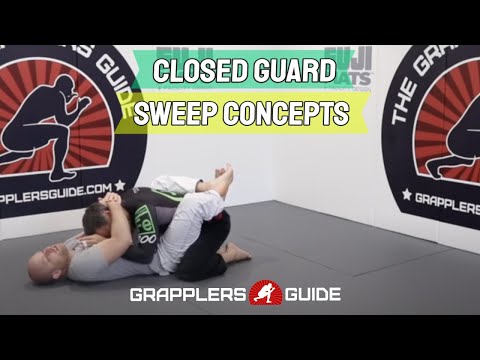
Closed Guard Sweep Concepts by Jason Scully
0
Standard Technical Standup·The Grapplers Guide by Jason Scully
The Grapplers Guide is the longest running and most recommended premium BJJ and grappling learning site ever created. L…
Перевод: standard technical standup
The Standard Technical Standup subfamily covers the fundamental technique of rising from a seated or downed position while maintaining a defensive base and guard throughout the standing motion. [1] The technique uses a three-point base (two hands and one foot, or one hand, one foot, and one knee) to maintain stability while rising, keeping one leg extended as a barrier to prevent the opponent from closing distance. [1],[2] The standard technical standup is considered the safest method of returning to feet because it keeps the defender balanced and protected at every stage. [2],[3]
The standard technical standup is the baseline version of this fundamental standing escape. [1]
A fundamental BJJ and MMA technique. [1]
Used in MMA and BJJ competition. [1]
Изображений для этой техники пока нет.
Войдите, чтобы предложить изображение.
The Grapplers Guide is the longest running and most recommended premium BJJ and grappling learning site ever created. L…
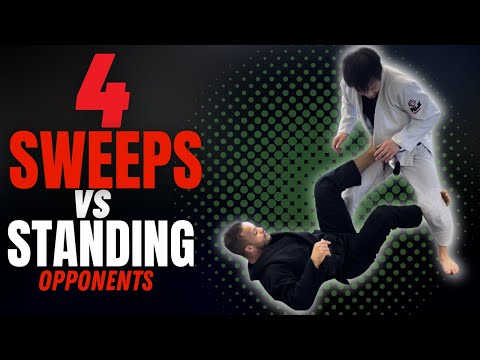
IF HAVE HARD TIME SWEEP SOMEONE WHEN THEY STANDING FORM YOUR GUARD THIS VIDEO IS FOR YOU. . . On This video i show 4 way…
When you first start Jiu Jitsu, you're gonna be getting stuck in the bottom of mount. A lot. Even by people who aren't v…
The standard technical standup from mount position represents a fundamental escape strategy taught across beginner and intermediate Brazilian Jiu-Jitsu levels. Brandon McCaghren identifies three primary mount escape variations that form the foundation of this technique family: the bridge and roll, the knee-elbow escape, and the kipping (hip bump) escape. All three escapes share core principles: securing frame control to prevent the top player from maintaining pressure, using hip movement to create space and flatten the opponent's legs, and executing explosive bridging or rolling movements to dislodge the mounted opponent. McCaghren emphasizes that successful execution requires trapping the opponent's limbs—particularly the arms—before initiating the escape motion, and that combining these movements into a single fluid action increases success rates. The knee-elbow escape and kipping escape both transition the bottom player into half guard or guard position with an established underhook, enabling immediate offensive counters. Jason Scully's conceptual framework on closed guard sweeps provides complementary theory: successful sweeps require controlling at least one of the opponent's limbs (the "table leg concept") and bringing the opponent's body weight over the escaper to neutralize their base. BIG OSS Jiu-Jitsu Channel emphasizes grip transitions and timing when the opponent stands from guard, highlighting that maintaining old grips prevents effective movement and that immediate weight redistribution is essential. All three instructors converge on the importance of explosive bridging mechanics, proper frame placement, and transitioning to offensive positions immediately after the escape.
Сформировано на основе 3 инструкторов
Учебных курсов по этой технике пока нет.
Войдите, чтобы предложить курс.
Риск травмы для человека, к которому применяется техника
Standing escapes from clinch/holds; involves explosive disengagement
Уровень мастерства, необходимый для надёжного выполнения техники
Разрешена ли техника по основным соревновательным правилам
Jiu-Jitsu University (Saulo Ribeiro, 2008)
Alias sources — [1] Gracie Jiu-Jitsu (Gracie & Gracie, 2001) [2] Jiu-Jitsu University (Saulo Ribeiro, 2008) [3] MMA coaching terminology
Effectiveness sources — [1] Mastering Jujitsu (Gracie & Danaher, 2003)
Standard katakana transliteration of Western martial arts terminology (外来語) — used in Japanese MMA, boxing, and BJJ communities
Alias sources — [1] Gracie Jiu-Jitsu (Gracie & Gracie, 2001) [2] Jiu-Jitsu University (Saulo Ribeiro, 2008) [3] MMA coaching terminology
Effectiveness sources — [1] Mastering Jujitsu (Gracie & Danaher, 2003)
hip escape (shrimping) speed, framing strength, timing
flexible hips and quick lateral movement
hip flexors, obliques, triceps (framing), core
Каждое движение в любом боевом искусстве обладает рядом универсальных свойств. Комбинируйте параметры ниже, чтобы найти нужный инструмент или сравнить аналоги из разных стилей.
According to BIG OSS Jiu-Jitsu, when your opponent stands up, you need to transition your grips immediately—don't just hang onto sleeve control. The key is to shift to controlling their ankles or legs, as holding sleeves alone won't prevent them from passing your guard.
Jason Scully emphasizes that you must control your opponent's arms during a sweep attempt, because if you don't, they can post their hands out or do a cartwheel to stop the sweep.
You want to bring your opponent's base over you to disrupt their center of gravity and posture, making it much harder for them to defend. Jason Scully notes that the elevator sweep works best when you first bring them over you before executing the sweep.
BIG OSS Jiu-Jitsu recommends dropping your hips to force them backward, then using your feet and hips to push them further back. Once they're walking back, hook both ankles with your legs and sweep by pushing up with the sleeve grips.
The Standard Technical Standup subfamily covers the fundamental technique of rising from a seated or downed position while maintaining a defensive base and guard throughout the standing motion. The technique uses a three-point base (two hands and one foot, or one hand, one foot, and one knee) to maintain stability while rising, keeping one leg extended as a barrier to prevent the opponent from closing distance.
The standard technical standup is a fundamental self-defence and BJJ technique, taught as the proper method of standing up when an opponent is present. It is one of the first self-defence techniques taught in BJJ and is essential in MMA ground-to-standing transitions.
Unified MMA: разрешён — Legal defensive/transitional technique; IBJJF: разрешён — Legal; IJF: разрешён — Legal; ADCC: разрешён — Legal; UWW: разрешён — Legal, escape scores 1 point (freestyle), reversal scores 1 point; FIAS Sport Sambo: разрешён — Legal; NCAA Folkstyle: разрешён — Legal, escape scores 1 point, reversal scores 2 points
Оценка опасности 3/10. Moderate — standing escapes from clinch/holds; involves explosive disengagement
Стандартная цепочка подготовки: Create Space → Disrupt Control → Execute Escape → Recover Position.
Стандартные контрприёмы: Maintain Pressure — keep consistent weight distribution to limit escape space / Anticipate Direction — read escape attempt direction and block early / Transition — flow to a new position when the current one is threatened.
Распространённые варианты: Shrimp to guard (framing and hip-escaping to recover full guard or half guard); Underhook escape (winning the underhook and coming to knees or reversing); Bridge to knees (bridging into the opponent and transitioning to turtle or…); Ghost escape (inverting under the opponent to re-guard from the opposit…).
Used in MMA and BJJ competition.
Основные ошибки, на которые стоит обратить внимание: Posting the hand on the wrong side — post on the same side as the leg that will go underneath you / Not kicking out the lead leg — the leg extension creates essential distance / Standing up slowly — the technical standup should be explosive; a slow standup invites the opponent to close distance / Ending in a poor stance — the standup must end in a balanced fighting stance.
Standard Technical Standup также известен как Sutandādo Tekunikaru Sutando Appu, Tech Standup, Technical Get-Up, Post And Stand.