BJJ Kids Technique - Escape from Mount Position
0
Position Escape·Resenha BJJ Kids
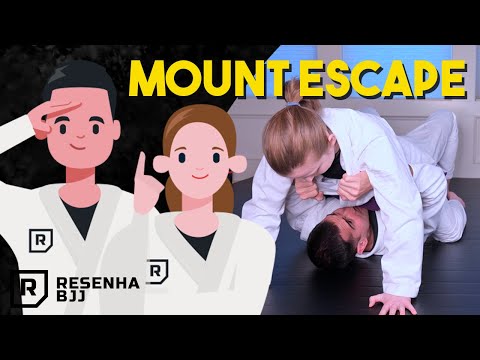
In this video, we show little warriors how to escape from mount control. Welcome to Resenha BJJ Kids! This is the offic…
Перевод: Position escape
Position Escape covers techniques for escaping from specialised control positions that don't fit within the standard mount, side control, or back escape categories — addressing unique positional challenges found in MMA, 10th Planet Jiu-Jitsu, and modern submission grappling. [1] This group includes escapes from crucifix, body triangle, truck position, leg ride, cradle, and other specialised control positions that have become increasingly common as positional systems have diversified. [1],[2] Many of these positions are unique to specific martial arts or competition formats — the truck position is primarily a 10th Planet Jiu-Jitsu concept, the body triangle is common in MMA back control, and the crucifix appears across wrestling, BJJ, and MMA. [2],[3] Understanding these escapes requires knowledge of the specific control mechanics of each position, as the escape principles differ significantly from standard bottom escapes. [3]
Position-specific escapes have become increasingly important as grappling positional systems have diversified beyond the traditional mount/side control/back hierarchy. [1] Eddie Bravo's 10th Planet system (founded 2003) introduced positions like the truck and twister that required entirely new escape knowledge. [1],[2] In MMA, the body triangle back control system became dominant through fighters like Khabib Nurmagomedov and Demian Maia, creating demand for body triangle escape training. [2],[3]
Изображений для этой техники пока нет.
Войдите, чтобы предложить изображение.
In this video, we show little warriors how to escape from mount control. Welcome to Resenha BJJ Kids! This is the offic…
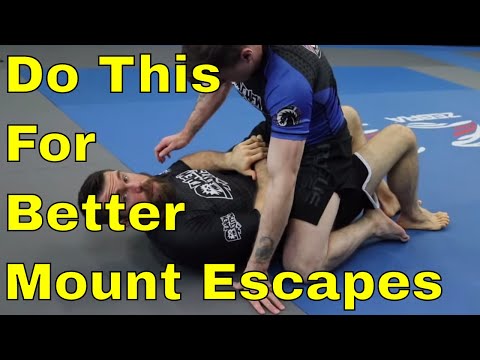
Do you have plenty of techniques to escape Mount but yet you still have trouble escaping the position? If so then this v…
Учебных курсов по этой технике пока нет.
Войдите, чтобы предложить курс.
Риск травмы для человека, к которому применяется техника
Specialised control positions often involve joint vulnerability (body triangle can compress the ribs, crucifix exposes the neck, truck position threatens the twister) and the escape may require movement through dangerous transitional positions
Уровень мастерства, необходимый для надёжного выполнения техники
Разрешена ли техника по основным соревновательным правилам
Jiu-Jitsu University (Saulo Ribeiro, 2008)
Description sources — [1] Jiu-Jitsu University (Ribeiro, 2008) [2] Mastering the Rubber Guard (Bravo, 2006) on 10th Planet positions [3] MMA competition evolution
Jiu-Jitsu University (Ribeiro, 2008) || Mastering the Rubber Guard (Eddie Bravo, 2006) || Mastering Jujitsu (Gracie & Danaher, 2003)
Description sources — [1] Jiu-Jitsu University (Ribeiro, 2008) [2] Mastering the Rubber Guard (Bravo, 2006) on 10th Planet positions [3] MMA competition evolution
position-specific flexibility, problem-solving ability, calm under pressure
body awareness, flexibility (especially hip mobility for body triangle escapes)
position-dependent — core for most escapes, hip flexors for body triangle, shoulders for crucifix
Каждое движение в любом боевом искусстве обладает рядом универсальных свойств. Комбинируйте параметры ниже, чтобы найти нужный инструмент или сравнить аналоги из разных стилей.
The 10th Planet Escape family covers escape techniques for positions unique to Eddie Bravo's 10th Planet Jiu-Jitsu system — addressing the specific challenge of escaping the Truck, Twister Side Control, and other proprietary 10th Planet control positions that don't appear in traditional BJJ. [1] As the 10th Planet system gained popularity and its practitioners began using positions like the Truck (back-body control with a calf-crank hook and far-side leg control) in competition, opponents needed to develop escape knowledge for these unfamiliar positions. [1,2] 10th Planet escapes require understanding the specific mechanics of each position — for example, the Truck escape requires addressing the calf hook before addressing the seatbelt grip, while the Twister defence prioritises preventing the head-pull that completes the spinal crank. [2,3] Competitors in ADCC, EBI, and no-gi competition increasingly need these escapes as 10th Planet techniques spread beyond the system's original schools. [3]
The MMA Escape family covers escape techniques specifically adapted for mixed martial arts competition, where the threat of ground-and-pound strikes fundamentally changes the mechanics, urgency, and priorities of positional escapes. [1] In pure grappling, a bottom player can take time to methodically work an escape; in MMA, every second on bottom under a dominant position means absorbing punches, elbows, and hammer fists that can end the fight. [1,2] MMA escapes incorporate the cage wall for leverage (something unavailable in gi or no-gi grappling), account for striking threats (protecting the face while escaping), and often prioritise getting back to the feet (rather than recovering guard, which invites more ground-and-pound). [2,3] Fighters like Khabib Nurmagomedov's opponents and fighters defending against Jon Jones' top game have demonstrated that MMA-specific escape skills are essential for survival in the modern UFC. [3]
Position escapes cover all transitions from disadvantaged to neutral or advantageous positions — not just traditional escapes but also reversals that go directly from defense to offense. The berimbolo is an example of a position escape that leads directly to back control. (Ribeiro, Jiu-Jitsu University; BJJ competition strategy)
According to Chewjitsu, the sequence is critical: first get your legs free so you can bridge, then get your arms together and set your frames, and finally work your escape. The exact escape technique matters less than following this sequence properly.
Chewjitsu emphasizes that the bridge is one of your most powerful weapons to off-balance the person on top, allowing you to get them moving and create the space needed to escape.
Chewjitsu warns against the 'white belt hug' because it gives your opponent control of the inside position. Also avoid letting your opponent get the grapevine leg lock, as this is harder to deal with than having your opponent's heels tucked under your buttocks.
Chewjitsu notes that the specific escape (hip escape vs. flipper escape) depends on how tight your opponent's legs are, but emphasizes that focusing on the proper sequence and setup is more important than mastering one particular escape method.
Position Escape covers techniques for escaping from specialised control positions that don't fit within the standard mount, side control, or back escape categories — addressing unique positional challenges found in MMA, 10th Planet Jiu-Jitsu, and modern submission grappling. This group includes escapes from crucifix, body triangle, truck position, leg ride, cradle, and other specialised control positions that have become increasingly common as positional systems have diversified.
Position-specific escapes have become increasingly important as grappling positional systems have diversified beyond the traditional mount/side control/back hierarchy. Eddie Bravo's 10th Planet system (founded 2003) introduced positions like the truck and twister that required entirely new escape knowledge.
Unified MMA: разрешён — Legal defensive/transitional technique; IBJJF: разрешён — Legal; IJF: разрешён — Legal; ADCC: разрешён — Legal; UWW: разрешён — Legal, escape scores 1 point (freestyle), reversal scores 1 point; FIAS Sport Sambo: разрешён — Legal; NCAA Folkstyle: разрешён — Legal, escape scores 1 point, reversal scores 2 points
Оценка опасности 5/10. Moderate — specialised control positions often involve joint vulnerability (body triangle can compress the ribs, crucifix exposes the neck, truck position threatens the twister) and the escape may require movement through dangerous transitional positions
Стандартная цепочка подготовки: Identify Position → Identify Control Mechanism → Address Primary Control → Create Space → Escape → Recover.
Стандартные контрприёмы: When in control, counter escapes by: tightening the control mechanism when escape is attempted / Transitioning to submission when the escape exposes a limb or the neck / Switching to a different control position when the current one is being escaped / Using the opponent's escape energy to transition to a better position.
Распространённые варианты: Body triangle escape (prying open the ankle lock and sliding the hips free [1]); Crucifix escape (bridging and rolling to free the trapped arms); Truck position escape (addressing seatbelt and thigh hook to turn and face the o…); Cradle escape (fighting the hand lock and bridging to separate head and …); Leg ride escape (freeing the hooked legs and returning to standard bottom …); MMA-specific escapes (cage-assisted escapes from unique positions found in MMA).
Position-specific escapes are increasingly relevant in high-level competition, particularly in ADCC (where the truck and body triangle are commonly seen) and MMA (where body triangle back control is a dominant strategy).
Основные ошибки, на которые стоит обратить внимание: Using standard escape mechanics against specialised positions — bridging and shrimping won't work against a body tria… / Ignoring the body triangle — many fighters focus on fighting hand controls while the body triangle slowly compresses … / Panicking in the crucifix — the crucifix removes arm defence and can feel helpless; remaining calm and methodically w… / Not knowing the position — fighters who don't train against specialised positions are caught completely off guard whe….
Position Escape также известен как Pojishon Esukēpu, Positional Escape, Position Recovery, Escape From Control.